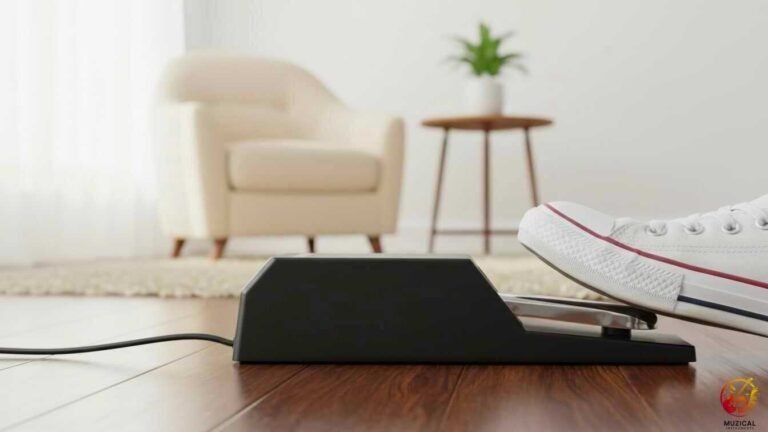
Common Sustain Pedal Mistakes Beginners Should Avoid

Many new piano players press the sustain pedal too soon, hold it too long, or forget to lift it at the right time. This makes the music sound blurry and hard to hear. Even easy songs can sound messy.
When you learn how to use the sustain pedal the right way, your playing sounds clean, smooth, and more confident.
This article helps you identify those common sustain pedal mistakes and teaches the right timing to keep your music clear. You will learn exactly when to lift your foot and how to listen for clarity.
Quick Summary of Common Beginner Sustain Pedal Mistakes
| Mistake | Why It Happens | The Fix |
|---|---|---|
| Holding the pedal during chord changes | Beginners forget to lift the foot; pedal used like a footrest | Lift and press the pedal each time the chord changes |
| Pressing the pedal before playing notes | Foot leads hands; all notes blend together | Play the note first, then press pedal immediately (“after pedaling”) |
| Using wrong pedal pressure | Piano responds differently; pressing too hard or too soft | Press slowly until the sound sustains properly; adjust for each keyboard |
| Wrong foot position | Heel lifted or toes used; leg too tense | Ball of foot on pedal, heel on floor, ankle relaxed, small ankle movements |
| Using pedal during fast runs, scales, or staccato | Old notes mix with new; notes need to be crisp | Lift pedal for fast or busy passages and during rests |
| Ignoring pedal polarity on digital keyboards | Pedal works backward or inconsistently | Check polarity settings, use switchable pedals |
| Using cheap or sliding pedals | Pedal lacks half-damper control; slides on floor | Use quality pedal with rubber base, weighted or spring feel |
| Over-pedaling for wrong music style | Not adjusting to genre | Adjust pedal use to match style: heavy for Romantic/pop, light for jazz/rock |
What Is The Most Common Beginner Sustain Pedal Mistake?
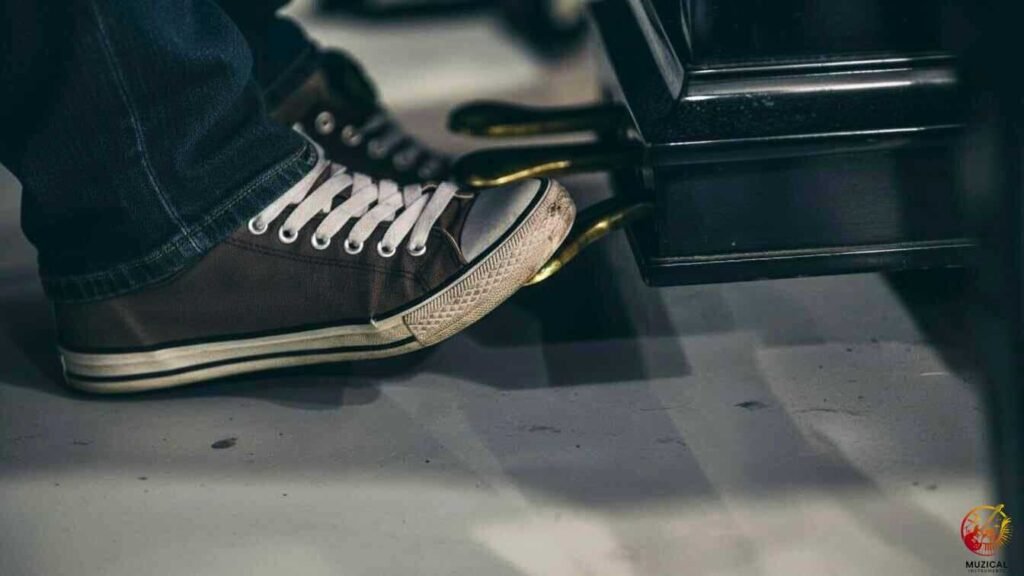
The most common mistake is holding the pedal down during chord changes. Beginners forget to lift their foot when the music moves to a new chord.
When this happens, old notes mix with new ones. The sound turns blurry and messy. Think of mixing many paint colors together. You do not get something bright. You get a dull brown color. Music works the same way.
Many new players press the sustain pedal at the start and never let go. They use it like a footrest. This builds a bad habit that is hard to fix later. The pedal is not a one-time switch. It is part of the music.
The problem: Keeping the pedal down all the time.
The result: Loud, muddy sound with no clear notes.
The fix: Lift and press the pedal each time the chord changes.
Why Does The Sustain Pedal Make My Piano Sound Muddy?

Your piano sounds muddy because old notes keep ringing. This happens when you hold the sustain pedal during note or chord changes.
When the pedal stays down, past notes do not stop. New notes stack on top of them. The sounds clash and lose clarity. Think of paint colors. Mix them with care and you get a new color. Mix everything at once and you get brown mud. Music works the same way.
The fix is small but important. Lift your foot a little when the chord changes. Then press the pedal right after you play the new chord. This clears old sounds first.
Some beginners also press the pedal the wrong amount. Each piano feels different. Try this. Play a chord. Press the pedal slowly. Stop when the sound starts to last longer. That is the right pressure.
What Happens If I Press The Pedal Too Early?
Pressing the pedal before playing makes the sound messy. All notes blend together with no clean breaks.
When you press the sustain pedal first, it holds every sound. Old notes, tiny slips, and new notes all mix. This makes music sound sloppy. Many beginners do this without noticing. Your foot moves before your fingers.
The fix is simple. Let your hands lead. Play the note or chord first. Then press the pedal right after. This is called “after pedaling.” It keeps the sound clear and smooth.
Use this order every time:
- Play the note or chord
- Press the pedal right after
- Lift and press again when the chord changes
Avoid this mistake:
- Press pedal first
- Play notes while it stays down
For beginner songs, your foot should follow your hands, not race ahead.
When Should I Press And Lift The Sustain Pedal?
Press the pedal right after you play a chord. Release it just before the next chord change.
This simple rule keeps your sound clean. The pedal should change when the harmony changes. If the music moves to a new chord and you keep the pedal down, old notes mix with new ones. That creates a muddy sound.
Train your ear to listen for chord changes. Each time the music shifts, your foot should move. Think of your foot doing a small bounce.
Try this slow practice:
- Play a chord
- Press the pedal right after
- Lift the pedal before the next chord
- Play the new chord
- Press again
The lift is very quick. It only lasts a moment. That tiny gap clears the sound.
Some music shows pedal marks. “Ped.” means press. A star (*) means release. If you see no marks, trust your ears and keep the sound clear.
What’s The Correct Foot Position On The Sustain Pedal?
Use the ball of your right foot on the pedal. Keep your heel on the floor at all times.
This foot position gives you control and speed. Your ankle should do the work. It moves like a hinge while your heel stays planted. This helps you lift and press the pedal quickly and cleanly.
Wrong foot placement causes trouble. Lifting your whole foot makes you slow. Using only your toes feels weak. Standing too far forward or back makes the pedal hard to control.
Correct position checklist:
- Ball of your foot in the center of the pedal
- Heel resting on the floor
- Ankle loose and relaxed
- Knee bent in a natural way
- Small ankle movement, not the whole leg
Your foot should feel like a seesaw. The heel stays still. The front moves up and down.
Also check your bench height. Sit so your legs feel relaxed. A good seat makes pedaling much easier.
When Should I NOT Use The Sustain Pedal?
Do not use the sustain pedal during fast or very busy music. Lift the pedal when the music needs clear, clean notes or silence.
The sustain pedal is not always your friend. Some parts sound better without it. Fast runs and scales need sharp sounds. If the pedal stays down, all the notes mix together and sound blurry.
Music by composers like Bach or Mozart often needs little or no pedal. Their songs depend on clear note shapes, not long echoes.
Always watch the sheet music. A rest means silence. If you hold the pedal during a rest, old notes keep ringing. That breaks the music’s rules.
Avoid the pedal when:
- Playing staccato (short, bouncy notes)
- Playing fast scales or quick runs
- The notes change very often
- You see a rest sign in the music
Use the pedal to help the music, not hide the notes.
What Sustain Pedal Mistakes Do Digital Piano Players Make Most?
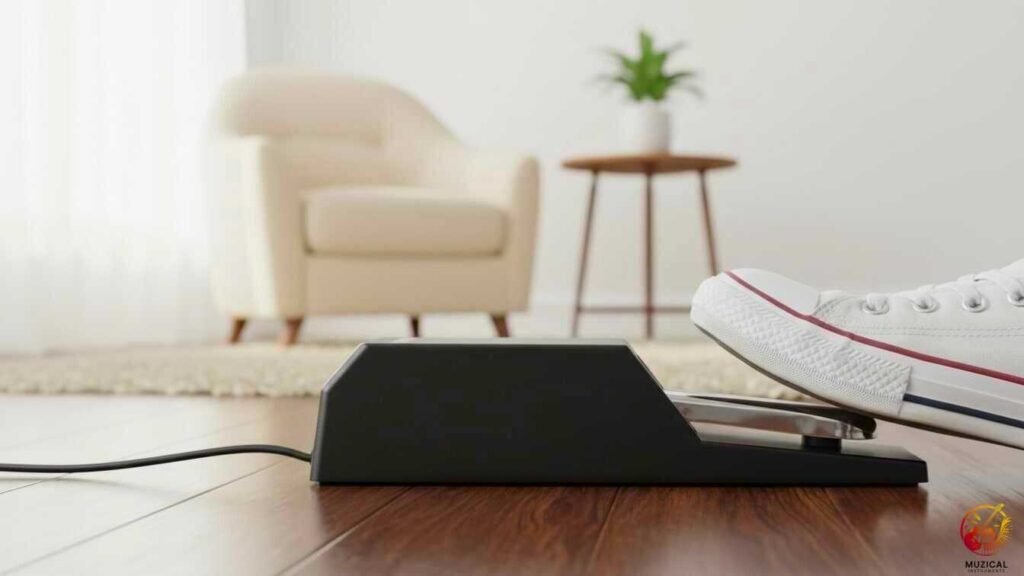
Digital piano players often use the wrong pedal or wrong settings. The biggest mistakes are ignoring polarity and using cheap on/off pedals.
Many digital piano players never check pedal polarity. This makes the pedal work backward and feels confusing. Another big mistake is using very cheap pedals. These pedals only turn sound on or off. They cannot control sound smoothly.
Budget keyboards often bundle with tiny plastic pedals. They slide on the floor and feel nothing like a real piano pedal. This limits your playing as you improve.
Good digital pedal features:
- Smooth control, not just on/off
- Weighted or spring feel
- Rubber bottom so it stays put
- Long cable (at least 6 feet)
- Standard 1/4-inch plug
Cheap pedal problems:
- No half control
- Slips on the floor
- Short cables
- Unclear response
Always check your manual for “half-damper” support. Use wired pedals to avoid delay.
How Often Should I Practice Pedaling?
Practice pedaling every day, but only for a few minutes. Short, focused practice works better than long sessions.
Spend about five minutes each practice session on the sustain pedal. Go slow. Use simple chords. Focus only on your foot timing, not speed.
Exercise 1: Two-Chord Pedal Practice
- Play a C chord
- Press the pedal right after
- Hold for four counts
- Lift the pedal
- Play a G chord
- Press the pedal again
- Repeat many times
Listen for a tiny moment of silence between chords.
Exercise 2: Simple Scale Pedaling
- Play a slow C scale
- Use the pedal on some notes only
- Lift often to keep sounds clear
Exercise 3: Timing Check
- Play a chord
- Press the pedal one second later
- Notice when the sound changes
Record yourself. Use a slow beat. Clean sound is the goal.
Sustain Pedal Practice Schedule For First Month
| Week | Focus Area | Exercise Time | Key Goal |
|---|---|---|---|
| 1 | Foot positioning and basic press/release | 5 minutes daily | Heel stays on floor throughout |
| 2 | Two-chord changes with pedal | 10 minutes daily | Clear gap between chord changes |
| 3 | Adding pedal to learned songs | 15 minutes daily | No muddy sections in slow practice |
| 4 | Variable pedal timing and half-pedaling | 15 minutes daily | Matching pedal changes to music style |
Does The Genre Of Music Change How I Use The Pedal?
Yes, the music style changes how you use the sustain pedal. Different genres need different pedal amounts.
Pop and Romantic classical music, like Chopin, use the pedal a lot. They need a warm, flowing sound.
Jazz uses the pedal very lightly. Pianists want short, rhythmic chords. Too much sustain makes jazz lose its swing.
Rock and Blues also need less pedal. These styles rely on a strong beat. Holding the pedal too long softens the rhythm and energy.
Always think about the style before pressing the pedal. Ask yourself: “Does this music need long, flowing notes or short, crisp chords?” Adjust your foot to match the style.
Final Thought : Common Sustain Pedal Mistakes Beginners Should Avoid
Common sustain pedal mistakes make your piano sound messy. Pressing too early, holding too long, or not lifting between chords blurs the notes.
Start by practicing simple two-chord progressions. Lift and press the pedal with each chord, keep your heel on the floor, and listen for clear gaps.
Don’t overuse the pedal to hide mistakes. Record yourself so you can hear muddy parts your ear misses.
With daily practice, this simple lift-play-press routine will make your playing cleaner, more expressive, and professional.
Mastering it now builds the foundation for a lifetime of confident piano playing.
FAQ: Common Sustain Pedal Mistakes Beginners Should Avoid
1. Can beginners use the sustain pedal from day one?
Yes, you can use the sustain pedal from the start. You just need to use it lightly and slowly. Begin with simple two-chord songs. Press the pedal after playing the chord, not before. This builds good habits early and prevents muddy sound later.
2. Is it okay to practice piano without using the sustain pedal?
Yes, practicing without the sustain pedal is very helpful. It trains your fingers to play clean notes. Once your hands sound clear on their own, adding the pedal becomes much easier and sounds better.
3. Do all keyboards and digital pianos use the same sustain pedal?
No, not all keyboards use the same sustain pedal. Some digital pianos need pedals with the correct polarity or half-damper support. Always check your keyboard manual and use a pedal that matches your instrument.
4. Should kids use the sustain pedal when learning piano?
Yes, kids can use the sustain pedal, but only for short practice times. Teach them to keep the heel on the floor and lift the pedal during chord changes. Simple guidance helps children avoid bad habits.
5. Why does my sustain pedal sometimes not work properly?
This often happens because of wrong pedal polarity, loose cables, or low-quality pedals. Try unplugging and reconnecting the pedal. If the problem continues, use a better pedal that matches your piano.