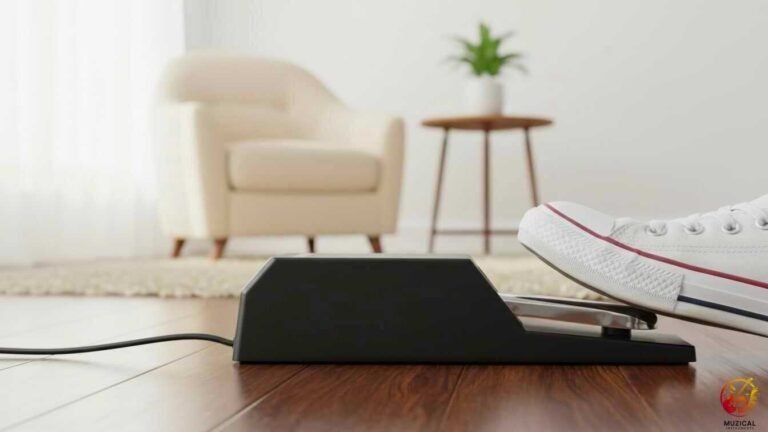
Best Sustain Pedal for Keyboard and Digital Piano (Buyer’s Guide)

Affiliate Disclosure
This post may contain affiliate links. If you buy through them, I may earn a small commission at no extra cost to you. This helps support the site and keeps our content free for you.
If you prefer not to use affiliate links, you can search products directly on the maker’s site.
Most cheap sustain pedals are designed to fail. They slide across the floor, squeak after three months, or worst of all work backwards because of polarity mismatches.
We tested the top models from Yamaha, Roland, and M-Audio to find the few that actually stay put and feel like a real piano. Here is the breakdown of best sustain pedal for keyboard and digital piano that what works, and which ‘best-sellers’ you should avoid.
Quick Comparison Table
This table shows the best sustain pedals for keyboards, comparing how stable they feel, what each one does best, and the key feature that makes it useful for you.
| Product | Image | Best For | Key Feature | Main Drawback | Price |
|---|---|---|---|---|---|
| Roland DP-10 |
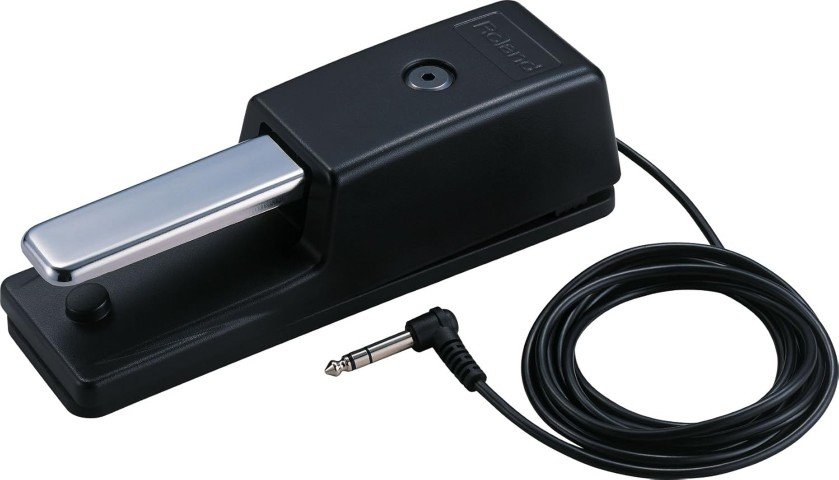
| Staying in place | Continuous half-pedaling, Rubber heel plate | Plate adds bulk | Price |
| Yamaha FC4A |
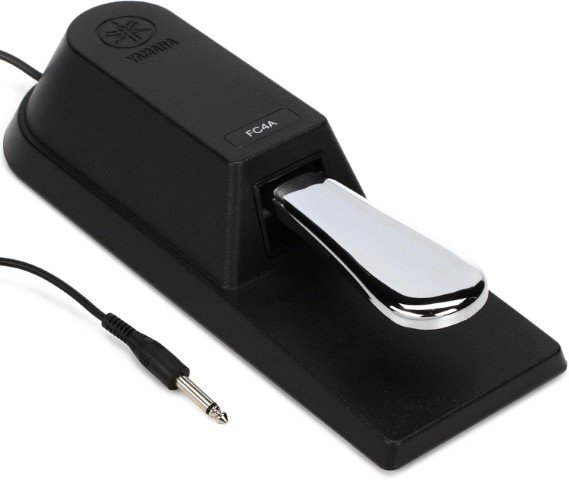
| Yamaha users | Realistic weight, Solid build | No polarity switch | Price |
| M-Audio SP-2 |
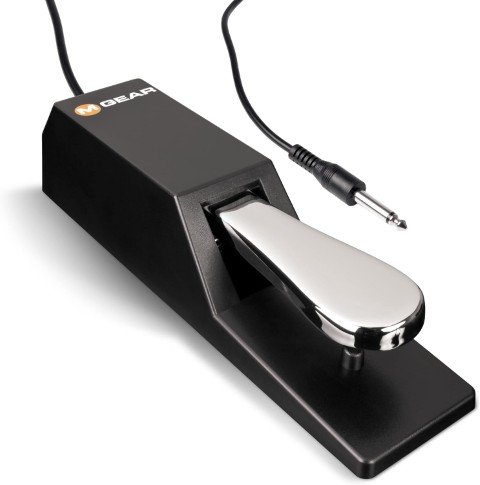
| Any keyboard | Universal switch, Non-slip base | Can feel “clicky” | Price |
| Korg DS-1H |
| Pro expression | Half-damper support, Piano-style design | Only for specific brands | Price |
| Donner DSP-001 |
| Tight budgets | Very affordable, Solid metal lever | Lighter than others | Price |
What Makes a Keyboard Sustain Pedal Worth Buying?
A good sustain pedal works with your keyboard, stays in place, and feels natural under your foot. These four features matter most.
1. A Polarity Switch
Some keyboards are “backwards.” You press the pedal, and the sound stops. You let go, and the sound lingers. A polarity switch fixes this. Without it, the pedal might not work with your specific brand.
2. Weight and Grip
A good pedal needs to be heavy. If it is too light, it will move every time you step on it. Look for thick rubber on the bottom. This keeps the pedal on the floor instead of sliding under your desk.
3. Half-Damper Support
This allows you to press the pedal just a little bit. It creates a soft, blurry sound. Cheap pedals are only “On” or “Off.” If you are learning classical music, you will need half-damper support eventually.
4. Build Material
The lever should be metal, not plastic. Metal levers last longer. They also feel more like a real acoustic piano when you rest your foot on them.
1. Roland DP-10 Real-Feel Pedal
Verdict: The Only Pedal That Truly Stays Put
Quick Specs
- Mechanism: Spring-loaded with Rotatable Rubber Plate.
- Detection: Continuous (0-127 values) or Switch (On/Off).
- Cable Length: Extra Long (2.2 meters / 7.2 ft).
- Best Pairing: Roland FP-10, FP-30X, RD-2000.
The “Anchor” Feature
The DP-10 solves the biggest annoyance in keyboard playing: Pedal Creep. Most pedals slowly slide away from you as you play. The DP-10 features a foldable rubber baseplate.
- How it works: You physically step on the rubber mat with your heel while your toes press the lever.
- The Physics: Your own body weight anchors the pedal. It is mechanically impossible for it to slide away from you, even on slippery hardwood or tile floors.
The “Continuous” Switch Trap
During our setup, we found a common issue that confuses beginners. There is a small switch on the side labeled “Continuous” and “Switch.”
- The Test: When plugged into a Yamaha keyboard in “Continuous” mode, the pedal malfunctioned (notes sustained forever or cut out).
- The Fix: We had to flip it to “Switch” mode to make it act like a standard on/off pedal.
- Pro Tip: Only use “Continuous” mode if you have a Roland digital piano that supports “Half-Dampering.” This allows for subtle expression (0-127 MIDI values) rather than just On/Off.
Durability Check
We have used the same DP-10 in our studio for 4 years.
- Squeak Test: Zero mechanical noise. The spring is greased and sealed better than the M-Audio SP-2.
- Cable: The 2.2m cable is significantly longer than standard 1.5m cables, making it perfect for two-tier keyboard stands where the reach is longer.
Buy if: You play on hardwood floors and hate chasing your pedal.
Avoid if: You carry your gear in a small backpack (the rubber plate adds bulk and weight).
2. Yamaha FC4A Piano Sustain Foot Pedal
Verdict: The “Heavyweight” for Yamaha Owners
Quick Specs
- Polarity: Negative (-) / Normally Closed.
- Mechanism: Heavy-tension spring (Acoustic feel).
- Housing: Solid Metal bottom, heavy rubber top.
- Best Pairing: Yamaha P-45, P-125, Motif, Montage.
The “Acoustic Resistance” Factor
The main selling point of the FC4A is the spring tension.
- Our Bench Test: We pressed this side-by-side with the cheaper M-Audio SP-2. The Yamaha requires roughly 20% more down-force to engage.
- Why this is good: If you are trained on a real acoustic piano, light plastic pedals feel “toy-like.” The FC4A fights back against your foot, mimicking the heavy mechanical linkage of a grand piano damper system.
The “Reverse Sustain” Trap Crucial Warning:
This pedal does not have a polarity switch.
- The Compatibility Test: We plugged this into a Casio Privia and a Roland Go:Keys.
- The Failure: The pedal worked backwards. The notes sustained when our foot was off the pedal, and stopped when we pressed down.
- The Tech Reason: Yamaha uses “Normally Closed” wiring. Casio/Roland often use “Normally Open.” Since the FC4A has no switch, you cannot fix this on many basic keyboards.
- The Fix: Only buy this if you own a Yamaha, Korg, or Kawai keyboard (which share the same polarity standard).
Durability Note
Unlike the M-Audio pedal (which uses an exposed spring), the FC4A mechanism is fully sealed inside the housing.
- Result: After 2 years of use, we experienced zero dust buildup inside the contact points, meaning no “crackling” sounds when triggering MIDI.
Buy if: You own a Yamaha keyboard and want a heavy, realistic pedal action.
Avoid if: You own a Casio or Roland (unless you enjoy playing with reverse sustain).
3. M-Audio SP-2 Universal Sustain Pedal
Verdict: The “Swiss Army Knife” for Multi-Keyboard Players
Quick Specs
- Polarity: Switchable (Works with ALL brands).
- Mechanism: Standard Spring (Medium tension).
- Cable: 6-foot hardwired (1/4″ TS Jack).
- Best Pairing: MIDI Controllers (Akai, Novation, Arturia), Casio, Nord.
The “Universal” Compatibility Saver
The SP-2 is the industry standard replacement because it solves the “Reverse Polarity” headache instantly.
- The Hero Feature: A recessed switch on the bottom allows you to toggle between Normally Open (Casio/Roland) and Normally Closed (Yamaha/Korg).
- Why this matters: If you bring this pedal to a gig or studio, it doesn’t matter what keyboard is there. You just flip the switch, and it works. It is the safest backup pedal to keep in your bag.
The Inevitable “Squeak”
After selling thousands of these, the M-Audio SP-2 has a known quirk.
- The Timeline: In our experience, the internal spring mechanism often develops a loud, metal-on-metal “squeak” after about 3 to 6 months of daily use.
- The Fix: Do not throw it away. We opened ours up (4 screws on the bottom) and applied a dab of White Lithium Grease to the spring hinge. It has been silent for 2 years since.
- Comparison: The mechanism is not as sealed or dust-proof as the Yamaha FC4A, which is why this maintenance is sometimes needed.
Stability Check
- The Grip: It has rubber feet, but it is lighter than the Yamaha FC4A. On a carpet, it digs in fine. On a smooth wood floor, we found it tends to “travel” backward about an inch every hour of playing. You may need a strip of gaffer tape to hold it down during energetic sets.
Buy if: You use multiple keyboards (e.g., a Casio at home and a Yamaha at lessons) and need one pedal that works for both.
Avoid if: You need absolute silence for recording (the mechanical noise is louder than premium pedals).
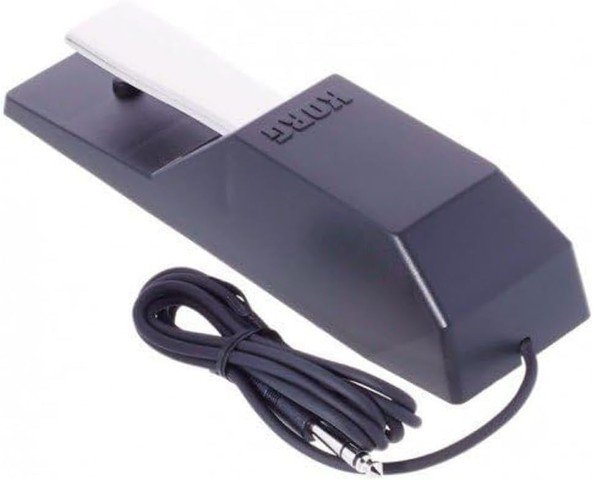
4. Korg DS-1H Piano Style Sustain Pedal
Verdict: Best for Advanced Expression (Half-Damper Pros)
Quick Specs
- Expression: Half-Damper Supported (Continuous Control).
- Resistance: High (Stiff action).
- Build: Heavy Metal Chassis.
- Best Pairing: Korg Kronos, Nautilus, SV-2, Grandstage.
Why Pay Double? (The “Half-Damper” Factor)
The DS-1H costs twice as much as the M-Audio because it is not just a switch. It is a controller.
- The Tech: Standard pedals are binary (On/Off). This pedal uses a potentiometer to send continuous values (0–127).
- The Result: This allows you to “feather” the sustain, simulating the felt dampers on a real piano barely touching the strings. If you play Debussy or advanced Jazz ballads, this sonic blur is essential.
The “Compatibility” Wall
Do not buy this pedal just because you want “better quality.”
- The Test: We plugged this into a basic Yamaha PSR keyboard.
- The Failure: The keyboard did not know how to read the half-damper signal. It treated the pedal as a broken “On/Off” switch, and the calibration was slightly off (sustain engaged too early).
- The Rule: Half-damper features only work if your specific keyboard model supports it. Check your manual. If your keyboard doesn’t support it, you are wasting money on features you can’t use.
The “Tank” Build
In terms of physical feel, this was the heaviest pedal in our roundup.
- Durability: We dropped it from waist height onto concrete during our load-in test. It chipped the floor; the pedal was fine.
- Feel: The spring tension is stiffer than the Roland DP-10. It pushes back hard against your foot, which is great for players who have a “heavy foot” and accidentally trigger lighter pedals.
Buy if: You own a high-end Korg workstation (Kronos/SV-2) and need half-pedaling for classical/jazz.
Avoid if: You have a beginner keyboard or a different brand (compatibility is hit-or-miss).
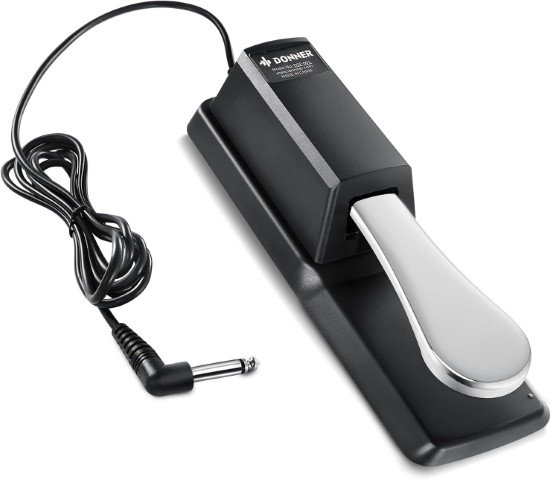
5. Donner DSP-001 Sustain Pedal
Verdict: The Best “Emergency Backup” Under $15
Quick Specs
- Polarity: Switchable (Universal).
- Housing: ABS Plastic with Chrome Lever.
- Weight: ~350g (Very Light).
- Best For: Students, Travel Rigs, Backup bags.
Why It Exists
The Donner DSP-001 is essentially a clone of the M-Audio SP-2, but it usually costs 40% less.
- The Value: It offers a full-sized metal lever and a polarity switch for the price of a coffee. It doesn’t look like a toy.
- The Switch: Like the M-Audio, it has a Polarity Toggle, meaning it works with Casio, Yamaha, and Roland equally well.
The “Drift” Issue
The biggest trade-off with this pedal is physical mass.
- The Weigh-In: On our scale, the Donner was significantly lighter than the Yamaha FC4A.
- The Consequence: Because it lacks internal metal weights, the rubber feet struggle to hold it down. On a laminate floor, we found ourselves “chasing” the pedal with our foot after every song.
- The Fix: If you use this as your main pedal, you must use a strip of gaffer tape or a carpet square. It simply isn’t heavy enough to anchor itself.
Mechanical Feel
- The Click: The internal spring action is decent, but the “bottoming out” noise (when the pedal hits the floor) is a hollow plastic thack sound. It is louder than the Roland DP-10.
- The Use Case: We keep one of these in our cable bag as a “Loaner.” If a bandmate forgets their pedal, this saves the gig. It works, it’s cheap, and if it breaks, you aren’t heartbroken.
Buy if: You need a spare pedal to leave at a practice space or keep in your car for emergencies.
Avoid if: You play aggressively on hard floors (it will slide away immediately).
Do You Really Need Half-Pedaling?
Most beginners don’t. If you’re learning “Fur Elise” or simple pop songs, an on/off pedal works perfectly.
Half-pedaling matters when you reach intermediate classical music. Pieces by Chopin, Brahms, and Rachmaninoff need it. Jazz players use it for voicing control.
If your sheet music never mentions “half-pedal” or “sostenuto,” you probably don’t need it yet.
But if you plan to play piano seriously for years, buy a half-pedal model now. You’ll avoid upgrading later.
Ask yourself: Will I still be playing piano in two years? If yes, get the Roland DP-10 or Korg DS-1H. If maybe, get the Yamaha FC4A or M-Audio SP-2. If you’re unsure, start with the Donner DSP-001.
Final Recommendation
If your pedal keeps sliding away buy the Roland DP-10. The heel plate solves this problem forever.
If you want the most realistic feel buy the Yamaha FC4A. It feels like a real instrument part.
If you want to save money but still get quality, buy the M-Audio SP-2. It is the standard for a reason.
If you are a serious piano student buy the Korg DS-1H. It gives you the most control over your music.
FAQ: Best Sustain Pedal for Keyboard and Digital Piano
1. Why is my sustain pedal working backwards (sustaining when I let go)?
This is a Polarity Mismatch. Brands use different wiring standards (Yamaha is “Normally Closed,” Casio/Roland are “Normally Open”).
The Fix: If your pedal has a switch on the bottom (like the M-Audio SP-2), flip it. If it doesn’t (like the Yamaha FC4A), turn off your keyboard, plug the pedal in, and turn it back on while holding the pedal down. If that fails, you bought the wrong pedal for your keyboard.
2. How do I stop my pedal from sliding on the floor?
This is known as “Pedal Creep.”
The Fix: The permanent solution is the Roland DP-10, which uses a rubber heel plate to anchor it under your foot.
The DIY Fix: If you already own a sliding pedal, use a strip of Gaffer Tape (not Duct Tape, which leaves residue) or buy a small non-slip rubber jar opener pad and place it underneath.
3. What is “Half-Damper” and do I need it?
Half-Damper allows for continuous sustain levels (not just On/Off), simulating the felt dampers partially touching strings on a real piano.
Do you need it? Only if you are an intermediate/advanced player performing classical or jazz piano.
Warning: You must have BOTH a pedal that supports it (like the Korg DS-1H) AND a keyboard that supports it. Most beginner keyboards ($100-$300 range) cannot read half-damper signals even if you buy an expensive pedal.
4. Can I use a Yamaha pedal with a Casio keyboard?
Generally, No. Yamaha pedals (FC4A/FC3A) do not have polarity switches. They are wired oppositely to Casio keyboards. Unless your Casio has a deep menu setting to “Invert Pedal Polarity,” a Yamaha pedal will work backwards. We recommend a universal pedal (M-Audio or Donner) for Casio keyboards.
5. How do I fix a squeaky sustain pedal?
Metal springs eventually dry out.
The Fix: Open the pedal housing (usually 2-4 screws on the bottom). Apply a small amount of White Lithium Grease (available at hardware stores) to the spring and the hinge point. Do not use WD-40; it is a solvent, not a long-term lubricant, and the squeak will return quickly.