Why Do My Hands Hurt After Drumming? (Causes and Fixes)

You sit down excited to play, but twenty minutes later your palms ache and your fingers throb. You ask yourself, why do my hands hurt after drumming?
Most hand pain after drumming comes from the “Death Grip”, squeezing the sticks too tightly. When you grip too hard, the shock from hitting the drum travels straight into your bones instead of being absorbed by the stick’s bounce. Other causes include using heavy sticks, setting your drums at bad angles, or playing on surfaces with no rebound.
In this guide, we will break down exactly why this happens and, more importantly, how to stop hand pain drumming so you can play longer and faster.
Is Hand Pain Normal for Beginner Drummers?
No, sharp or lasting pain is never normal. While some mild fatigue or a small blister is common when you first start playing, drumming pain in hands that feels like burning, shooting aches, or deep joint stiffness is a warning sign. It means your technique is fighting against physics.
In our experience teaching beginner drummers, we often see students try to “muscle through” the pain. This is a mistake. Pain is your body telling you that your fulcrum (the pivot point of the stick) is too tight or your wrists are locked. If you ignore it, it can turn into tendonitis.
The “Good Pain” vs. “Bad Pain” Test
- Muscle Fatigue (Okay): Your forearms feel tired, like after a gym workout. This usually goes away after rest.
- Joint/Tendon Pain (Bad): Sharp pain in the thumb joint, wrist, or top of the hand. This requires an immediate change in technique.
The “Death Grip”: The no. 1 Cause of Hand Pain
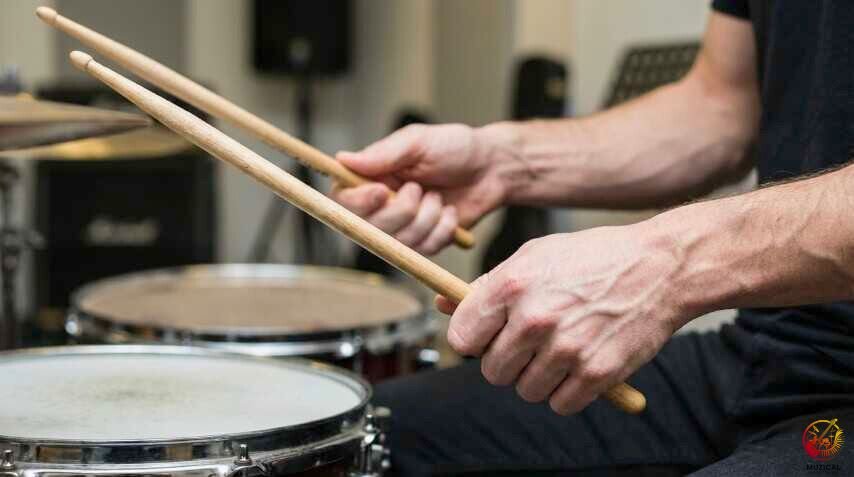
Why it hurts: When you squeeze the stick against your palm, you stop it from vibrating. Every time you hit a drum or cymbal, a shockwave travels down the wood. If your hand is loose, that shockwave dissipates. If your hand is tight, that shockwave goes right into your soft tissue and joints.
What we found in the studio: We often ask students to hand us their sticks. If we have to yank the stick out of their hand, they are gripping way too hard. The stick should be loose enough that someone could easily pull it from your fingers while you are playing.
How to fix the Death Grip
You need to rely on the fulcrum. The fulcrum is the balance point where you hold the stick, usually between your thumb and index finger (or middle finger).
- Open the back fingers: Don’t clamp your pinky and ring finger tight against the stick. Leave a little space.
- Let it wobble: The stick should move slightly in your hand when it hits the drum.
- The Bounce Test: Throw the stick at the drum head. Does it bounce back up? That is free energy. If you squeeze, you kill the bounce, and your hand has to work twice as hard to lift the stick back up.
Stick Shock: Does stick size matter?
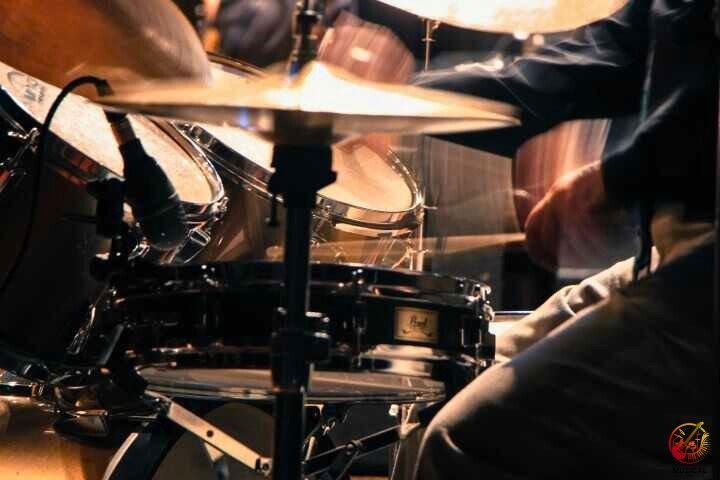
Yes, stick size matters, especially for kids and beginners. Using a stick that is too heavy for your hand size forces you to grip harder to control it. This leads to hand pain after drumming very quickly.
Our testing with beginners: We have seen teenagers try to learn on huge “marching band” sticks or thick 2B rock sticks because they think they look cool. Within 10 minutes, their thumbs hurt. When we switched them to a lighter 5A or 7A stick, the tension disappeared instantly.
Choosing the Right Tool
- 7A Sticks: Thin and light. Great for jazz, kids, or players with smaller hands.
- 5A Sticks: The standard middle ground. Good for rock, pop, and general practice.
- 2B Sticks: Thick and heavy. Avoid these until you have built up your technique, unless you have very large hands.
Pro Tip: Check the material too. Oak sticks are denser and transfer more shock. Hickory is the standard because it absorbs shock well. If you have beginner drumming hand pain, try switching to a standard Hickory 5A.
Bad Ergonomics: Is Your Snare Drum Too Low?
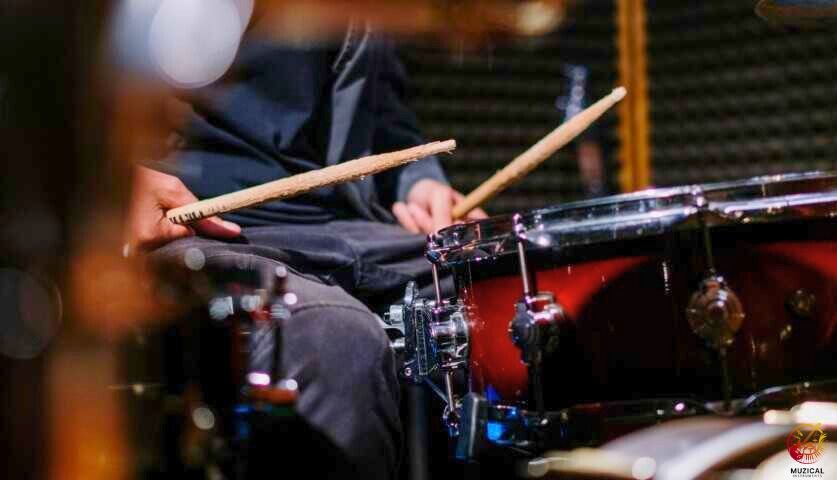
If your snare drum is too low, you have to bend your wrists downward to hit it. If it is too high, you have to shrug your shoulders. Both positions lock up your tendons. Drumming hand pain causes are often hidden in how you set up your kit.
The “Rimshot” Effect: If your drum is tilted the wrong way, you might be accidentally hitting the metal rim every time you hit the skin. Metal does not bounce. Hitting the rim sends a harsh “clank” of vibration straight into your thumb.
How to set up for pain-free playing
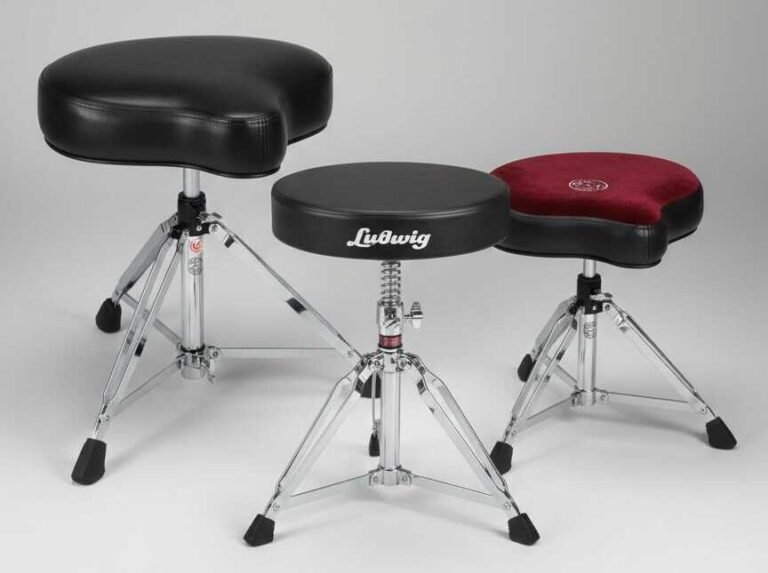
- Sit down first: Adjust your throne (seat) height so your thighs are slightly above parallel to the floor.
- Snare Height: With your arms relaxing at your sides, lift your forearms until they are flat. The snare drum should be about 2-3 inches below your drumstick tips.
- The Angle: Tilt the snare drum slightly toward you (if playing traditional grip) or keep it mostly flat (if playing matched grip). Avoid extreme angles that force your wrists to bend weirdly.
The Practice Pad Trap
Why practice pads can hurt: This might sound strange, but practice pads can sometimes cause more pain than real drums. Why? Because rubber bounces back extremely fast.
Real-world observation: We have noticed that students who practice exclusively on rubber pads tend to get lazy with their lift. They let the rubber doing all the work. When they move to a real floor tom (which has very little bounce), their hands hurt because they haven’t developed the muscles to pull the stick up.
Also, hitting a hard rubber pad on a solid table creates a very harsh impact.
The Fix:
- Don’t just pound the pad. Practice controlling the stick at low volumes (ghost notes).
- Put a towel over the pad sometimes. This kills the bounce and forces your wrists to work gently to lift the stick, building strength without the shock.
Blisters vs. Joint Pain: Knowing the Difference
It is important to know which pain is “part of the process” and which is dangerous.
Blisters (Surface Pain)
Is it bad? Not really. Blisters happen when friction rubs your skin. They are annoying, but they usually mean your skin is just soft. Over time, these will turn into calluses.
- Quick Fix: Use drummer’s tape or a simple band-aid. Do not pop them.
- Prevention: Check your grip. If the stick is sliding around too much, you might be sweating. Use drum wax or grip tape.
Tendonitis (Deep Pain)
Is it bad? Yes, very. This feels like a dull ache deep in the wrist or a sharp shooting pain up the forearm.
- The Rule: If you feel this, stop playing immediately. Ice your hand. Do not play again until the pain is gone. Pushing through this type of drumming pain in hands can cause permanent damage.
The “Pain Decoder” Table
| If You Feel… | It Likely Means… | The Immediate Fix |
|---|---|---|
| Burning Skin / Blisters | Friction from loose grip or sweat | Use stick tape or grip wax; do not pop blisters |
| Sore Forearms | Muscle fatigue (good pain) | Rest for 15 minutes; you are building muscle |
| Sharp Thumb Pain | “Death grip” (squeezing too hard) | Loosen your index finger; let the stick wobble |
| Top of Wrist Ache | Snare drum is too low or angled wrong | Raise your snare drum 2 inches; flatten the angle |
| Numbness / Tingling | Nerve compression or shock | Stop immediately. Check stick type (switch to wood tip) |
How to Stop Hand Pain Drumming (3 Quick Fixes)
If you are hurting right now, here is what you need to do.
1. The “Shake It Out” Method
Every 15 minutes, put the sticks down. Stand up. Shake your hands out loosely at your sides like you are trying to dry them off without a towel. This gets blood flowing back into your fingers and releases the tension from that “death grip.”
2. The Stretch Routine
Before you play, do these two simple stretches:
- Prayer Stretch: Put your palms together in front of your chest. Slowly lower your hands until you feel a gentle stretch in your wrists.
- Reverse Stretch: Put the backs of your hands together (fingers pointing down) and gently lift your elbows.
3. Check Your Thumb
Look at your thumb while you play. Is it pressing hard into the stick? Is the tip of your thumb turning white?
Try this: Move your thumb slightly so the fleshy pad is holding the stick, not the bony joint. Relax the pressure until the stick feels like it might almost fall out. That is the sweet spot.
When Should I See a Doctor?
We are drummers, not doctors, but we know when things are serious. You should see a professional if:
- The pain lasts more than 24 hours after you stop playing.
- You feel numbness or tingling in your fingers (this could be Carpal Tunnel).
- You lose strength in your grip (dropping things in daily life).
Drumming should feel fun, energetic, and loose. It should never feel like a punishment for your body.
Final Verdict: Loose Hands Win
If you take one thing away from this guide, let it be this: Relax.
The best drummers in the world do not look stiff. They look like they are pouring water. The power comes from speed and gravity, not from squeezing the stick.
Why do my hands hurt after drumming? Because you are working too hard. Let the stick do the work. Let the drum head bounce the stick back to you. Loosen your grip, check your setup, and listen to your body.
FAQ: Why Do My Hands Hurt After Drumming?
1. Is it normal for my hands to hurt after drumming?
A little bit of tiredness is okay. It is like when your legs feel tired after running in gym class. Your muscles are just waking up. But if you feel sharp pain or burning, that is not normal. It usually means you are holding the sticks too tightly. If it hurts, take a break!
2. How tight should I hold my drumsticks?
Think of it like holding a small bird. You want to keep it safe so it doesn’t fly away, but you don’t want to squeeze it. If a friend grabbed the stick while you were playing, it should slide right out of your hand. A loose grip stops the shock from hurting your fingers.
3. Will drumming give me calluses?
Yes, and that is actually a good thing! When you first start, you might get small blisters because your skin is soft. Over time, the skin on your fingers will get thicker and tougher. These are called calluses. They act like natural armor to protect your hands so you can play longer without pain.
4. Why do my wrists hurt when I play the snare drum?
This usually happens because your drum is set up wrong. If your snare drum is too low, you have to bend your wrists down really far to hit it. That bending stretches your tendons and causes pain. Try raising your drum stand up a few inches so your arms stay flat.