Best Student Violin Brands Comparison (2026 Buyer’s Guide)

Affiliate Disclosure
This post may contain affiliate links. If you buy through them, I may earn a small commission at no extra cost to you. This helps support the site and keeps our content free for you.
If you prefer not to use affiliate links, you can search products directly on the maker’s site.
Finding the right instrument is the first step in this student violin brands comparison. It can be hard to know what to buy. Many cheap violins online look good, but they are hard to play and sound bad. These “violin-shaped objects” can make a new player want to quit.
This guide will help you find the best student violin brands that are approved by teachers. We will show you what makes a good beginner violin. Our top pick, the Stentor Student II, is loved by teachers for its great value and easy playability.
A Quick Look: Our Top Picks
| Product Name | Image | Best For | Quality Rating | Key Feature | Check Price |
|---|---|---|---|---|---|
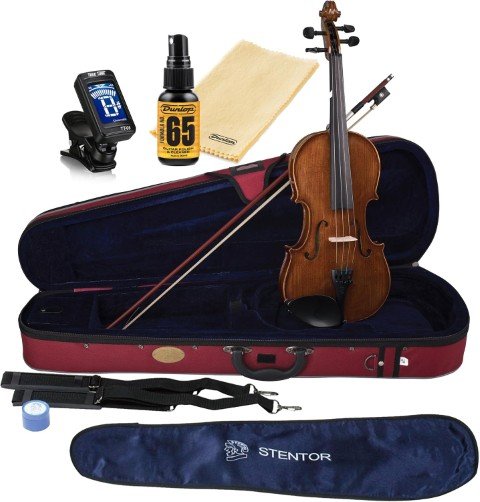
| Stentor Student II (1500) |
| Overall Top Pick | 4.8 / 5 | Solid tonewoods and ebony fittings. | Price |
| Cremona SV-175 |
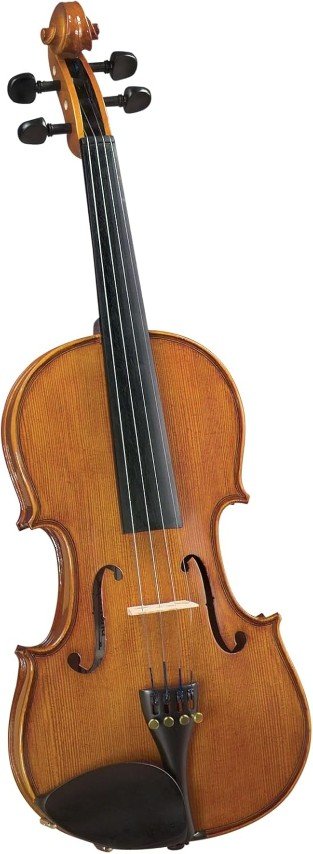
| Best Value Outfit | 4.6 / 5 | Comes with D’Addario Prelude strings. | Price |
| Eastman VL100 |
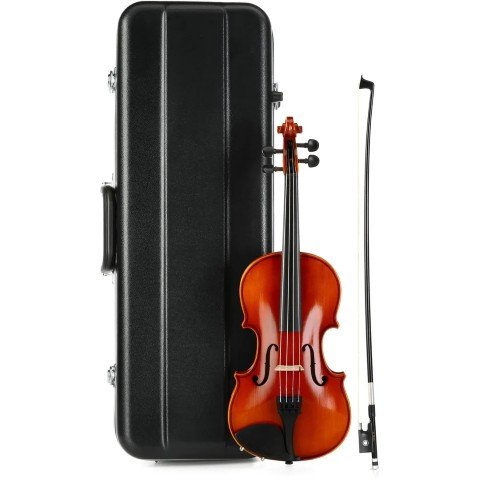
| Best Sound Quality | 4.9 / 5 | Fully hand-carved with a rich tone. | Price |
| Yamaha AV5 Student Violin Outfit |
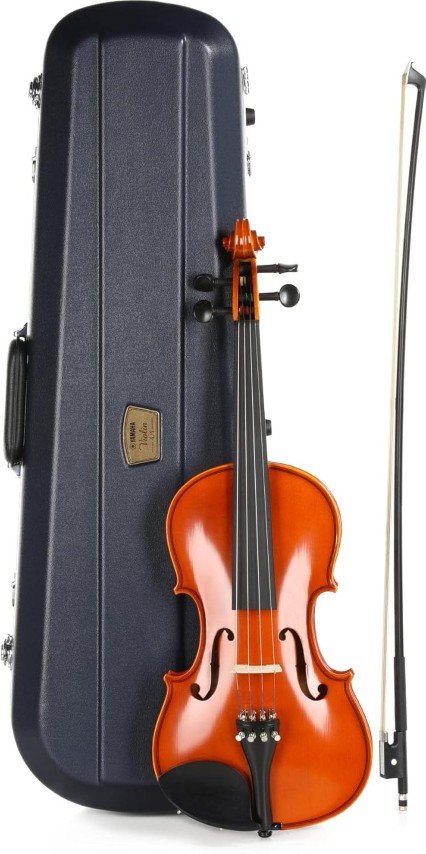
| Most Reliable | 4.7 / 5 | Great quality control and Wittner tuners. | Price |
| Cecilio CVN-300 |
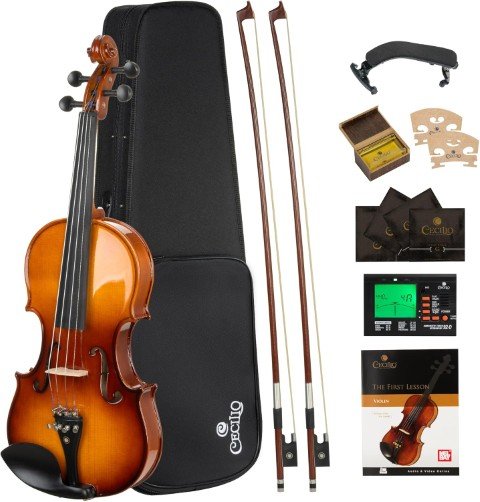
| Best All-in-One Kit | 3.8 / 5 | Includes two bows, tuner, and shoulder rest. | Price |
| Mendini MV400 |

| Ultra-Budget | 2.5 / 5 | The cheapest way to get started. | Price |
In-Depth Violin Brand Reviews
Here is a closer look at the top violin brands for beginners. We will cover the pros and cons of each one.
1. Stentor Student II (Model 1500)
Overview
The Stentor Student II is our top pick for a simple reason: most teachers recommend it. Stentor is a brand from the UK that focuses on making quality student instruments. This violin is not a toy. It is a real instrument built to be easy to play and to last.
Key Features
- Solid Woods: The top is solid spruce, and the back and sides are solid maple. These tonewoods are just like the ones in professional violins.
- Ebony Fittings: The fingerboard, tuning pegs, and chin rest are made of solid ebony. Ebony is a very hard wood that lasts a long time. Cheaper violins use soft wood painted black, which wears away.
- Good Bow: The outfit includes a good student bow made of quality wood with real horsehair.
Our Take
The Stentor Student II is known for its reliable setup. This means the bridge (the part that holds the strings up) is at the right height. The tuning pegs work smoothly and hold the violin in tune.
It has a warm, pleasant tone that makes practice enjoyable. While the included strings are okay, this violin sounds even better if you add a set of D’Addario Prelude strings. It comes in a lightweight case with a pocket for music. For a beginner violin brand comparison, Stentor hits the perfect spot between price and quality.
Pros
- Highly recommended by violin teachers.
- Made from solid spruce and maple.
- Genuine ebony fittings for long life.
Cons
- Included strings are basic.
- The rosin in the case is not very good.
Best for: Any new student who wants a reliable, teacher approved violin.
2. Cremona SV-175 Premier Student Violin
Overview
The Cremona SV-175 is another top choice for students. It is a bestseller because it offers amazing value. This violin is made to meet the standards of school music programs. It focuses on playability and good sound from the start.
Key Features
- Upgraded Strings: It comes with D’Addario Prelude strings already on the violin. This is a huge bonus. Most student violins come with cheap, metal sounding strings.
- Select Woods: Like the Stentor, it uses a solid spruce top and solid maple back. The wood is hand carved to make the sound better.
- Good Outfit: The outfit includes a nice oblong case, which has more room than a shaped case. It also has a built-in hygrometer to measure humidity. The bow is a quality Brazilwood bow.
Our Take
Cremona is one of the best student violin brands because they care about the little details. The SV-175 is set up well in the workshop. This means the string height is low, so it is easy for a new player to press them down.
The tone is clear and bright, thanks to the Prelude strings. We also like the J. LaSalle Brazilwood bow that is included. It is well balanced and helps students learn good bowing habits. The oblong case is a professional touch and keeps the instrument safe. This is a great student violin buying guide option.
Pros
- Comes with D’Addario Prelude strings.
- High quality, lightweight oblong case.
- Hand-carved solid woods.
Cons
- Slightly more expensive than a Stentor.
- The finish can sometimes be thick.
Best for: Students who want a great sounding violin right out of the box.
3. Eastman VL100 Student Violin
Overview
Eastman is a brand that is famous for “punching above its weight.” Many musicians feel an Eastman violin sounds like a much more expensive instrument. The VL100 is their entry level student model, but it is built by hand with great care.
Key Features
- Hand-Carved: The VL100 is fully hand carved from aged spruce and maple. This old-school method gives it a rich, complex sound.
- Inlaid Purfling: Purfling is the little black line around the edge of the violin. On cheap violins, this line is just painted on. On the Eastman, it is a real strip of wood set into the violin. This protects the violin from cracks and looks beautiful.
- Durable Varnish: The finish is an oil-based varnish. It is thin so the wood can vibrate, but it is also tough enough to handle student use.
Our Take
This is the violin for the serious student. In any violin brand review, sound is key. The VL100 has a warm, full, and clear tone that makes you want to play.
It does not always come as a full “outfit.” You may need to buy a case and bow separately. But this lets you pick your own. A luthier (a violin repair person) will tell you that Eastman violins are made correctly. This makes them easy to play and gives them good intonation (playing in tune).
Pros
- Best in class sound quality for the price.
- Handmade with high-quality materials.
- Beautiful finish and real inlaid purfling.
Cons
- Higher price point.
- Often sold as “instrument only” (no case or bow).
Best for: The serious beginner or student ready for their first “step up” violin.
4. Yamaha AV5 Student Violin Outfit
Overview
The Yamaha AV5 is all about quality and consistency. You know a Yamaha violin will be well-made and ready to play.
Key Features
- Great Quality Control: Every Yamaha violin is made to the same high standard. You do not have to worry about getting a “bad one.”
- Wittner “Ultra” Tailpiece: The tailpiece (which holds the strings) has four built-in fine tuners. These make tuning much, much easier for a beginner.
- Complete Outfit: The AV5 comes as a full kit with a durable shaped case, a good wood bow, and high-quality Pirastro brand rosin.
Our Take
Yamaha is perfect for violin brands for new players. The sound is clear and bright. The setup is always good. The neck is shaped to be comfortable for small hands.
The best part is the set of fine tuners. On most violins, you tune with the big wooden pegs at the top, which is hard. The fine tuners let you make tiny, easy changes. This helps students learn to tune their own instrument and builds confidence.
Pros
- Trusted brand with amazing consistency.
- Four built-in fine tuners make tuning easy.
- Comes with a good case, bow, and rosin.
Cons
- The sound is very good but can be a little “bright.”
- Costs more than Stentor or Cremona.
Best for: Parents who want a no-risk, reliable brand from a name they trust.
5. Cecilio CVN-300 Violin Outfit
Overview
Cecilio is one of the most popular affordable student violins online. Its main selling point is value. The Cecilio CVN-300 outfit gives you everything you need to start playing, and we mean everything.
Key Features
- The Ultimate Kit: It comes with a hard case, two bows, a shoulder rest, a clip-on tuner, a lesson book, and extra rosin.
- Solid Woods: Even at this low price, it has a solid spruce top and maple back.
- Ebony Fittings: The fingerboard, pegs, and chin rest are all ebony, which is a big plus for durability.
Our Take
This violin is a great deal. For under $200, you get a full-size violin and all the gear. This is perfect for someone who just wants to try the violin without spending a lot of money.
However, there is a catch. The setup on these violins can be inconsistent. The bridge might be too high, or the pegs might slip. The two bows are very basic. You will get a much better experience if you take it to a music shop for a $50 setup. Even with that extra cost, it is still a good value.
Pros
- Amazing value, includes all needed accessories.
- Solid wood (not laminate).
- Comes with two bows.
Cons
- The setup out of the box is often poor.
- The included bows and strings are very low quality.
Best for: The absolute beginner on a tight budget who is willing to get a setup done.
6. Mendini MV400 Violin Outfit
Overview
Mendini is Cecilio’s other brand, and it is aimed at the ultra-budget market. These are some of the cheapest violin outfits you can buy. They are very popular because of their bright, fun colors and low price.
Key Features
- Lowest Price: This is the cheapest way to get a violin-shaped object and a case.
- Full Kit: Like the Cecilio, it comes with a case, bow, rosin, and shoulder rest.
- Solid Woods: The company says it uses a solid spruce top and maple back.
Our Take
We must be very honest in this violin brand review. You are taking a big risk with a Mendini. Many of these violins are not set up at all. The bridge may be lying flat in the case. The strings may be so high off the fingerboard that they are impossible to press.
A teacher will almost always tell a student not to buy this. It can be so hard to play that it makes the student quit. If you must buy this, you must take it to a luthier for a full setup. This setup could cost more than the violin itself.
Pros
- The cheapest option available.
- Comes with all the basic accessories.
Cons
- Very poor quality control.
- Almost always needs an expensive setup to be playable.
Best for: A wall decoration, a costume prop, or a project for someone who knows how to set up violins.
What to Consider When Choosing: A Student Violin Buying Guide
This part of our student violin brands comparison will help you shop like a pro.
1. Solid Wood vs. Laminated
This is the most important thing.
- Solid Wood: A violin top should be solid spruce. The back and sides should be solid maple. This lets the violin vibrate and make a good sound. All the brands on our “Top Picks” list use solid wood.
- Laminated: This is cheap plywood pressed into a violin shape. It is heavy and does not vibrate. The sound is thin and “boxy.” Avoid these.
2. The Setup is Everything
A “setup” is the work a luthier does to make a violin playable. This includes:
- The Bridge: Cutting the feet of the bridge to fit the violin’s top.
- String Height: Making sure the strings are not too high (hard to play) or too low (buzzing).
- The Nut: Filing the grooves at the end of the fingerboard so strings are spaced right.
- The Soundpost: Placing the small wooden stick inside the violin. The soundpost is the “soul” of the violin. If it is in the wrong place, the violin will sound terrible.
The problem with many online violins (like Mendini) is that they have no setup.
3. Ebony Fittings
Look for the word “ebony.”
- Ebony: A very hard, black wood. It is used for the fingerboard, tuning pegs, and chin rest. It does not bend, warp, or wear out.
- “Ebonized” or “Hardwood”: This means a cheap, soft wood that is painted black. The paint wears off, the pegs will slip, and the fingerboard can get grooves in it.
4. The Outfit (Case, Bow, Rosin)
For a beginner, buying a full “outfit” is the best deal.
- Case: A shaped case is light. An oblong case has more room for a shoulder rest and music.
- Bow: Most outfits come with a fiberglass or cheap Brazilwood bow. This is fine to start. You can always upgrade the bow later.
- Rosin: You need rosin to make the bow hair “sticky” so it can grab the strings. The rosin that comes in cheap kits is often bad. Plan to buy a $5 cake of good rosin.
5. Violin Sizing
Violins come in sizes. A full-size violin is a 4/4 (four-four). Children use smaller sizes like 3/4, 1/2, 1/4, or even smaller.
How to check the size: Have the student hold the violin under their chin. They should be able to comfortably curve their left hand around the scroll (the curly end). If their arm is bent at a sharp angle, the violin is too small. If they have to stretch to reach it, it is too big.
6. A Good Lesson Book
While some kits include a basic pamphlet, we highly recommend getting a dedicated guide to start your journey. A book like “HOW TO PLAY THE VIOLIN FOR BEGINNERS“ is a great resource to learn proper form and basic music reading alongside your teacher’s lessons.
Our Final Recommendation
Choosing a first violin is a big step. After this student violin brands comparison, our top recommendation is clear.
For the best balance of quality, price, and playability, we recommend the Stentor Student II (1500). It is the brand most teachers trust. It is made correctly from solid woods and ebony fittings, so it will not hold a student back. It gives a new player the best possible chance to fall in love with music.
If you have a slightly larger budget, the Eastman VL100 offers the best sound. If you are on the tightest budget, the Cecilio CVN-300 is a good value if you get it set up by a professional.
FAQ: Best Student Violin Brands Comparison
1. What is the best violin brand for a beginner student?
Many teachers agree that Stentor is one of the best student violin brands. The Stentor Student II model is highly recommended. Other great choices for new players include Cremona, Eastman, and Yamaha. These brands are known for making violins that are easy to play and sound nice.
2. How much should I spend on a good student violin?
A good beginner violin outfit (which includes the violin, case, and bow) usually costs between $150 and $400. Be careful with violins under $100. They are often very hard to play and tune, which can make a new student want to quit.
3. What size violin does a beginner need?
Adults and children over 12 usually use a full-size violin, which is called a 4/4 size. Younger children need smaller sizes, like 3/4, 1/2, or 1/4. The best way to find the right size is to have a teacher or a person at a music shop measure the student’s arm.
4. Is Cecilio a good violin brand?
Cecilio is a very popular brand for those on a tight budget. It is one of the most affordable student violins and comes with many accessories. However, the quality can be a hit-or-miss. It is a good idea to have a music shop “set up” the violin to make sure it is easy to play.
5. Is it better to rent or buy a violin for a beginner?
Renting is a great choice if you are not sure the student will stick with it. You can rent a high-quality instrument for a low monthly fee. Buying is a good idea if you know the student is excited to learn. Owning an instrument, like a Stentor or Cremona, is often cheaper in the long run.