How Hard Is It to Learn Piccolo? Explained Simply

If you are wondering how hard is it to learn piccolo, the short answer is this: it is harder than it looks.
At first glance, the piccolo looks harmless. Tiny. Light. Almost toy-like. Then you play it.
And it pushes back.
Most beginners don’t expect that level of resistance. The instrument asks for more control than many other wind instruments, and it tends to surprise even experienced flute players. The small body is not forgiving. In fact, it does the opposite, it exposes every slip, every uneven breath, every tiny misalignment. That alone may explain why so many beginners quickly label it “hard.”
Still, difficulty is not random here. Once you see what actually causes the struggle and what doesn’t, the decision becomes clearer. You can judge if now is the right time to take it on.
What Makes Piccolo Difficult To Learn? (The Physical Realities)
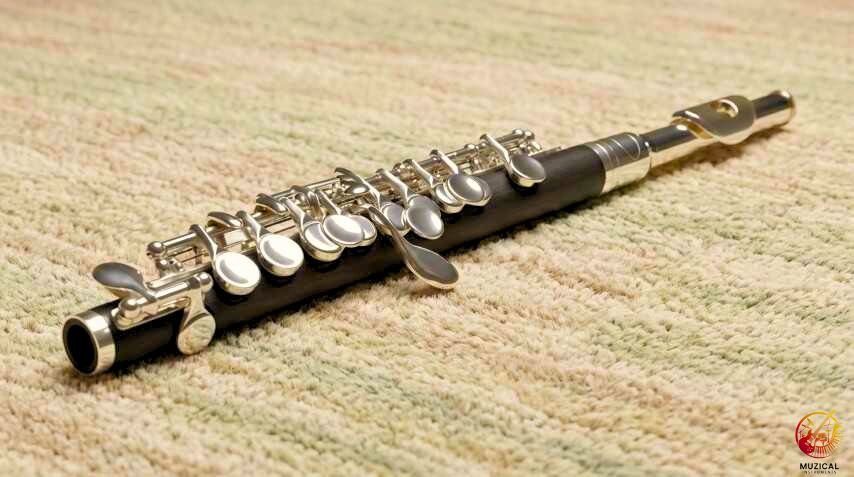
The piccolo is difficult to learn because its microscopic embouchure hole is extremely small. And you have to push fast, focused air through a narrow space while using very little total air. That balance is not intuitive. It has to be trained, slowly.
Then there is the instrument’s size. A short tube reacts quickly, sometimes too quickly. Pitch shifts more than you expect. Small changes in temperature, even from your own breath, seem to matter.
And the sound? It is not just “bright.” It can be loud enough (100+ decibel) to cause real discomfort during practice. Some players underestimate this at first. They usually rethink that after a few sessions.
The “Garden Hose” Air Trap
Most beginners run into this problem almost immediately. They use flute air. That instinct makes sense. But here, it works against you.
- The Flute Reality: A flute needs a lot of air, but the pressure stays fairly low. Imagine water flowing freely from a hose.
- The Piccolo Reality: The piccolo flips that idea. You use much less air, but you push it faster and with more force. Like covering part of the hose opening to create a sharp spray.
- The Trap: Here is where things go wrong. When you send a large volume of flute-style air into the piccolo, the sound breaks. It jumps. It can turn into a sharp, unpleasant shriek almost instantly.
So the adjustment is not small. You learn to compress the air. You engage your core more. The stream becomes narrow, controlled, almost laser-like. That shift alone may take weeks to feel natural.
Intonation (The “Warm-Up” Drift)
On a flute, tuning tends to stay stable once you set it. You make a small adjustment at the start, and you are mostly fine.
The piccolo does not behave that way.
Because it is so small, it heats up fast. Your breath warms the tube within minutes. That heat changes the pitch.
At first, everything sounds fine. Then, without warning, the pitch starts climbing. Fifteen minutes later, you may notice you are consistently sharp.
That drift can feel frustrating, especially early on. You are not doing anything “wrong,” yet the sound no longer fits.
So you compensate. You adjust your embouchure. You roll the instrument slightly inward. Over time, you begin to predict these changes instead of reacting to them. But early on, it can feel like chasing a moving target.
The Auditory Hazard (The “Tired Ear” Myth)
Some guides soften this issue. They say your ears might feel “tired.” That description misses the point.
The piccolo can be very loud in close spaces. In a small room, especially with hard surfaces, the sound level can exceed 100 decibels (equivalent to a jackhammer or a motorcycle) over long sessions.
That is not just a minor inconvenience. Prolonged exposure at that level may lead to ringing in the ears. For some players, that ringing does not go away quickly.
The solution is simple, though often ignored: use proper ear protection. High-fidelity musician earplugs (such as Etymotic or Earasers) help reduce volume without distorting the sound too much. Many players focus on protecting the right ear, since it sits closest to the instrument.
It may feel unnecessary at first. Later, most players see it differently.
The Piccolo Learning Curve (A 6-Month Timeline)
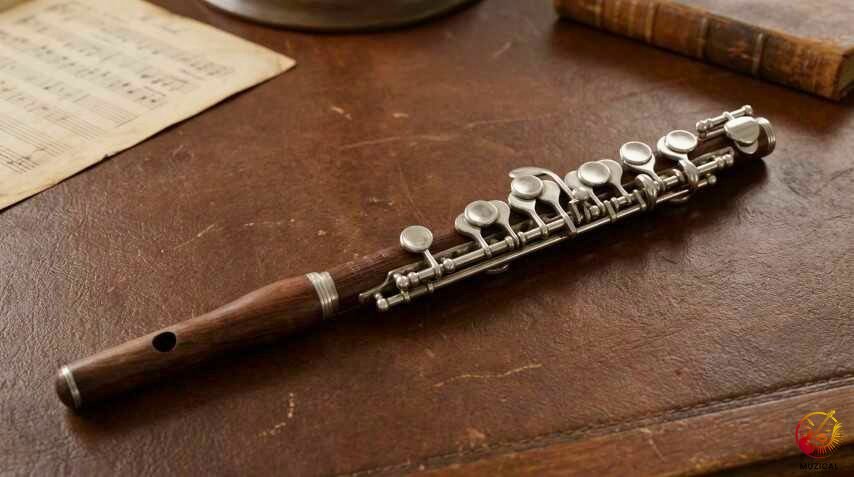
If you already play the flute, the fingerings will not slow you down. You can pick them up in a few days.
The real challenge lies in control, in tone, in pitch. Those take time.
For most players, noticeable progress happens over three to six months of steady practice. Not casual practice. Focused, daily work.
The shift from “flute player” to “piccolo player” happens in three distinct phases. Do not expect to sound like a professional in phase one.
Phase 1: The “Squeak and Fatigue” Stage (Months 1–2)
This stage feels physical more than musical.
Your lips are not used to the tension. Holding such a small opening demands precision, and after 15 minutes of playing, the corners of your mouth will shake and fail.
The sound reflects that struggle. Notes crack. Air escapes unevenly. You may feel like you are fighting the instrument rather than playing it.
That is normal.
At this point, speed does not matter. Range does not matter much either. The real goal is stability. Can you hold a single note steady for a few seconds? If yes, that is progress.
Phase 2: The “Pitch Chasing” Stage (Months 3–4)
Something improves here. Your tone becomes clearer. The squeaks reduce.
Then a new issue appears, intonation.
In this stage you will realize that the piccolo is a wildly out-of-tune instrument by nature.
You may sound fine alone. In fact, you might feel confident. But when you play with others, the differences show up quickly. High notes, especially, can clash.
This stage teaches you to listen more carefully. You start using a tuner regularly. You adjust constantly, rolling in for sharp notes, easing out for flat ones.
It can feel tedious. Yet this is where control begins to form.
Phase 3: The “Taming the Beast” Stage (Months 5–6+)
Things begin to settle.
Breath support improves. High notes no longer feel as unstable. You can play longer without fatigue or dizziness.
The sound changes too. It loses some of that harsh edge and becomes more focused, more musical. Not soft but more refined.
At this point, you may explore alternate fingerings, especially for very high notes. These small adjustments help keep pitch steady in situations where standard fingerings fall short.
You are no longer just getting through notes. You are shaping them.
The Practice Room Survival Guide (How to Learn Faster)
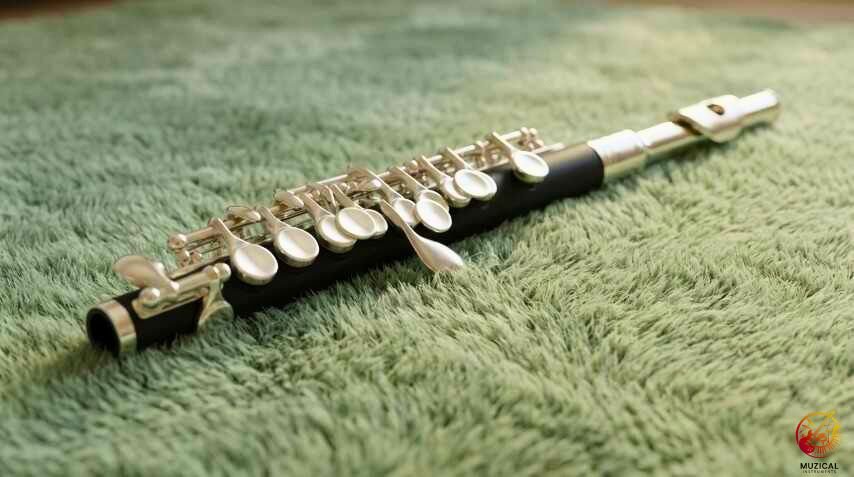
Old habits from flute practice do not always carry over well. Implement these three absolute rules:
The 20-Minute Limit: Long sessions can do more harm than good. The embouchure tires quickly, and overworking it may slow progress. Short, focused practice around 20 minutes often works better.
Mandatory Earplugs: Wear a high-fidelity musician’s earplug in your right ear. If your ears start ringing, your body reacts. You may pull back, tense up, or lose control of your air. That can build bad habits over time.
Mirror Work: Keep a mirror on your music stand. If your sound suddenly vanishes, look at the mirror. Your embouchure hole has likely slid a millimeter to the left or right off the center of your lips.
The Final Verdict: Is Piccolo Worth the Frustration?
If you expect an easy transition from flute, the experience may disappoint you. The piccolo is demanding. It highlights mistakes instead of hiding them. It can feel physically tiring, especially early on.
Yet there is another side to it.
With steady effort, particularly through those first few months, you start to notice a shift. You are no longer blending quietly in the background. Your sound carries. It cuts through a full ensemble. In loud, climactic moments, the piccolo often sits right at the top, clear and unmistakable.
So the choice depends on timing.
It may suit you now if: you already have solid flute basics, you can stay patient while working on pitch, and you are drawn to those bright, leading lines in band music.
It might be better to wait if: you are just starting out, you find squeaks discouraging, or your practice space is not ideal for a very loud instrument.
Piccolo is not easy. That much seems clear. But for some players, the challenge itself becomes part of the appeal.
FAQ: How Hard Is It to Learn Piccolo?
1. Do I need to learn the flute before playing the piccolo?
Yes. Band directors strongly recommend at least two years of flute experience first. The piccolo requires advanced embouchure control and intense breath support that is nearly impossible for an absolute beginner to develop without a flute foundation.
2. Why do my notes squeak when I switch from flute to piccolo?
Squeaking happens when you use too much “flute air.” The flute requires a high volume of air, but the piccolo requires a tiny volume of air pushed at a much higher speed and pressure. Overblowing instantly causes the piccolo to crack.
3. Why does my piccolo always sound out of tune?
Piccolos are highly sensitive to temperature. As the heat from your breath warms the tiny acoustic tube during your first 10 to 15 minutes of practice, the pitch naturally rises. You must constantly adjust your embouchure to stay in tune.
4. Will practicing the piccolo hurt my ears?
It can if you are not careful. A piccolo in its highest register can produce over 100 decibels of sound. You must wear high-fidelity musician earplugs (especially in your right ear) during solo practice in small rooms to prevent permanent hearing damage.
5. How long should a beginner practice the piccolo every day?
Limit your practice to 20-minute sessions. The microscopic embouchure hole requires extreme tension in your facial muscles. Playing longer than 20 minutes will exhaust your lips, leading to a shaky tone and bad habits.