Top Piano Tuning Kits for Beginners: Easy Tools for First-Time Tuners

Affiliate Disclosure
This post may contain affiliate links. If you buy through them, I may earn a small commission at no extra cost to you. This helps support the site and keeps our content free for you.
If you prefer not to use affiliate links, you can search products directly on the maker’s site.
Professional piano tuning can cost between $65 and $225 per session, and most pianos need tuning twice a year. That’s up to $450 annually just to keep your instrument sounding right. A good piano tuning kit helps you save money and gives you control over your piano’s sound quality.
In this article, we review the best piano tuning kit options for beginners. We will look at top sellers like Howard, Generic kits, CONCHACIELO, XUYUYUE, and MELHA. By the end, you will know which tools are safe to use and which ones help you tune upright piano yourself.
A Quick Look: Our Top Picks
| Product Name | Image | Best For | Stability Rating | Key Feature | Check Price |
|---|---|---|---|---|---|
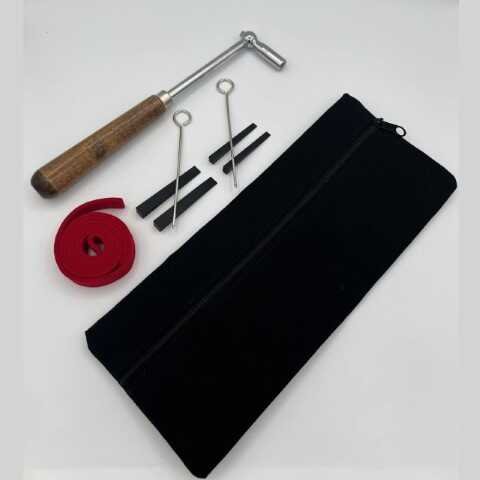
| Howard Piano Industries Student Kit |
| Best Quality | 5/5 | Strong USA-made hammer | Price |
| Generic 16-Piece Professional Kit |
| Most Popular | 3/5 | The classic starter set | Price |
| CONCHACIELO Piano Tuning Kit |
| Most Complete | 4/5 | Great organizing bag | Price |
| XUYUYUE Professional Tools |
| Budget Wood | 3/5 | Simple wooden handle | Price |
| MELHA Piano Tuning Kit |
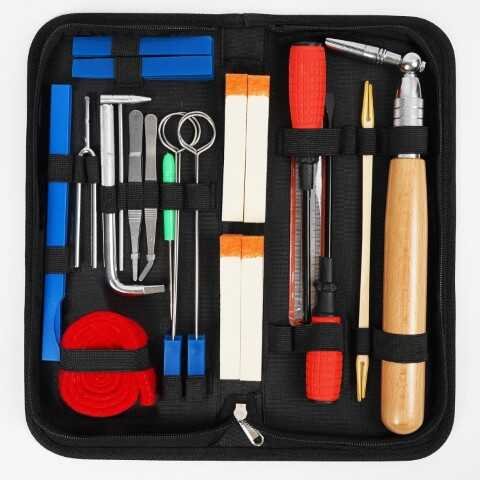
| Beginner Value | 3.5/5 | Includes tuning fork | Price |
In-Depth Reviews
1. Howard Piano Industries Student Kit
Overview
If you want to treat your piano with the utmost care, the Howard Piano Industries Student Kit is the smartest choice. Howard is a trusted name in the industry. Unlike random brands, they specialize specifically in pianos. This kit is designed for students who want to learn the trade correctly. It focuses on high-quality materials rather than giving you a bag full of unnecessary plastic toys.
Key Features
- Rigid Tuning Hammer: The metal shaft is very stiff and does not bend under pressure.
- Standard Tip: This tip fits 99% of pianos found in homes and schools.
- Professional Mutes: The rubber wedges are made of durable material that grips the strings tight.
Our Take
We love this kit because of the piano tuning lever. When you tune a piano, you are moving a metal pin that is held very tightly in a wood block. If your tool is flexible or weak, it bends like a fishing rod. This makes it impossible to make tiny adjustments. The Howard lever is solid. It gives you direct control over the tuning pins.
Pros
- The nylon handle is virtually unbreakable.
- The star tip allows you to position the tool at 8 different angles.
- Comes with access to real support and instructions.
Cons
- It is more expensive than the imported “bulk” kits.
- Does not include a temperament strip (you have to buy it separately).
Best For: Serious beginners who want to learn how to tune a piano at home without risking damage to the instrument.
2. Generic 16-Piece Professional Kit
Overview
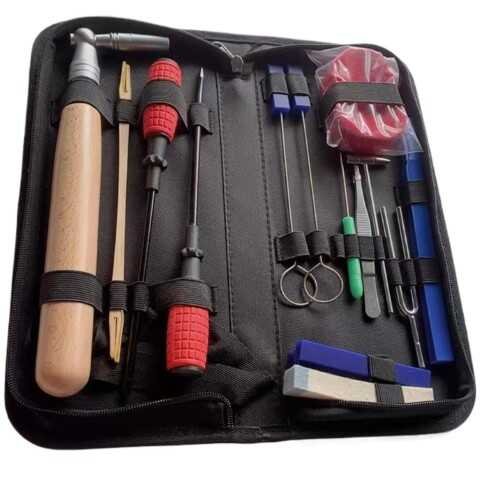
Generic 16-Piece Professional Kit has the most tools, and it is made for people who want to dive deep into the craft. You get every mute type, several piano tuning levers, screwdrivers, a temperament strip, and other small tools used for fine repair. Even if you start as a beginner, this kit gives you room to grow.
Key Features
- Massive Variety: Includes pliers, screwdrivers, tweezers, and a hammer.
- L-Shape Hammer: Comes with a standard metal tuning wrench.
- Full Mute Set: You get multiple rubber wedges and a felt strip.
Our Take
This is the classic beginner piano tuning kit. If you want to tune your upright piano yourself with more freedom, this is the largest and most complete kit. It covers simple tuning and also lets you explore small repair skills. The variety helps you learn which tools you like best.
Pros
- Feels stable on most tuning pins.
- Great for emergency repairs or just exploring.
- Includes tools for other repairs, not just tuning.
Cons
- The tuning hammer can be a little flexible (bendy).
- The metal tip is sometimes softer than expensive brands.
Best For: New learners who want to grow into advanced skills without buying new tools later.
3. CONCHACIELO Piano Tuning Kit
Overview
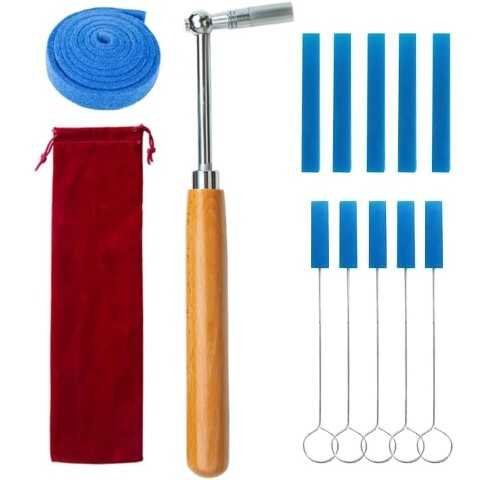
The CONCHACIELO Piano Tuning Kit takes the “all-in-one” concept and polishes it. It comes with better packaging and quality control. It is designed to be a complete portable workshop for a beginner tuner.
Key Features
- Zippered Carrying Case: Keeps all your small tools from getting lost.
- Comfortable Handle: The tuning lever is designed to fit well in the hand.
- Extended Mutes: Includes mutes with wire handles for hard-to-reach spots.
Our Take
We like the CONCHACIELO kit because it is organized. Tuning involves a lot of small parts, like rubber wedges and felt blocks. Having a dedicated bag makes a big difference. The tools are decent quality for the price. The piano tuning wedges included are versatile, allowing you to mute strings in both the treble (high notes) and bass (low notes).
Pros
- Excellent value for the money.
- The bag is durable and handy.
- Shipping and packaging are usually reliable.
Cons
- The tip of the hammer is not removable (fixed head).
- Some of the small screwdrivers are not very strong.
Best For: Beginners who want a tidy, complete set of piano maintenance tools.
4. XUYUYUE Professional Piano Tuning Tools
Overview
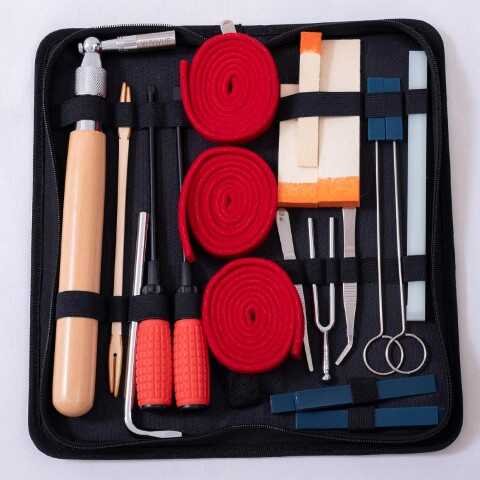
The XUYUYUE Professional Piano Tuning Tools set stands out because of its handle. While many cheap kits use plastic or metal handles, this one often features a wooden handle. This gives it a classic look and a different feel when you hold it.
Key Features
- Wooden Handle Lever: Feels warm and natural to grip.
- Basic Essentials: Focuses on the hammer and the mutes.
- Lightweight: Easy to carry around in a gig bag.
Our Take
The wood handle isn’t just for looks; it can be more comfortable if your hands get sweaty while working. This kit is simple. It doesn’t overload you with junk you won’t use. It provides the core piano tuning equipment needed to pull a string up to pitch. It is a good backup kit to keep in your piano bench.
Pros
- Very low cost.
- Simple design is less intimidating for new users.
- Wood handle looks nice.
Cons
- The fit on the tuning pins can sometimes be a bit loose.
- The wood finish varies in quality.
Best For: Piano owners who prefer the feel of wood and need a low-cost solution for DIY piano tuning.
5. MELHA Piano Tuning Kit
Overview
The MELHA Piano Tuning Kit is a solid contender in the starter market. It is often praised for including a tuning fork. Before electronic apps existed, tuners used forks to find the perfect pitch. This kit nods to that tradition while providing modern tools.
Key Features
- Tuning Fork (A440): A metal tool that rings at a perfect “A” note.
- Red Temperament Strip: Essential for setting the “temperament” octave.
- Damping Rods: Additional muting tools for different sections of the piano.
Our Take
The MELHA kit is great for students learning music theory. Using the tuning fork helps train your ear, which is a vital skill. The piano tuner kit itself is sturdy. The rubber mutes are the correct density, not too soft, not too hard. It strikes a good balance between the very cheap kits and the professional ones.
Pros
- Great for ear training practice.
- Includes a good variety of mutes.
- Reliable construction.
Cons
- The tuning lever is shorter than professional ones (less leverage).
- Often lacks detailed instructions.
Best For: Music students who want to learn to tune upright piano yourself using both ears and apps.
What are the Essential Accessories to Include?
When you look at these kits, you might get confused by all the parts. Here is a breakdown of what you actually need in your piano tuning kit:
Tuning Hammer (Tuning Lever)
This is your primary tool. The hammer attaches to tuning pins and adjusts string tension. Look for:
- Wooden or padded handle for comfortable grip
- Universal tip size that fits most pianos
- Rigid construction that transfers force smoothly
Rubber Wedge Mutes
These silence individual strings while you tune others. Most pianos have 2-3 strings per note in the middle and upper registers. You need at least 2-3 rubber wedge mutes to work efficiently.
Temperament Strip (Felt Strip)
This long felt strip mutes entire sections at once. It saves significant time when setting the temperament octave. The strip slides between strings and stays in place without constant adjustment.
Felt Mute
A separate felt mute helps with the bass section where strings are thicker and require different muting techniques.
Mute Clamp or Handle Mute
The treble section benefits from a mute with a handle. It’s easier to position and retrieve when working with shorter, harder-to-reach strings.
Tuning Fork or Electronic Tuner
You need a pitch reference. A tuning fork (usually A-440) provides a physical standard. Many beginners prefer electronic tuning apps that detect pitch and show whether you’re sharp or flat.
Protective Case
A good case keeps tools organized and protected. Piano tuning tools can damage each other if they rattle around loose in a bag.
Optional but Helpful:
- Screwdrivers for removing piano parts
- Tweezers for handling small components
- Extra rubber mutes as backups
- Tuning software for more precise work
What to Consider When Choosing
When picking your piano tuning kit, focus on these points to get tools you can trust.
Hammer Fit and Build
- Snug Grip: The tip must fit the tuning pin perfectly tight.
- Standard Size: Look for a “#2 Star Tip” to ensure it fits almost all modern pianos without slipping.
Handle Comfort
- Ergonomic Design: Tuning takes time, so a comfortable handle is a must.
- Reduce Strain: A thicker wood or rubber grip helps prevent your hand and wrist from cramping.
Mute Quality
- Firm Rubber: Wedges should be stiff enough to stay between the strings without popping out.
- Clean Felt: Piano mutes made of felt should not shed or leave fuzz inside your instrument.
Number of Tools
- Quality First: Don’t be fooled by kits with 50 cheap parts.
- Essentials Only: It is better to have a few reliable tools than a bag full of plastic junk you won’t use.
Tool Stability
- No Flex: A stiff tool is key for piano tuning for beginners.
- Control: A rigid shaft lets you make tiny, slow movements to get the pitch exactly right.
Piano Type
- Space Check: Upright pianos can be tight, so ensure the head angle works for your case.
- Leverage: Grand pianos often benefit from a longer handle for extra power.
Purpose
- Quick Fix: A budget kit is fine for fixing one sour note.
- Deep Learning: If you want to master DIY piano tuning, invest in a professional-grade lever.
Our Final Recommendation
Learning to care for your instrument is a journey. It requires patience, a good ear, and the right piano tuning equipment.
- For the Serious Beginner: If you want to do a professional-level job and keep your piano safe, buy the Howard Piano Industries Student Kit. It is a tool you buy once and keep for a lifetime. It is worth the extra money for the stiffness alone.
- For the “All-in-One” Lover: The CONCHACIELO Piano Tuning Kit or the Generic 16-Piece Kit are excellent values. They give you every accessory you need in one bag.
- For the Budget Conscious: The XUYUYUE and MELHA kits are perfect for keeping in the bench for quick touch-ups.
Choose the kit that fits your budget. Then, download a dedicated piano tuning app (not a guitar tuner!). With the right piano tuning kit in hand, you can bring the beautiful sound back to your home today.
FAQ: Top Piano Tuning Kits for Beginners
1. Can I really tune my own piano?
Yes! Many people learn DIY piano tuning to save money. You just need patience and steady hands. It is important to buy a good piano tuning kit so you do not damage the pins. We suggest starting with just a few notes in the middle to practice before doing the whole instrument.
2. Can I use a regular guitar tuner?
No, please don’t! Pianos are different from guitars. The high notes need to be tuned slightly sharp, and the low notes slightly flat. This is called “stretch.” A simple guitar tuner cannot understand this. You need to download a specific app made for pianos to get the sound right.
3. Is it hard for a beginner to tune a piano?
It can be tricky at first. The hardest part is learning to move the tuning hammer just a tiny bit. If you turn it too fast, the pitch jumps too far. However, with the right piano tuning tools and some practice, anyone can learn to tune an upright piano yourself.
4. What tools are absolutely necessary?
You only need three main things to start. First, a tuning lever (wrench) to turn the pins. Second, rubber piano mutes to silence the strings you aren’t tuning. Third, a good app to help your ears. You do not need big, expensive machines.
5. How long does it take to tune a piano?
For a beginner, it might take 2 or 3 hours to finish the whole piano. Professionals can do it in about an hour. Don’t rush! It is better to tune just one small section a day so your ears and arms don’t get too tired.