Essential Parts of a Piano Every Beginner Should Know

A piano makes sound with four main parts. First is the keyboard, where you press the keys. Next is the action. The action is the set of small parts that move when you press a key. The third parts are the strings inside the piano. They vibrate to make sound. The fourth part is the soundboard. It makes the sound louder and fuller.
Even though these parts seem simple, a piano has over 10,000 small moving parts working together.
Learning the essential parts of a piano helps you play with more care. It also helps you keep your instrument in good shape.
This guide explains the essential parts of a piano in small, easy sections. Each part is simple to understand, even if you are just starting out.
Quick Reference: Essential Parts of a Piano
| Part | Location | Function |
|---|---|---|
| Keys | Front, where you play | Levers that trigger the action |
| Action | Behind/under keys | Mechanical system that throws hammers |
| Hammers | Inside, near strings | Felt-covered pieces that strike strings |
| Dampers | Resting on strings | Stop strings from vibrating |
| Strings | Inside, horizontal or vertical | Vibrate to create pitch |
| Cast iron plate | Inside, holding strings | Withstands string tension |
| Tuning pins | Top of plate | Allow pitch adjustment |
| Soundboard | Under/behind strings | Amplifies string vibrations |
| Bridge | On soundboard | Transfers vibration from strings to soundboard |
| Pedals | Bottom of piano | Modify sound and sustain |
Why Should You Learn The Essential Parts Of A Piano First?
When you sit at a piano, you touch only a small part of it. Most of the work happens inside the piano body.
Knowing the essential parts of a piano helps you in many ways:
- You understand how a piano works
- You avoid bad habits while playing
- You talk clearly with teachers and tuners
- You take better care of your instrument
From years of working with beginners, one thing is clear. Students who know piano structure basics learn faster. They also feel more confident when something feels “off.”
Let’s open the piano step by step.
What Are The Main Piano Parts?
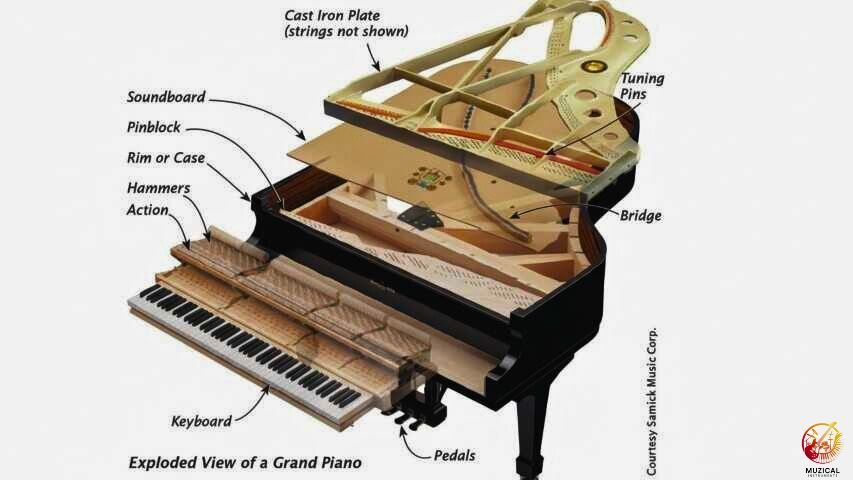
At the highest level, a piano has four main systems:
- Keys you press
- Action that moves
- Strings that vibrate
- Sound parts that make music louder
Together, these form the basic piano parts.
The Four Core Systems At A Glance
| System | What it does | Why it matters to you |
|---|---|---|
| Keyboard | Takes your finger input | Controls pitch |
| Action | Transfers motion | Controls touch and speed |
| Strings | Create vibration | Create sound |
| Soundboard | Amplifies sound | Makes music loud and warm |
Each system has smaller parts inside it. Now let’s slow down and look closely.
What Are The Piano Keys Parts And How Do They Work?
The keyboard is the part everyone recognizes, but there is more to it than meets the eye.
- The Keys: A standard piano has 88 keys, 52 white (naturals) and 36 black (accidentals). They are usually made of wood covered in plastic or resin (older pianos used ivory). When you press a key, it acts like a seesaw. The part you touch goes down, and the hidden back end goes up to trigger the mechanism inside.
- The Keybed: This is the sturdy wooden shelf that supports the entire keyboard. It must be perfectly flat to keep the keys level.
- The Key Slip: This is the thin strip of wood running along the very front of the keys. It protects the front of the keyframe and gives the piano a finished look.
Did you know? The keys are much longer than what you see. Almost two-thirds of the key length is hidden inside the piano cabinet!
What Happens Inside When You Press A Key? (The Action)
The “Action” is the heart of the piano. It is the complex mechanical system that transmits energy from your fingers to the strings.
The Hammers
The hammer is what actually strikes the string to make noise.
- Material: They are made of wood covered in tightly compressed wool felt.
- Function: When you press a key, the hammer swings forward (or upward in a grand) to hit the string. It must bounce back instantly so the string can keep vibrating.
The Dampers
Dampers are the “brakes” of the piano.
- What they do: These are small wooden blocks with soft felt on the bottom. They sit directly on the strings to stop them from vibrating.
- How they work: When you press a key, the damper lifts off that specific string so it can ring. When you let go of the key, the damper falls back onto the string to silence the note.
The Wippen and Jack
These are the small levers between the key and the hammer. They ensure that the hammer strikes the string quickly and then falls back, even if you are still holding the key down. This “escapement” allows the string to vibrate freely.
What Are Piano Strings, Frame, and Pins Made Of?
This section covers the parts that hold the tension and create the raw sound.
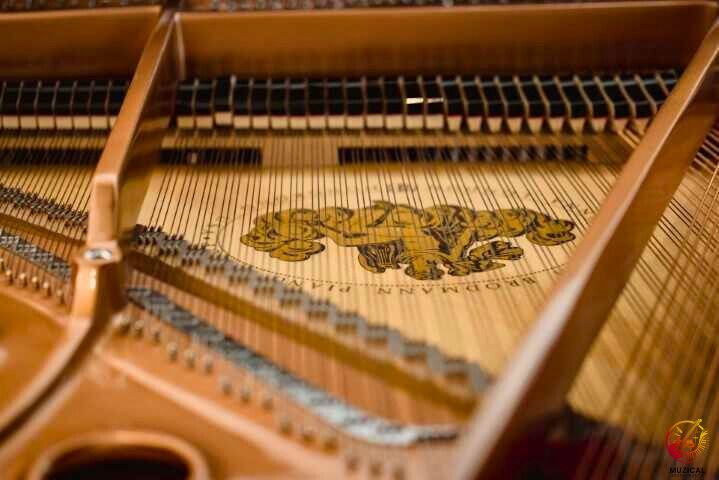
The Strings
Piano strings are made of high-tensile steel wire.
- Treble Strings: The high notes use short, thin, bare steel wires.
- Bass Strings: The low notes use a steel core wrapped in copper wire. This added thickness makes the pitch lower without requiring the string to be 30 feet long!
The Cast Iron Plate (The Harp)
You will see a large, gold-painted metal frame inside the piano. This is the cast iron plate.
- Job: It holds the massive tension of the strings. The combined pull of all 230+ strings can equal 20 tons of pressure. Without this iron plate, the piano would collapse on itself.
The Tuning Pins and Pinblock
- Tuning Pins: These are the metal pegs that hold the ends of the strings. A piano tuner turns these pins to tighten or loosen the strings, changing their pitch.
- Pinblock: This is a thick piece of laminated wood hidden under the metal plate. It grips the tuning pins tightly so the piano stays in tune. If the pinblock wears out, the piano cannot hold a tune.
What Are The Soundboard And Bridges And Why Are They Important?
If you plucked a piano string in the air, it would make a tiny, quiet “ping.” The soundboard turns that “ping” into a loud, rich musical tone.
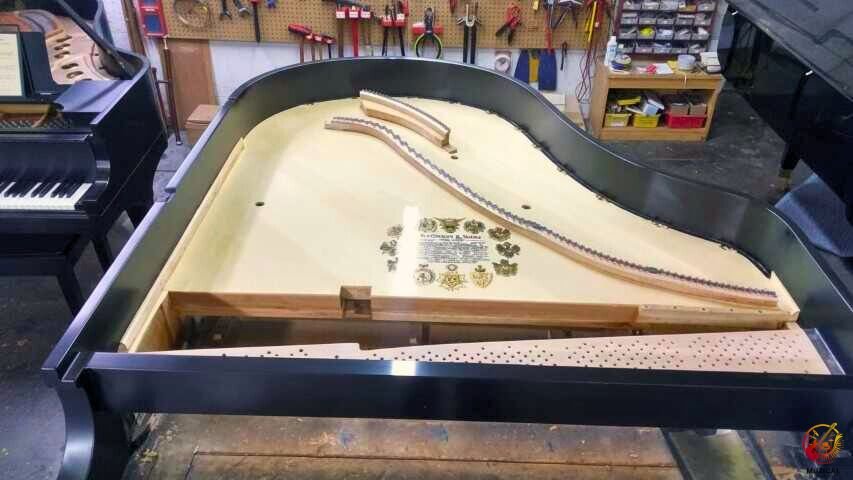
The Soundboard
This is the large, thin sheet of wood (usually Spruce) that sits behind the strings (upright) or underneath them (grand).
- How it works: It acts like the cone of a speaker. When the strings vibrate, the soundboard vibrates with them, amplifying the sound and projecting it into the room.
- Why Spruce? Spruce wood is lightweight but strong, making it perfect for transmitting vibrations.
The Bridges
The bridge is a long, curved strip of hard wood glued directly onto the soundboard.
- Role: The strings stretch tightly across the top of the bridge. The bridge acts as the messenger, it takes the vibration from the string and transfers it down into the soundboard.
Understanding Sound Transmission
| Component | Function | Analogy |
|---|---|---|
| Hammer | Strikes the source | The drumstick |
| String | Creates the vibration | The vocal cords |
| Bridge | Transfers the energy | The wire of a telephone |
| Soundboard | Amplifies the sound | The speaker cone |
What Do the Three Pedals Do?
Most pianos have three pedals (some older ones have two). They change the tone or duration of the sound.
1. The Right Pedal (Sustain/Damper Pedal)
This is the most used pedal. When you press it, all the dampers lift off the strings. This lets the notes ring out even after you lift your fingers from the keys. It creates a lush, blended sound.
2. The Left Pedal (Soft/Una Corda Pedal)
- Grand Pianos: It shifts the entire keyboard slightly to the right so the hammers hit only two strings instead of three. This changes the tone color and volume.
- Upright Pianos: It moves the hammers closer to the strings so they have less distance to swing, making the sound quieter.
3. The Middle Pedal (The Confusing One!)
This pedal does different things depending on the type of piano.
| Feature | Grand Piano (Sostenuto) | Upright Piano (Practice/Mute) |
|---|---|---|
| Function | Sustains only the notes you are holding down when you press the pedal. New notes will not sustain. | Lowers a piece of felt between the hammers and strings. |
| Result | Allows for complex layering of sound (advanced). | Makes the piano very quiet. Great for practicing without disturbing neighbors. |
Upright Vs. Grand Piano: Essential Structural Differences
While they have the same parts, the layout changes how they work.
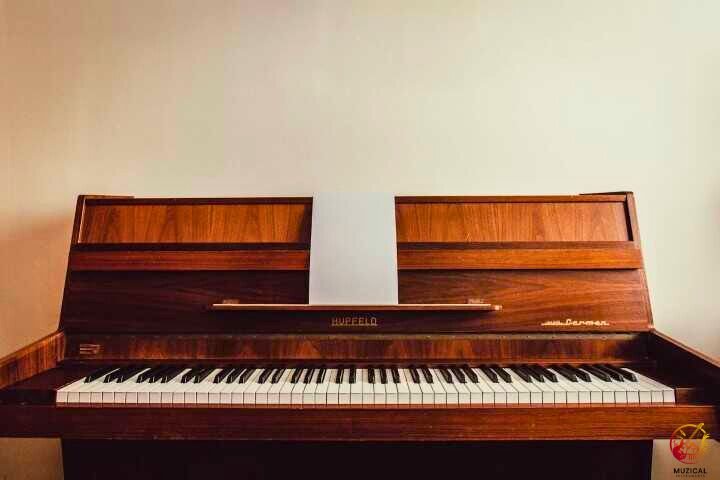
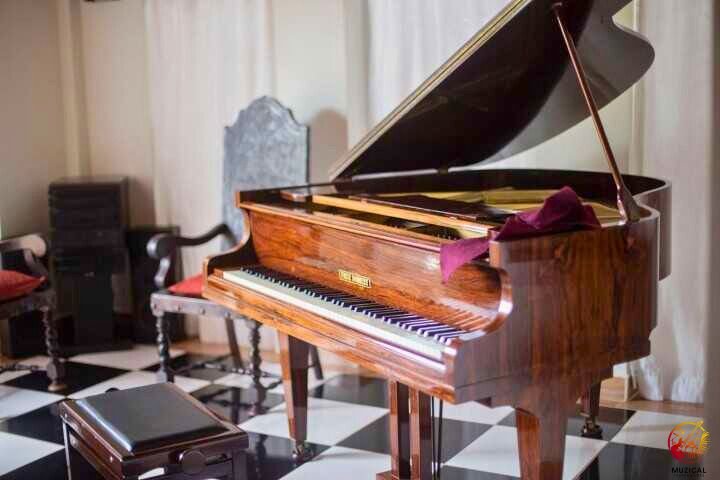
Gravity vs. Springs
- Grand Piano: The strings are horizontal. When you play a key, the hammer hits up and then falls back down due to gravity. This allows for faster repeated notes and better control.
- Upright Piano: The strings are vertical. The hammer strikes forward and relies on springs to pull it back into position. This mechanism is slightly slower than a grand action.
The Case and Lid
- Grand Piano Lid: Opens upward to project sound into the room (usually towards the right).
- Upright Piano Lid: Usually opens at the top, but the sound mostly comes out the back. This is why you should leave a few inches of space between an upright piano and the wall.
Upright Vs Grand Comparison
| Feature | Upright Piano | Grand Piano |
|---|---|---|
| String direction | Vertical | Horizontal |
| Touch control | Good | Excellent |
| Size | Compact | Large |
| Price range | Lower | Higher |
What Parts Do You Need To Maintain?
Pianos require a mix of simple home care and expert attention to stay in top condition.
Parts You Can Care For:
- Keys: Wipe with a soft, slightly damp cloth. Never spray cleaners directly to prevent moisture damage between the keys.
- Pedals: Silence squeaks by applying a tiny amount of lubricant to pivot points, avoiding excess to prevent dust buildup.
- Exterior: Dust the case regularly and keep the lid closed when not playing to protect the interior.
Parts for Professionals:
- The Action: Requires “regulation” every few years to adjust levers and felts, ensuring keys respond evenly.
- Strings: Schedule tuning at least annually, as humidity and temperature fluctuations shift string tension.
- Hammers: Over time, hammers flatten and harden, creating harsh tones. A technician must reshape or replace them.
Common Piano Parts Problems And What They Mean
Sticky Keys
If a key doesn’t come back up, something in the action is catching. This might be:
- Swollen wood from humidity
- A broken spring
- Dirt or debris in the mechanism
Don’t force it. Call a piano technician.
Buzzing Sounds
Buzzing usually means something is loose. Could be a loose screw, a broken string winding, or even something sitting on top of the piano. Check the obvious stuff first (music, books, decorations on top). If the buzz continues, it’s internal.
Dead or Weak Notes
If one note sounds much quieter than others, the hammer might be:
- Worn down and compacted
- Not traveling far enough (action needs regulation)
- Missing entirely (yes, this happens)
Pedals Not Working
If the sustain pedal doesn’t sustain, the connection rod might have come loose. If it sustains too much (notes blur together), the dampers might need adjusting.
Final Thoughts On Essential Parts Of A Piano
Learning the essential parts of a piano changes how you approach the instrument. Instead of just seeing keys, you now see the levers, hammers, and strings that work in harmony to create music.
Whether it is the cast iron plate holding tons of tension or the bridge transferring delicate vibrations, every piece plays a vital role.
FAQ: Essential Parts Of A Piano
1. What are the black keys on a piano called?
Musicians call the black keys “sharps” or “flats.” They sit between the white keys to create half-steps in pitch. While the white keys play natural notes (like A, B, or C), the black keys help you play more complex melodies and different scales.
2. How many strings are inside a piano?
You might guess 88 strings for 88 keys, but a piano actually has about 230 strings! This is because the high notes need three strings each to sound loud enough. Only the deep bass notes use one thick string per key.
3. What does the middle pedal actually do?
This is the most confusing part for many people! On an upright piano (the tall kind found in homes), the middle pedal is usually a “mute” pedal. It lowers a piece of felt inside the piano to make the sound very quiet. On grand pianos, it holds specific notes longer while others stop.
4. What are piano keys made of today?
A long time ago, the white tops were made from elephant ivory. Today, piano makers use wood for the main stick and cover the top with a special smooth plastic. This is stronger, stays white longer, and is safe for animals.
5. What is the “action” in a piano?
Think of the “action” as the engine of the instrument. It is the huge group of thousands of tiny moving parts inside. When you press a key, the action is what triggers the hammer to hit the string and jump back instantly. Without the action, the piano makes no sound.