Does an Upright Piano Cover Muffle the Sound?

Yes, does an upright piano cover muffle the sound? The short answer is absolutely. Putting a cover on your upright piano is like putting a heavy blanket over a speaker. The sound will change, and the volume will go down. But the change depends on the thickness, padding, and how tightly it sits on the cabinet.
In this article, you will learn how much the sound changes and if playing with a cover is a good idea for practice.
How Does A Piano Cover Affect The Sound Quality?
To understand this, you need to know how a piano makes sound. When you press a key, a hammer hits a string. That string vibrates.
But the string alone is too quiet. The vibration travels to a large piece of wood on the back of the piano called the soundboard. The soundboard is the real amplifier. It pushes the air to make big sound waves that your ears hear.
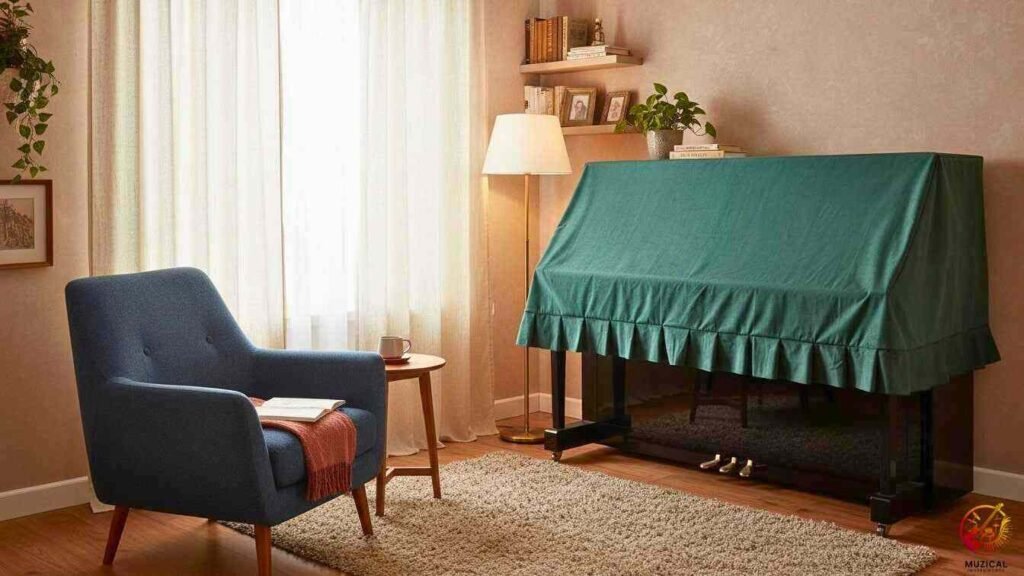
When you put a cover over an upright piano, you are blocking that air movement. The cover traps the sound waves inside.
Here is what happens to the piano cover acoustic effect:
- Volume drops: The overall loudness goes down noticeably.
- Tone gets dull: The bright, sparkly high notes get cut off first. The sound becomes “boxy” or muddy.
- Sustain decreases: The notes might not ring out as long as usual.
Think of it like speaking with your hand over your mouth. People can still hear you, but your voice is muffled and not clear.
Does The Thickness Of The Cover Change The Sound?
Yes, the material of the cover is the biggest factor. Not all covers are equal when it comes to sound. The thick piano cover sound impact is much greater than a thin dust sheet.
A thin, silky cover is mostly for dust protection. It won’t change the sound very much. Sound waves can pass through thin fabric easily.
A thick, padded quilted cover is different. These are designed for physical protection against bumps, but they also act like acoustic panels. The heavy padding absorbs sound energy.
If you are looking for upright piano sound protection to make things quieter, you need density. The heavier the fabric, the more muffled the sound will be.
Here is a quick guide to materials and their effect on sound:
| Cover Material Type | Thickness Level | Sound Muffling Effect |
|---|---|---|
| Silky / Nylon Dust Cover | Very Thin | Very Low (Barely noticeable) |
| Standard Canvas | Medium | Medium (Takes the edge off) |
| Quilted / Padded Mackintosh | Thick and Heavy | High (Significant volume drop) |
Can I Play My Upright Piano With The Cover On?

Yes, you absolutely can. Playing with the cover on won’t hurt the piano’s mechanics at all. The keys, hammers, and strings work exactly the same inside the cabinet.
The only thing changing is how the sound escapes the box.
Many people leave the cover on for daily practice. It is very convenient. You don’t have to fold up a large, heavy piece of fabric every time you want to play for ten minutes.
You just fold back the part covering the keys, put your music up, and play. It is a very practical way to use the instrument in a busy home.
However, you should not do this if you are preparing for a performance. You need to hear the true tone of the piano to practice dynamics (playing loud and soft). The cover hides the piano’s real voice.
Is Muffling The Sound Actually A Good Thing?

Sometimes, muffling the sound is exactly what you need. An upright piano can be very loud. In a small room with hard floors, the sound can be overwhelming and harsh on your ears.
Using a cover for piano sound control at home is a great trick. It acts like a giant mute for the whole instrument.
Here are a few reasons why you might want a muffled sound:
- Apartment Living: If you have neighbors on the other side of the wall, a thick cover helps keep the peace during scale practice.
- Late Night Practice: You want to play at 9 PM without waking up the kids upstairs.
- Bright Rooms: If your room has lots of windows and tile floors, the piano might sound too sharp. A cover softens that harshness.
It turns the piano cover pros and cons into a personal choice based on your living situation.
Pros and Cons of Playing with a Cover On
| Pros (Why do it) | Cons (Why avoid it) |
|---|---|
| Instant volume reduction for quiet practice. | The tone is dull and “boxy.” |
| Protects the finish from scratches while playing. | Hard to practice real dynamics (loud/soft). |
| Takes the harsh edge off bright rooms. | Traps heat from lamps or electronics. |
| Convenient for quick practice sessions. | You don’t hear the true beauty of the instrument. |
Will Keeping A Cover On Damage My Piano?
A cover itself won’t damage the piano, but what the cover traps underneath it might. The biggest enemy of a piano is humidity (moisture in the air).
Pianos are made of wood and felt. They need to breathe. If you live in a very humid area, a thick, waterproof cover can trap moisture inside the piano. This can lead to rusty strings, sticky keys, and mold.
If you use a thick cover for upright piano noise reduction, you must also monitor the humidity.
- Don’t put a cover on a piano that is already damp.
- Take the cover completely off at least once a week to let air circulate.
- Get a simple tool called a hygrometer to check room humidity. Keep it between 40% and 50% if possible.
If your room is very dry in the winter, the cover actually helps keep some moisture in, which is good. It’s all about balance.
Are There Better Ways To Quiet An Upright Piano?
While a cover helps with upright piano practice volume, it isn’t the most effective soundproofing method. It just muffles the sound that has already escaped.
If you need serious sound reduction, you need to stop the soundboard from vibrating so hard.
A better method is putting acoustic foam or heavy blankets between the back of the piano and the wall. Since the sound comes out of the back, blocking this area is very effective.
Another option is installing a “practice mute rail” inside the piano. This is a strip of felt that drops down between the hammers and strings. It makes the piano very quiet without changing the outer appearance.
But for a quick, easy, and cheap solution, a thick quilted cover is a good place to start.
Final Thoughts
Does an upright piano cover muffle the sound? Yes, it definitely does. A thick, padded cover will significantly lower the volume and make the tone sound duller.
This isn’t bad for the piano. In fact, it is a very useful tool for quiet practice in busy homes or apartments. Just remember to take the cover off occasionally to let the piano breathe, and always take it off when you want to hear your instrument shine.
FAQ: Does An Upright Piano Cover Muffle The Sound?
1. Is it okay to leave a piano cover on all the time?
Mostly, yes. Leaving a cover on protects your piano from dust and scratches. However, pianos made of wood need to breathe. If your room is humid or damp, take the cover off once a week. This lets air flow through and prevents moisture from getting trapped inside, which can rust the strings.
2. How else can I reduce the sound of my upright piano?
Besides using a cover, you can put a thick rug underneath the piano. This absorbs sound so it doesn’t bounce off hard floors. You can also place acoustic foam or a heavy blanket between the back of the piano and the wall. This blocks the sound coming from the soundboard.
3. Do piano covers help with humidity?
They can help a little, but they are not a perfect shield. A thick cover can keep sudden temperature changes away from the piano. But be careful. If the air is already very wet, a cover might trap that moisture against the wood. It is best to use a room dehumidifier along with the cover.
4. What is the best material for a piano cover to muffle sound?
If you want to lower the volume, look for “quilted” or “padded” covers. These usually have a soft lining and a thick middle layer. This density absorbs sound waves. Thin materials like velvet or nylon are good for dust, but they won’t change the sound very much.
5. Does a piano sound better with the lid open or closed?
It usually sounds better and clearer with the lid open. When the lid is open, the sound waves travel freely into the room. When you close the lid (or put a cover on), the sound stays inside the box. This makes the tone sound darker and quieter.