Do Piano Practice Mutes Really Work? Easy Answer for Beginners

Do piano practice mutes really work to make your playing quiet enough for an apartment or late-night session? The short answer is yes. A simple felt mute can lower your piano’s volume by about 50% to 70%. It turns a loud, bright sound into a soft, dull whisper.
You don’t need to be a professional technician to understand how this works. If you have neighbors, roommates, or sleeping family members, a mute is often the cheapest and fastest way to solve your noise problem.
In this article you’ll learn exactly how piano mutes work, which type fits your piano best, and what to expect when you install one.
What Is A Piano Practice Mute And How Does It Reduce Piano Noise At Home?
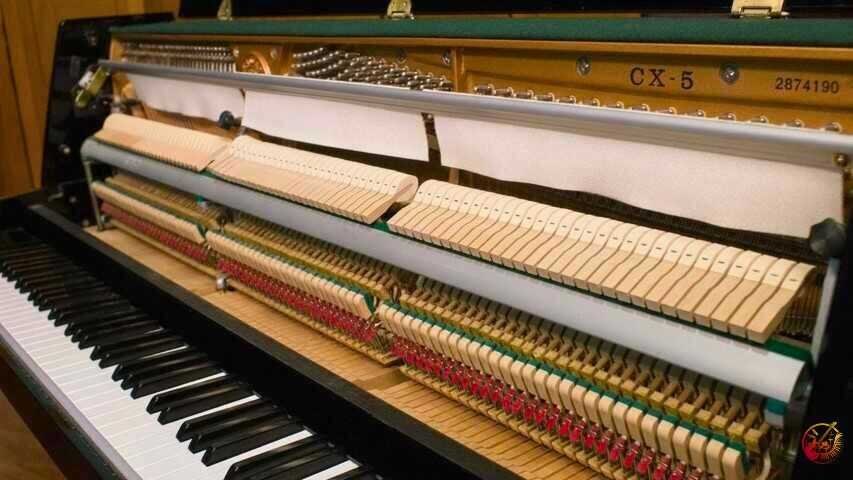
A piano practice mute is a simple tool. It is usually a long strip of felt (a soft, thick fabric).
When you use it, this strip drops down inside your piano. It sits right between the hammers (the parts that hit the strings) and the strings themselves.
Here is what happens when you play:
- Normal playing: The hard felt hammer hits the metal string. The sound is loud and bright.
- Muted playing: The hammer hits the soft mute cloth first. The cloth hits the string. The sound is soft and “muffled.”
This simple layer of fabric absorbs a lot of the energy. It stops the piano from projecting that big, booming sound that travels through walls.
How Effective Are Practice Mutes For Piano Sound Control?
They are very effective for reducing volume, but they do change the quality of the sound. You won’t hear a crisp, clear musical note. Instead, you will hear a warm, fuzzy tone.
Here is a quick look at how much quiet you actually get:
Piano Volume Comparison
| Playing Style | Normal Volume (No Mute) | Muted Volume (With Felt) | What It Sounds Like |
|---|---|---|---|
| Soft Scales | 60–70 Decibels | 40–50 Decibels | Like a quiet conversation. |
| Loud Chords | 80–90 Decibels | 60–65 Decibels | Like a TV at normal volume. |
| Banging Keys | 95+ Decibels | 70–75 Decibels | Like a vacuum cleaner in another room. |
Note: These numbers are estimates. Every piano is different!
The mute makes the biggest difference for sharp, sudden sounds. It takes away the “attack” of the note, which is usually the part that annoys neighbors the most.
Upright Piano Practice Mute Vs. Grand Pianos: What’s The Difference?
This is where things get a little tricky. The type of piano you own matters a lot.

1. Upright Pianos (The Easy Ones)
Upright piano mute systems use a felt rail that drops between hammers and strings. You activate this with:
- The Middle Pedal: On most uprights, this is the “Celeste” or practice pedal.
- A hand lever above the keys.
- A lock mechanism to keep it engaged.
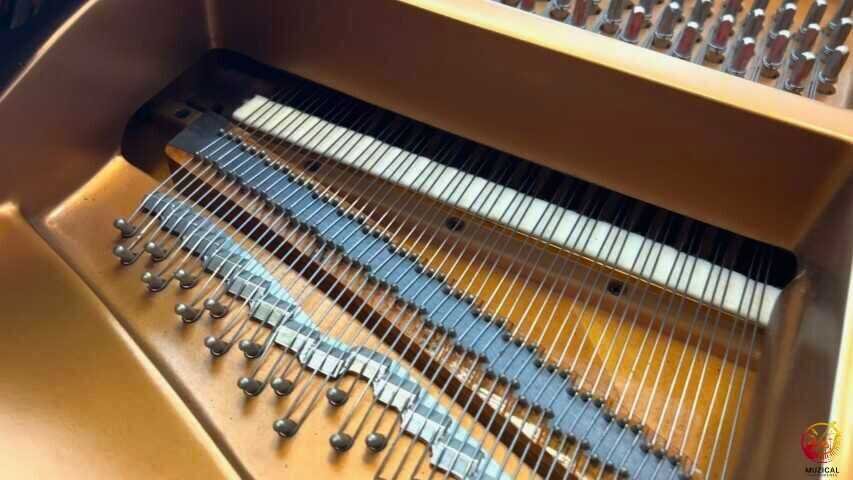
2. Grand Pianos (The Hard Ones)
Grand pianos rarely come with a practice mute pedal. The middle pedal on a grand piano usually does something else (called “sostenuto”).
- To mute a grand piano, you often need to buy a custom piano mute system or install a “string cover.”
- You can also buy aftermarket rails that a technician installs, but these can be expensive.
Can I Install A Piano Mute System Myself?
If your upright piano doesn’t have a middle pedal, can you fix it yourself?
For Beginners:
It is risky. The inside of a piano has thousands of moving parts. If you try to glue felt onto the wrong rail, you might jam the keys.
For the Brave DIYer:
You can buy a piano mute felt strip online.
- The Safe Way: Open the top lid. manually place a strip of thick felt over the strings (tape it to the sides, not the strings!).
- The Risk: If the felt is too thick, the hammers will bounce back and hit the strings twice. If it is too thin, it won’t be quiet.
Recommendation: If you need a permanent solution, call a piano tuner. They can install a “muffler rail” in about an hour. It usually costs less than $200.
Will A Mute Damage My Piano Or Change The Touch?
This is a very common worry. You don’t want to ruin your expensive instrument just to get piano sound control.
- Damage: No. A felt mute will not damage your strings or hammers. In fact, it protects the strings from hammer wear.
- Touch: The keys might feel a tiny bit different. Because the felt is there, the hammer stops a fraction of a second earlier than normal. This changes the “let-off” (the click you feel).
The Mental Trick:
When the sound is quiet, your brain thinks the keys are “heavier.” You might press harder to try to make the sound louder. Be careful not to strain your hands!
How Does A Piano Mute Affect Sound Quality?
Here’s the honest truth: mutes change your piano’s tone significantly.
The sound becomes duller and less resonant. You lose the bright, clear tone that makes pianos sound beautiful. High notes sound thin. Low notes lose their depth.
This matters more for advanced players working on expression and dynamics. Beginners focusing on technique and note reading won’t notice as much.
Sound changes you’ll hear:
- Less sustain when you hold notes
- Reduced harmonic overtones
- Compressed dynamic range
- Muddier pedal effects
- Loss of “singing” tone quality
But remember why you’re using a mute. You’re choosing between practicing with a muted piano or not practicing at all because of noise complaints. The choice becomes obvious.
Professional concert pianist Lang Lang practiced on a muted upright piano during his childhood in China. He lived in a small apartment where noise complaints threatened his practice time. He still developed into one of the world’s top pianists.
Can I Still Learn Piano Properly With A Practice Mute?
This question worries many beginners. You absolutely can learn piano with a mute engaged.
The key action stays the same. Your fingers build the same muscle memory. You practice the same techniques. The only real difference is the volume level.
What stays the same with a mute:
- Finger placement and technique
- Rhythm and timing practice
- Reading sheet music
- Hand coordination
- Muscle memory development
What changes with a mute:
- Dynamic range feels compressed
- Soft passages sound very similar to loud ones
- Tone color becomes muted
- Pedal effects are less obvious
Professional pianists recommend spending 70-80% of practice time with a mute if noise is an issue. Use the remaining 20-30% without the mute to hear true tone quality and dynamics.
The Yamaha Corporation conducted a study with 200 piano students. Half practiced only with mutes, half without. After six months, both groups showed similar technical improvement. The mute group actually practiced 30% more hours because they could play anytime without complaints.
What Are The Best Piano Mute Options For Beginners?
If you don’t have a built-in pedal, here are your best choices.
Best Ways to Mute Your Piano
| Method | Cost | Difficulty | Best For |
|---|---|---|---|
| DIY Felt Strip | Low ($10–$20) | Medium | Temporary quiet time on uprights. |
| Aftermarket Rail | Medium ($150+) | High (Pro needed) | Permanent solution for older pianos. |
| Soundboard Insulation | Low ($50) | Easy | Reducing boom/echo (doesn’t mute fully). |
| Silent Piano System | High ($1,500+) | Expert | Playing silently with headphones. |
Are There Silent Piano Alternatives Or Low-Noise Tools?
Maybe a felt strip isn’t enough. Maybe you need piano practice at night when the house is totally silent.
1. The “Silent” System (Digital Hybrid)
This is the ultimate piano mute device. A technician installs sensors under your keys and a bar that stops the hammers from hitting the strings.
- How it works: You put on headphones. You play the acoustic keys, but you hear a digital sound.
- Pros: It is 100% silent to the outside world (except for the thumping of keys).
- Cons: It is expensive.
2. Caster Cups and Rugs
Sometimes the noise isn’t the air sound; it’s the vibration going through the floor.
- Put thick rubber cups under the piano legs.
- Put a thick rug under the piano.
This stops the “boom” from traveling to the apartment downstairs.
How Much Do Piano Practice Mutes Cost?
Let’s break down the real costs of different mute options.
- Built-in mutes: $0 if your piano already has one. Newer pianos from Yamaha, Kawai, and other major brands include practice mutes as standard features.
- Aftermarket felt rail mutes: $50 to $200 for the parts. Add $100 to $300 for professional installation if needed. Total cost: $50 to $500.
- Silent system retrofits: $2,000 to $5,000 installed. This includes the electronic components, sensors, control box, and professional installation.
- Maintenance costs: Minimal. Felt rails might need replacement every 10-15 years ($30-$50 for new felt). Silent systems might need electronic repairs ($200-$500) if components fail.
Used pianos with built-in mutes often cost the same as those without. This makes them the best value for beginners seeking quiet practice options.
Practical Quiet Piano Tips For Practice At Night
If you have to practice late, use these quiet piano tips to stay friends with your neighbors.
- Avoid the Bass: Low notes travel through walls easier than high notes. Stick to right-hand melody practice at night.
- Use the Soft Pedal: The left pedal (una corda) moves the hammers closer to the strings. Combined with a mute rail, it gets even quieter.
- Close the Lid: It seems obvious, but keep the top and bottom panels of your piano closed tight.
- Check Your Schedule: Ask your neighbors when they are typically out of the house. 30 minutes of loud practice when they are at the grocery store is better than 2 hours of muted practice when they are sleeping.
Final Thoughts
So, do piano practice mutes really work? Yes. They are the simplest, most effective tool for lowering volume without electricity. While they change the tone of your music, they allow you to practice scales and drills without disturbing the peace.
If you are a beginner with a loud upright piano, check your middle pedal today. If you don’t have one, consider asking a technician to install a mute rail. It is a small investment that gives you the freedom to play whenever inspiration strikes.
FAQ: Do Piano Practice Mutes Really Work?
1. Does using the practice pedal damage the piano?
No, it is perfectly safe. The practice mute is just a soft strip of felt fabric. When you use it, the hammers hit the soft cloth instead of the hard strings. This actually reduces wear and tear on your piano hammers because they aren’t hitting the metal strings directly.
2. Can I add a mute pedal to an old piano?
Yes, usually you can. If you have an upright piano that didn’t come with a mute pedal, a professional technician can install one for you. They call this a “mute rail” or “practice rail.” It is a common upgrade and usually takes about an hour to install.
3. How much quieter does a mute make a piano?
It makes a big difference. Most players feel the volume drops by about 50% to 70%. Instead of a bright, ringing sound that fills the whole house, you get a soft, muffled thumping sound. It is quiet enough that someone in the next room might not hear it at all.
4. Is it bad to practice with the mute on all the time?
It is okay for learning notes, but try not to use it 100% of the time. When the mute is on, you can’t hear the true “voice” of the piano. You need to play without it sometimes so you can learn how to control loud and soft dynamics properly.
5. Why does my middle pedal not make the sound quieter?
Not all middle pedals are practice mutes! On grand pianos, the middle pedal usually holds a single note (called a “sostenuto”). On some older uprights, it might just lift the bass dampers. If your middle pedal doesn’t lower a felt strip, it was built for a different purpose.