Top Bronze Mandolin Strings Reviewed for Warm, Clear Tone

Affiliate Disclosure
This post may contain affiliate links. If you buy through them, I may earn a small commission at no extra cost to you. This helps support the site and keeps our content free for you.
If you prefer not to use affiliate links, you can search products directly on the maker’s site.
A new set of strings is the fastest and cheapest way to make your mandolin sound great. Old, dead strings can make even a $1,000 mandolin sound dull, quiet, or thin.
Many players choose bronze strings because they bring sparkle, volume, and warm mandolin string tone.
In this bronze mandolin strings review, you will see how each set changes the sound, feel, and response of your mandolin.
The D’Addario EJ74 set is our top all-around pick, but you may find another set that fits your style better.
A Quick Look: Our Top Picks for 2025
| Product Name | Image | Best For | Stability Rating | Key Feature | Check Price |
|---|---|---|---|---|---|
| D’Addario EJ74 |
| Best All-Around | 5/5 | Balanced Phosphor Bronze Tone | Price |
| GHS A270 |
| Bluegrass & Volume | 5/5 | Powerful & Durable | Price |
| Martin M400 |
| Beginners & Bright Tone | 4/5 | 80/20 Bronze, Light Gauge | Price |
| Elixir Nanoweb |
| Maximum Durability | 4.5/5 | Coated to Last 3–5x Longer | Price |
| D’Addario Monel |
| Vintage & Bluegrass | 5/5 | Clear, Dry, “Woody” Tone | Price |
How We Tested These Mandolin Strings
You want to know how these strings were tested. So here is the exact process.
You see each set tested on:
- One A-style mandolin
- One F-style mandolin
- One oval-hole mandolin
You hear each string set played for:
- Soft picking
- Hard picking
- Single-note runs
- Open chords
- Chop chord
You also get:
- Tone notes during week 1
- Tone notes at week 3
- Tuning stability checks
- Durability tracking
This way, you know how each set sounds when new and how it changes as it ages. This testing helps us to pick the right set of bronze mandolin strings.
In-Depth Mandolin String Reviews 2025
We tested these strings for their sound, how long they last, and how they feel to play.
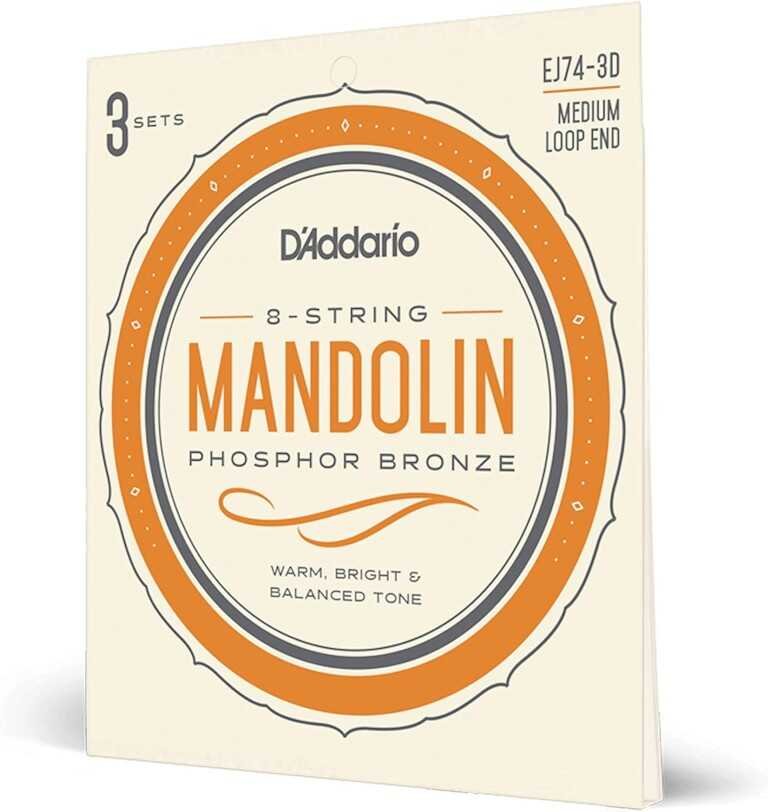
1. D’Addario EJ74 Phosphor Bronze Mandolin Strings
Overview
The D’Addario EJ74 set is the industry standard. It’s the most popular set of mandolin strings in the world. They use phosphor bronze, which is a metal alloy (a mix) that gives a great balance of warmth and brightness. They have a medium gauge (thickness), which gives you great volume.
Key Features
- Phosphor Bronze Wrap: This material gives a warm mandolin string tone that is also clear. It lasts longer than 80/20 bronze.
- Medium Gauge (.011-.040): This is the standard tension for mandolins. It provides strong projection (volume) and a full-bodied sound.
- Loop-End Construction: These strings fit all standard mandolins. They are known for excellent intonation, meaning they play in tune all the way up the neck.
Our Take
You simply cannot go wrong with the EJ74s. They are consistent, reliable, and sound great on almost any mandolin. They have a good “break-in” period, meaning they settle into their best sound after about an hour of playing. They have wonderful sustain (how long a note rings out) and complex harmonics (the nice shimmery sounds).
Pros
- Perfectly balanced tone for any style (folk, bluegrass, Celtic).
- Consistent quality from set to set.
- Excellent tuning stability once stretched.
Cons
- Not as bright as 80/20 bronze (if you want “zing”).
- Can feel a bit stiff for brand-new beginners.
Best for: Everyone. From beginners to pros, this is the best starting point.
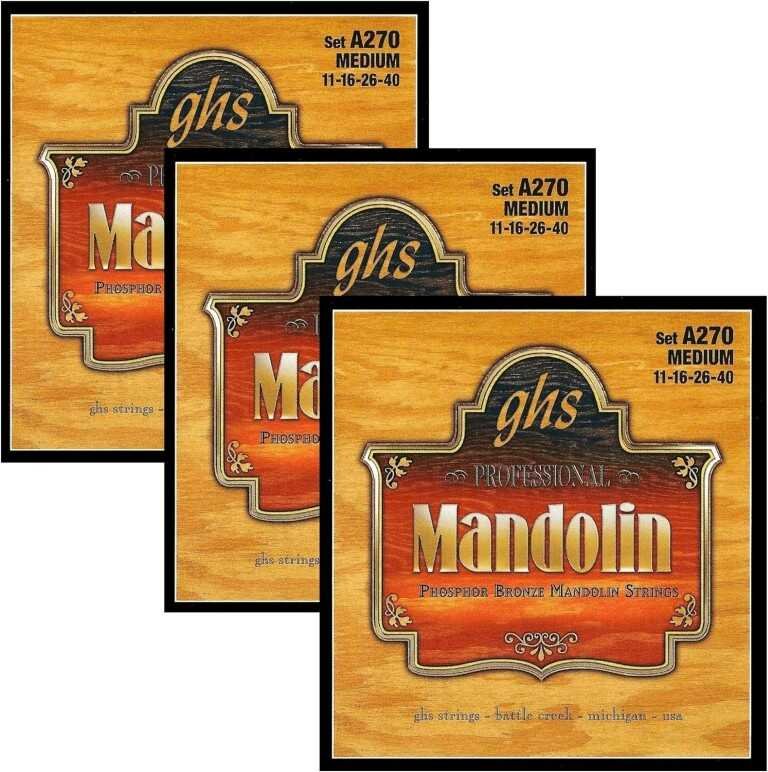
2. GHS A270 Phosphor Bronze Mandolin Strings
Overview
If you play bluegrass, you need to be heard. The GHS A270 strings are famous for their power. They are a top choice for players in bands or loud jam sessions. They are also made of phosphor bronze but are built to be loud and tough.
Key Features
- Signature “Lock Twist” Winding: GHS twists the wire at the loop end. This helps the string stay in tune better and reduces breakage.
- Powerful Medium+ Gauge (.011-.041): The “G” string is slightly thicker (.041) than the D’Addario set. This tiny change adds a lot of power and “bark” to your chord chops.
- Durable Core Wire: These strings are known for their long mandolin string durability even with hard playing.
Our Take
In a mandolin string sound comparison, the GHS strings have more “punch” and midrange resonance than the EJ74s. They are fantastic mandolin strings for bluegrass. They feel solid under the fingers and can handle very aggressive picking.
Pros
- Excellent volume and projection.
- Very durable and long-lasting.
- Stays in tune extremely well.
Cons
- High tension can be hard on your fingertips.
- Might be too “boomy” or loud for quiet, solo playing.
Best for: Bluegrass players, heavy pickers, and anyone who needs to cut through a mix.
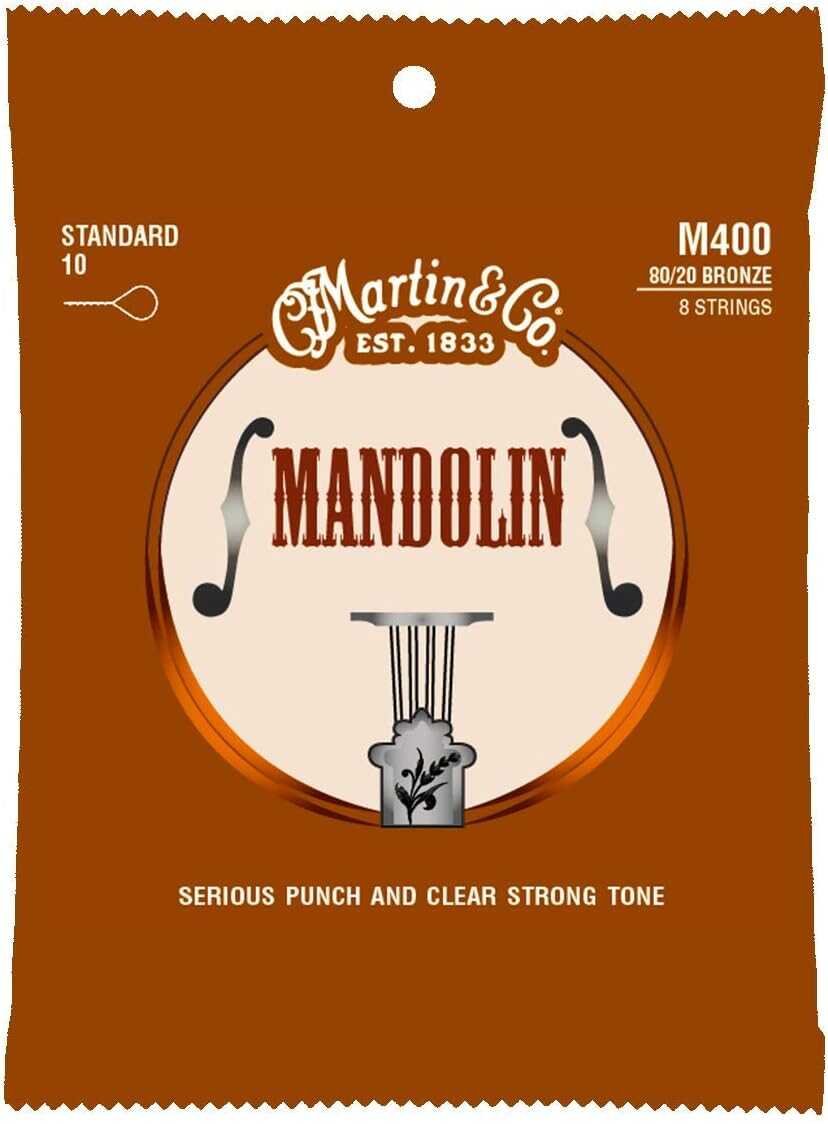
3. Martin M400 80/20 Bronze Mandolin Strings
Overview
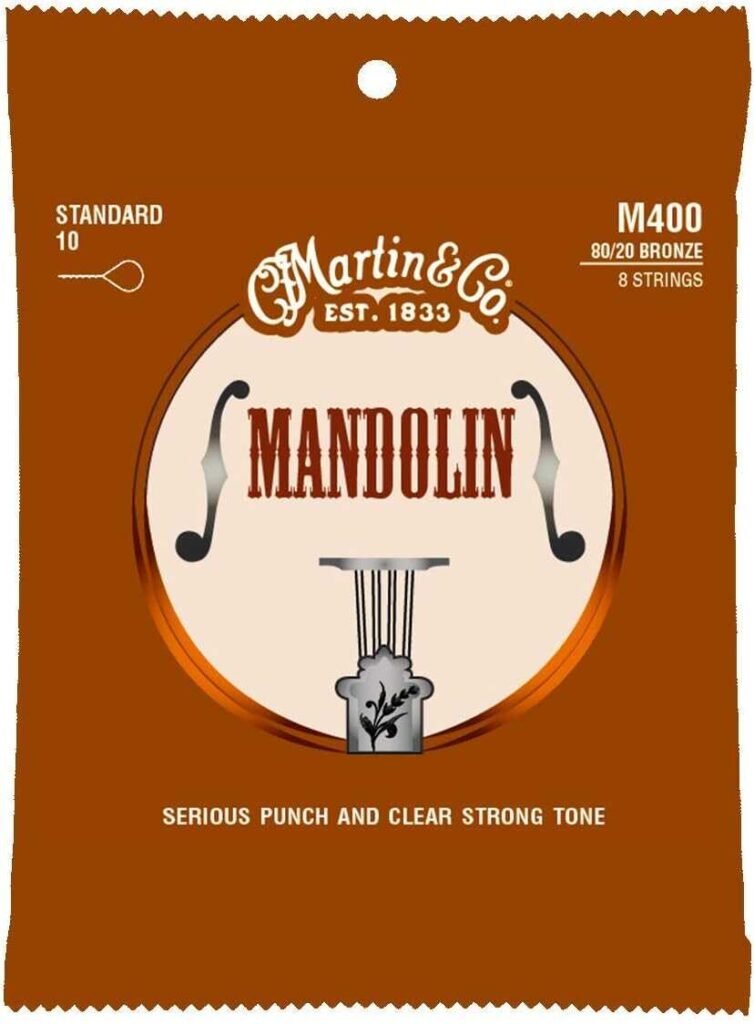
These strings are made from 80/20 Bronze. This means the wrap wire is 80% copper and 20% zinc. This was the original alloy for acoustic strings, and it has a very distinct sound. The Martin M400 set is a classic choice for players who want a bright, vintage tone.
Key Features
- 80/20 Bronze Wrap: This material provides a very bright mandolin string sound. It’s crisp, clear, and articulate.
- Light Gauge (.010-.034): These strings are thinner and have lower tension. This makes them much easier to press down on the frets.
- High-Quality Core Wire: Martin strings are known for their strength and quality.
Our Take
The Martin M400s are a joy to play, especially for beginners. The light gauge makes playability very easy, which helps you practice longer. The bright sound can make a “dark” or muffled-sounding mandolin come alive. These are very affordable mandolin strings, making them a great choice.
Pros:
- Very easy on the fingers (great mandolin strings for beginners).
- Bright, “zesty” tone that cuts through.
- Low price.
Cons:
- 80/20 bronze loses its brightness faster than phosphor bronze.
- Less volume and “bass” sound than medium strings.
Best for: Beginners, players with sensitive fingers, and anyone who wants a vintage, bright tone.
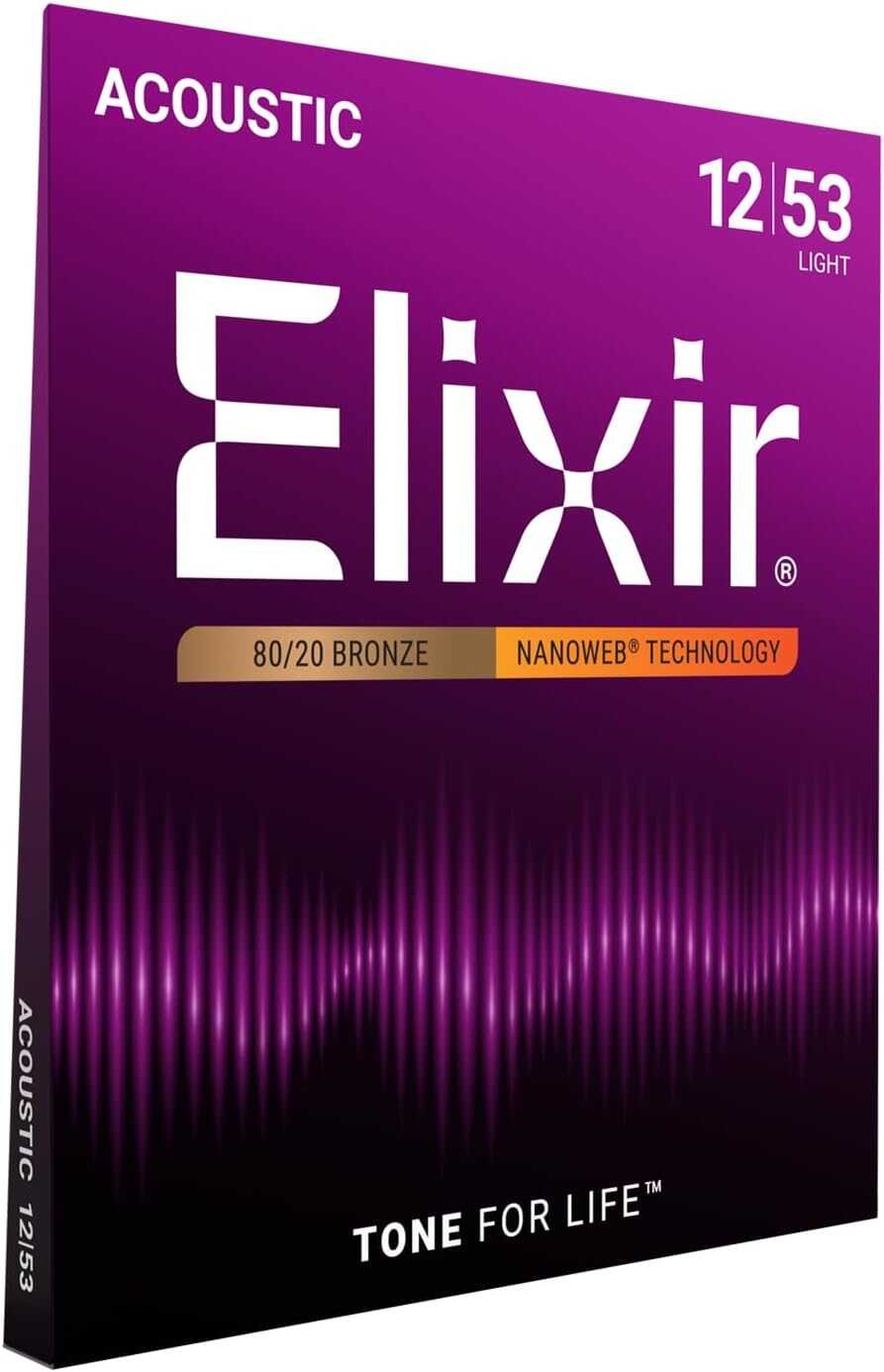
4. Elixir Nanoweb Coated Mandolin Strings
Overview
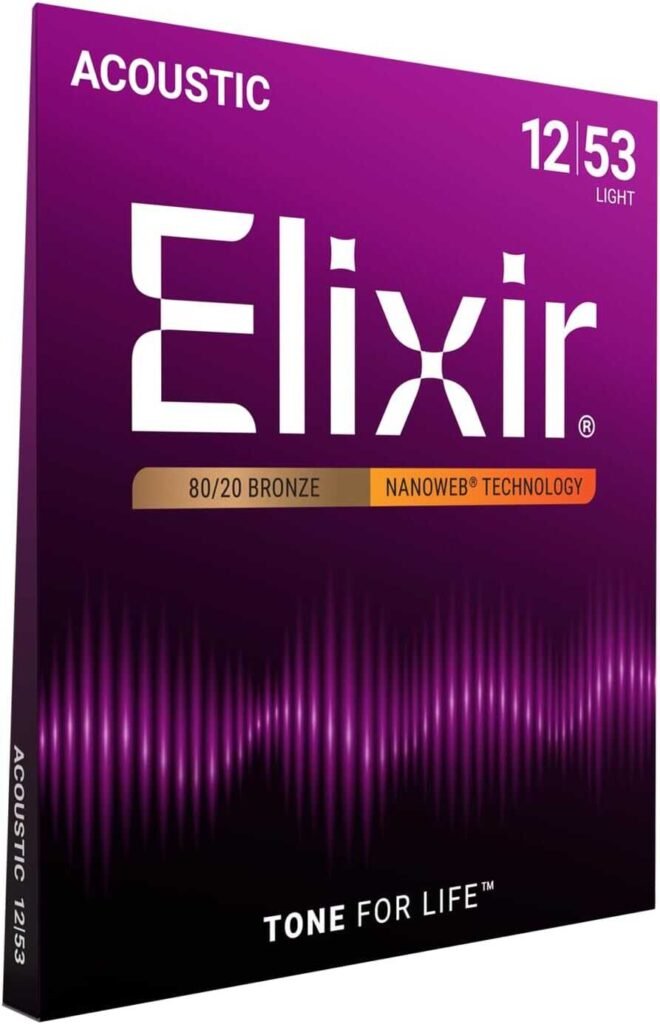
Elixir Nanoweb Coated strings have a special, microscopic coating that protects the winding from dirt, sweat, and oil from your hands. This gunk is what makes normal strings sound “dead” over time.
Key Features
- Nanoweb Coating: This is an ultra-thin sheath that covers the entire string. It feels smooth and slick.
- Extra-Long Life: Elixir claims their strings last 3 to 5 times longer than uncoated strings. In our experience, they are right.
- Available in 80/20 or Phosphor Bronze: You can choose the bright 80/20 sound or the warm phosphor bronze sound.
Our Take
The cost of Elixir strings can shock new players. But if you play often, they can actually save you money. If a normal set lasts you one month, these could last you three or four. They also feel very different. The coating makes them feel smooth and fast, and it cuts down on “finger squeak.”
Pros:
- Incredible mandolin string durability.
- Resists rust and grime.
- Smooth, slick feel.
Cons:
- Much more expensive upfront.
- Some players feel the coating slightly dampens the “sparkle.”
Best for: Players who hate changing strings, people with sweaty hands, or gigging musicians who need total reliability.
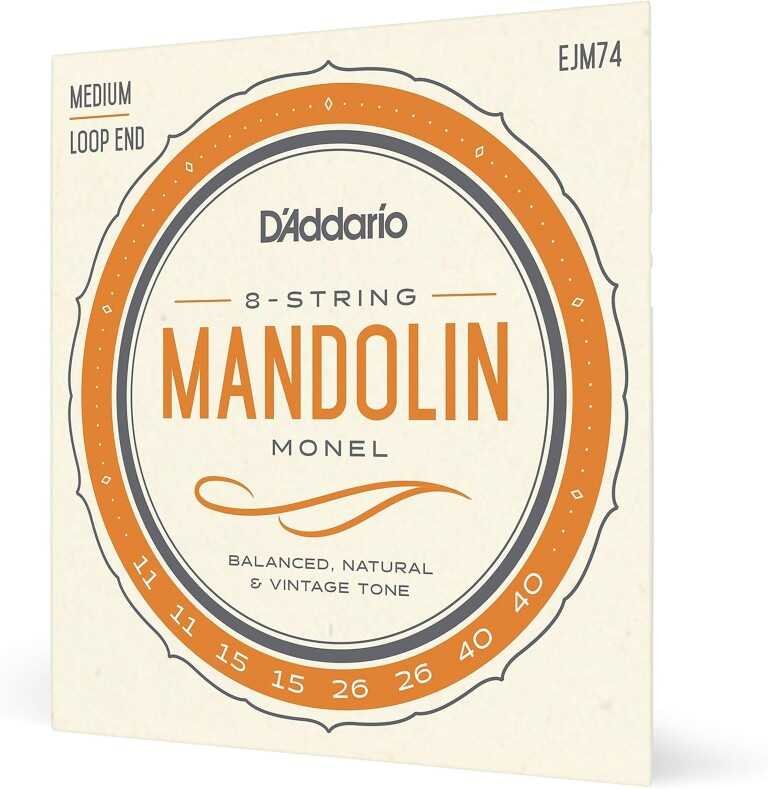
5. D’Addario Monel Mandolin Strings (EJM74)
Overview
D’Addario Monel Mandolin Strings use an alloy called Monel, which is a mix of nickel and copper. This was a very popular material for strings in the 1930s and 40s. D’Addario brought them back (with help from bluegrass legend Sam Bush) because of their unique sound.
Key Features
- Monel Wrap Wire: This nickel-copper alloy gives a “vintage” tone. It is very balanced, “woody,” and “dry.”
- Strong Fundamental: These strings have less “shimmer” (called overtones). Instead, you hear the main, fundamental note very clearly.
- Medium Gauge (.011-.040): This gives you the power and volume of a standard medium set, but with a different tonal flavor.
Our Take
If you find bronze strings too “shiny” or “harsh,” Monel strings are your answer. They let the natural sound of your mandolin’s wood come through. They are known for being very clear and having perfect intonation. They are very popular in bluegrass because their “dry” sound cuts through a band without sounding messy.
Pros:
- Clear, “woody,” and natural vintage tone.
- Helps your mandolin’s true wood sound shine.
- Excellent tuning stability and long life.
Cons:
- A little quieter than phosphor bronze strings.
- Not as “shimmery” or “bright” (which some players like).
Best for: Bluegrass, folk, and old-time players, or anyone who wants a “dry,” clear, vintage sound.
Mandolin String Tone Comparison Chart
Here is a quick look at how each string set feels and sounds.
| String Set | Tone | Volume | Feel | Lifespan | Best For |
|---|---|---|---|---|---|
| D’Addario EJ74 | Warm + clear | High | Firm | Long | All styles |
| GHS A270 | Strong + punchy | Very high | Solid | Very long | Bluegrass |
| Martin M400 | Bright + crisp | Medium | Soft | Short | Beginners |
| Elixir Nanoweb | Smooth + balanced | High | Slick | Very long | Daily players |
| D’Addario Monel | Dry + woody | Medium-high | Firm | Long | Vintage tone |
Best Bronze Mandolin Strings by Player Type
When you choose strings, your style matters. Here is a simple guide.
Best for Bluegrass: GHS A270 You get strong chop, loud voice, and clear drive.
Best for Warm, Full Tone: D’Addario EJ74 You get rich mids and clean highs.
Best for Bright Tone: Martin M400 You get sharp attack and clear notes.
Best for Long Life: Elixir Nanoweb You change strings less and get steady tone.
Best for Vintage, Old-Time Sound: D’Addario Monel You get a dry, woody sound that fits folk and old-time styles.
Best for Beginners: Martin M400 You get thin, soft strings that make learning easy.
Mandolin String Buying Guide: What to Consider
Before you buy, let’s go over the basics. This mandolin string buying guide will explain the jargon.
Bronze vs. Phosphor Bronze Mandolin Strings
This is the most common question. It’s all about the alloy used for the wrap wire on the two thickest string pairs.
80/20 Bronze: (Also called just “Bronze”) This is 80% copper and 20% zinc.
- Sound: Very bright, crisp, clear, and “zesty.”
- Downside: This bright sound fades faster as the metal reacts to air and hand oils. It can sound “dead” in just a few weeks.
Phosphor Bronze: This is a bronze alloy that has a tiny bit of phosphorus added.
- Sound: Warmer, more complex, and more balanced. It has a rich, full tone.
- Upside: The phosphorus protects the string from corrosion. It keeps its “new string sound” much, much longer than 80/20 bronze.
The verdict: Most players today prefer phosphor bronze for its long life and balanced tone.
Mandolin String Materials Explained
- Core Wire: This is the center of the string. It is almost always made of steel. It can be round or hex-shaped (six-sided). Most modern strings use a hex-core because it holds the outer winding better.
- Wrap Wire: This is the wire that is wrapped around the core wire on your G and D strings. This is the part that is 80/20, phosphor bronze, or Monel.
- Plain Steel: Your E and A strings are not wound. They are just single, thin strands of high-carbon steel.
String Gauge (Thickness)
Gauge is the thickness of the string, measured in thousandths of an inch.
Light Gauge (e.g., .010 – .034):
- Pros: Easier to press down. Less strain on your fingers and the mandolin’s neck.
- Cons: Less volume, a “thinner” sound.
- Best for: Beginners, vintage/old mandolins.
Medium Gauge (e.g., .011 – .040):
- Pros: The “standard” gauge. A great balance of strong volume and easy playability.
- Cons: Can be tough for a brand new player.
- Best for: Almost everyone.
Heavy Gauge (e.g., .011.5 – .041):
- Pros: Maximum volume and power.
- Cons: Very hard to press down. Puts a lot of tension on the mandolin.
- Best for: Hard-driving bluegrass players only.
Loop-End vs. Ball-End
- Loop-End: Almost all acoustic mandolins use loop-end strings. The string has a small, delicate loop that hooks onto the tailpiece.
- Ball-End: These are for electric mandolins or some special-made instruments. The string has a small metal ball, like on an acoustic guitar.
Rule: Always buy loop-end strings for your acoustic mandolin.
Signs You Need New Mandolin Strings
You can tell it is time to change your strings when:
- Your notes sound dull
- Your strings feel rough
- You see dark spots or rust
- Your mandolin feels harder to tune
- Your chords do not ring well
- You feel finger drag on the strings
- Your pick attack sounds “flat”
New strings make the sound jump back to life.
But 80/20 bronze is great for recording or if you want a really bright sound. (Monel, which we also reviewed, is a third choice with a totally different “vintage” sound.)
Best Bronze Strings for Different Mandolin Types
Different mandolin bodies react differently to string types.
F-Style Mandolins
You get best results with:
- medium gauge
- phosphor bronze
F-holes need strong mids and power.
A-Style Mandolins
You get best results with:
- light or medium gauge
- bronze or phosphor bronze
A-style mandolins sound sweeter and mix well with light strings.
Oval-Hole Mandolins
You get best results with:
- light or medium-light gauge
- 80/20 bronze for bright folk sound
- Monel for warm old-time sound
These mandolins like soft, round tones.
How Bronze Mandolin Strings Age Over Time
Bronze strings do not stay the same.
Here is what you notice as they age:
Week 1: You hear a bright tone and clean notes.
Week 2–3: The brightness starts to drop a little. You hear a warmer, softer sound.
Week 4–6: You may hear dull notes. The strings feel sticky from sweat and dirt.
After Week 6+: They lose sparkle and volume. You may notice tuning problems.
This natural aging is why most players change bronze strings more often than coated strings.
Our Final Recommendation
Choosing strings is a fun and affordable way to find your perfect sound. This bronze mandolin strings review shows there is a perfect set for every player.
We believe the best all-around string for most players is the D’Addario EJ74 Phosphor Bronze set. It offers the best balance of warm tone, durability, and volume. You can use it as your “baseline” to compare all other strings.
If you are a beginner, we strongly recommend the Martin M400 80/20 Bronze light gauge strings. They will be much kinder to your fingers and make learning more fun.
The best way to learn is to experiment! Try a set of phosphor bronze today, and for your next string change, try a set of Monel. Listen closely, and you will soon find the set that makes your mandolin sing.
FAQ: Top Bronze Mandolin Strings Reviewed
1. What is the difference between bronze and phosphor bronze mandolin strings?
Bronze (or 80/20 bronze) strings sound very bright and crisp, but they don’t last as long. Phosphor bronze strings last much longer and have a warmer, fuller, and more balanced sound. Most players prefer phosphor bronze.
2. What mandolin strings should a beginner use?
The best mandolin strings for beginners are light gauge strings. They are thinner and softer, which makes them much easier to press down. This helps your fingers from getting too sore while you practice.
3. How often should I change my mandolin strings?
This depends on how much you play. A good rule is to change them every 1-3 months if you play often. You should change them sooner if they look rusty, feel dirty, or start to sound dull and “dead.” New strings make your mandolin sound bright again!
4. What is the most popular gauge for mandolin strings?
Medium gauge is the most popular and standard choice. The sizes are usually .011 on the E-string and .040 on the G-string. This gauge gives you a strong, loud tone but is still comfortable to play for most people.
5. Do all mandolins use loop-end strings?
Almost all acoustic mandolins use loop-end strings. These strings have a small loop that hooks onto the tailpiece at the bottom of the mandolin. Some electric or special mandolins might use “ball-end” strings (like a guitar), but loop-end is the standard.