Where To Place A Guitar In A Room To Protect It From Heat And Moisture

Figuring out exactly where to place a guitar in a room can save you hundreds of dollars in repair bills. Wood is a natural material that reacts quickly to the air around it, leading to cracks or warping if you aren’t careful.
Many beginners ruin their first instrument simply by leaving it near a sunny window or a heat vent. A safe spot keeps your instrument playing well and holding its tune for years.
Let’s look at the best locations to keep your guitar safe from the elements.
Why Does Room Placement Matter For My Guitar?
Your guitar might look solid, but it is actually breathing. The wood used to build it takes in moisture and lets it out based on the room’s conditions. This is especially true for acoustic guitars made of solid wood.
When the air is too wet, the wood swells up. When the air is too dry, the wood shrinks. If this happens too fast, parts of the guitar can pull apart.
The fretboard might shrink, causing sharp fret ends to poke your hand. In worse cases, the top of the guitar can crack, or the bridge might lift off. Placing your guitar in a stable spot stops this battle between the wood and the air.
What Is The Best Place To Keep A Guitar In A Room?
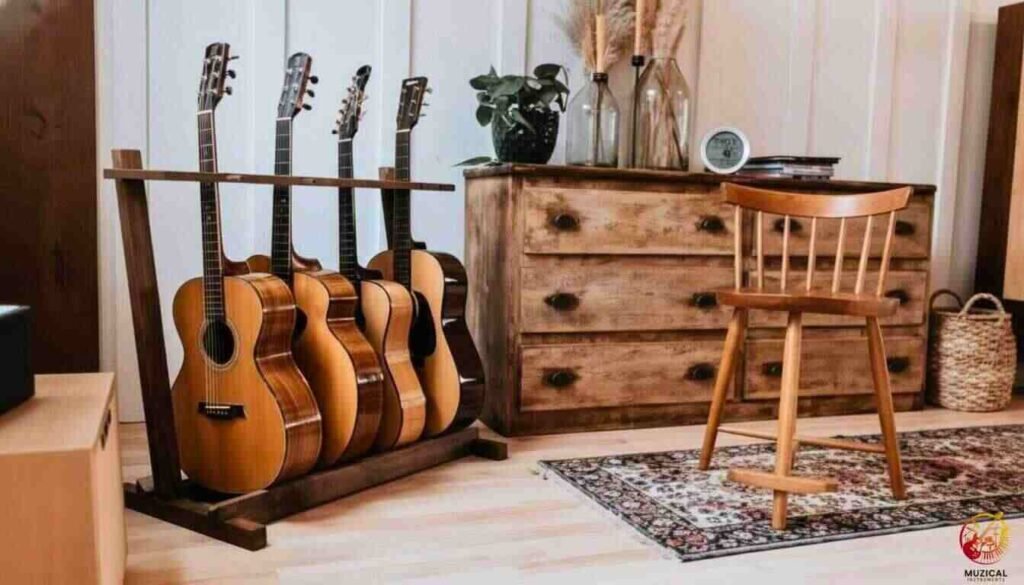
The absolute best place to keep a guitar in a room is on an interior wall away from direct sunlight. An interior wall is a wall that divides two rooms inside your house, rather than a wall that touches the outside.
Exterior walls change temperature depending on the weather outside. Interior walls stay much more stable.
Here are the key features of a perfect spot:
- It is far away from the windows.
- It is not next to a radiator or air vent.
- It is in a room where you spend a lot of time.
- The temperature stays consistent, ideally around 70°F (21°C).
Is It Safe To Keep My Guitar Near A Window?
You should never store your guitar near a window. This is one of the most dangerous spots in your home for an instrument. Windows allow UV rays to hit the instrument, which can fade the finish.
More importantly, windows act like a magnifying glass for heat. Direct sunlight creates “hot spots” on the wood. This heat can soften the glue that holds the guitar together.
Windows are also drafty. In the winter, cold air leaks through the glass. This constant shift from hot sun to cold draft causes thermal shock. This stress can cause the finish to crack, known as finish checking.
How Do Heaters And Vents Affect Guitar Safety?
Heating and cooling systems are the enemies of safe guitar storage at home. You must keep your instrument away from:
- Radiators
- Floor vents
- Fireplaces
- Space heaters
- Air conditioning units
Forced air systems blow dry air. This lowers the humidity in that specific corner of the room drastically. If your guitar sits in that stream of air, it will dry out very quickly.
When wood dries out, it shrinks. This puts massive tension on the top of the guitar. Eventually, the wood creates a loud “pop” and cracks. Always place your stand or hanger at least five feet away from any heat source.
What Is The Ideal Humidity For A Guitar Room?
Temperature is important, but humidity is critical. The “sweet spot” for guitar health is between 45% and 55% relative humidity.
If the humidity drops below 40%, the wood gets thirsty. If it goes above 60%, the wood gets bloated. Both extremes ruin the playability of the neck.
You cannot guess humidity just by feeling the air. You need a tool called a hygrometer. This is a small digital thermometer that also measures moisture. Place one near where you store your guitar to monitor the safety of the spot.
Humidity Effects on Guitars
| Humidity Level | Condition | Potential Damage |
|---|---|---|
| Below 35% | Too Dry | Top cracks, fret buzz, sharp fret ends, shrinking finish. |
| 45% – 55% | Safe Zone | Wood is stable, tone is best, stays in tune. |
| Above 65% | Too Wet | Swollen top, high action (hard to play), rusty strings, glue failure. |
Is It Better To Store A Guitar In A Case Or On A Stand?
The answer depends on your environment and your habits.
The Case (Maximum Safety)
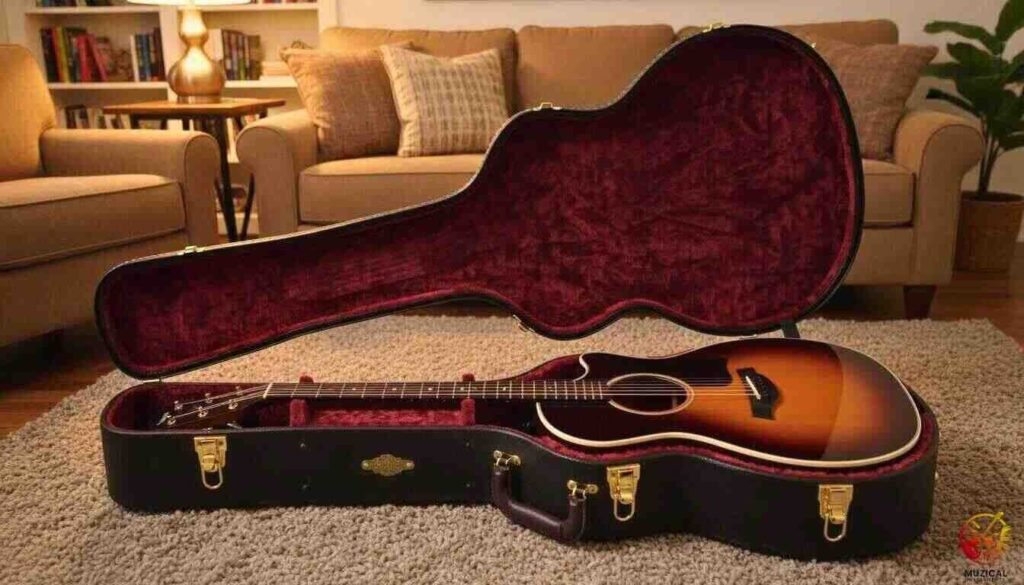
A hard case is the safest place for a guitar. It creates a micro environment. It buffers the instrument against sudden temperature changes. If you drop something, the guitar is safe. If you have pets or toddlers, the case is essential.
The Stand (Maximum Accessibility)
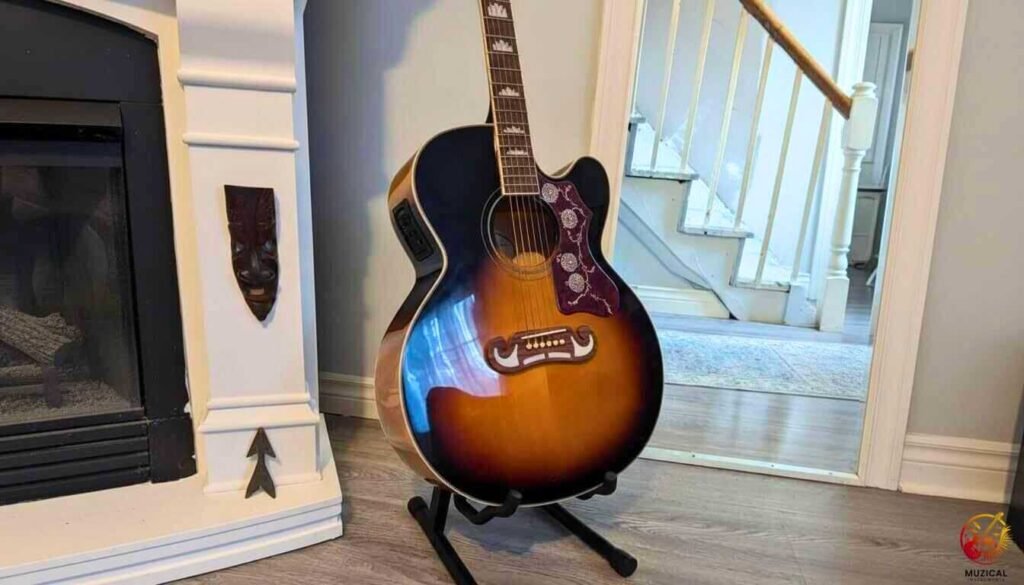
A guitar stand encourages you to play more. If the guitar is out, you will pick it up. However, it leaves the guitar exposed to dust, accidents, and dry air.
If you live in a very dry climate (like a desert or during snowy winters), keep the guitar in the case with a humidifier. If your room is stable, a stand is fine.
Case vs. Stand Comparison
| Feature | Hard Case | Floor Stand | Wall Hanger |
|---|---|---|---|
| Physical Protection | High | Low | Medium |
| Humidity Control | Excellent | Poor | Poor |
| Ease of Access | Low | High | High |
| Risk of Accidents | Low | Moderate (tipping) | Low (if installed right) |
How Does Using A Wall Hanger Affect The Guitar?
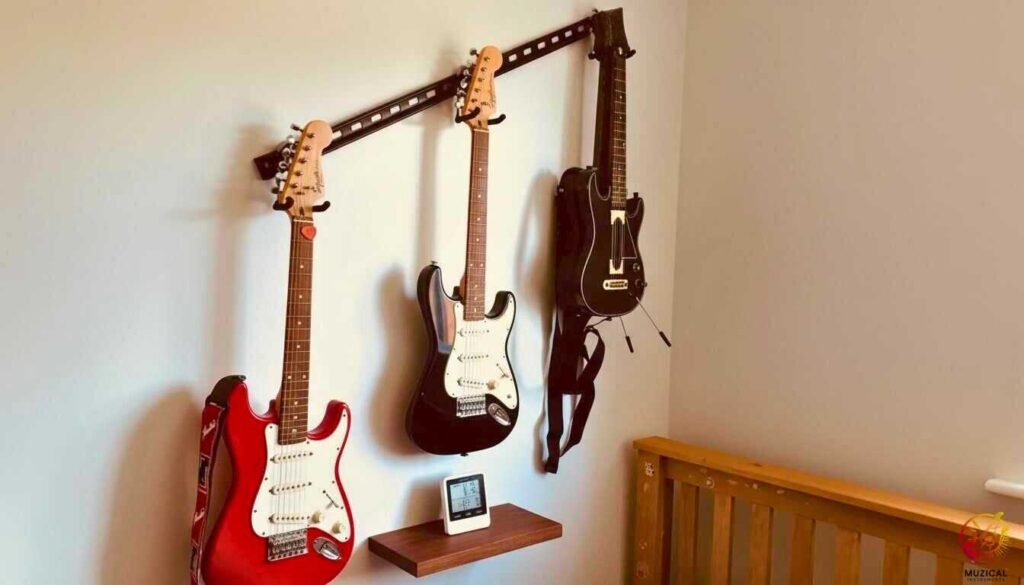
Guitar wall placement is a great option for saving space. It also keeps the instrument off the floor where it might get kicked. It turns your instrument into art.
However, you must follow the “Interior Wall Rule” mentioned earlier. Never hang a guitar on an exterior wall. The cold from outside transfers through the drywall and chills the back of the guitar.
The front of the guitar stays warm from the room air. This temperature difference between the front and back causes warping.
Tips for safe wall hanging:
- Use a stud finder to screw the hanger into the wooden beam.
- Use high-quality hangers with a locking gate.
- Check that the rubber on the hanger is safe for nitrocellulose finishes (if you have a vintage guitar).
- Keep the guitar away from swinging doors.
Should I Keep My Guitar In The Basement Or Attic?
You should avoid basements and attics if possible. These are usually the worst rooms for guitar storage ideas.
Basements are naturally damp. Concrete walls hold moisture. This high humidity causes the guitar top to belly up (swell). It can also cause the metal parts, like tuners and strings, to rust quickly. Mildew can also grow inside the acoustic body, creating a bad smell that is hard to remove.
Attics are the opposite. They trap heat. In the summer, an attic can reach over 100°F. This extreme heat destroys the glue joints. The bridge can pop off, and the neck can twist.
Guitar bedroom storage or a dedicated spot in the living room is much safer. These are “living zones” where you regulate the temperature for your own comfort. If you are comfortable, your guitar is usually comfortable too.
How Do I Manage Seasonal Changes?
Where to place a guitar in a room might change depending on the season.
In the summer, your air conditioner removes moisture. In the winter, your heater dries the air out even more.
Winter Tips:
- Move the guitar away from the heat vents.
- Use a room humidifier to add moisture back into the air.
- Consider keeping the guitar in its case with a sponge-based humidifier like a Dampit.
Summer Tips:
- Keep the guitar out of direct sun.
- If it is very humid, use a dehumidifier or silica gel packs in the case.
- Wipe down the strings after playing to remove sweat.
What Are Common Mistakes Beginners Make?
Even with good intentions, beginners often make simple errors. Avoiding these will prevent trips to the luthier (a professional guitar repair person).
- The “Lean”: Leaning a guitar against a desk or amp without a stand. It will slide and fall. The headstock often snaps when this happens.
- The Car Trunk: Never leave a guitar in a car. A car acts like an oven in summer and a freezer in winter. Minutes of exposure can destroy a guitar.
- Ignoring the Truss Rod: If you move the guitar to a new climate, the neck might bow. This is normal. A small adjustment to the truss rod usually fixes it, but ask a pro if you are unsure.
- Cheap Stands: Some cheap stands use rubber that eats into the guitar’s finish. Buy a stand that is marked “nitro-safe.”
Quick Guitar Safety Checklist
| Check | Action |
|---|---|
| Sunlight | Is the sun hitting the guitar at any time of day? Move it if yes. |
| Airflow | Can you feel a draft or heat blowing on the instrument? Move it if yes. |
| Humidity | Does your hygrometer read between 45-55%? Adjust if no. |
| Stability | Is the stand on a flat surface where it won’t get knocked over? |
Final Thoughts
Knowing where to place a guitar in a room is the best insurance you can give your instrument. Focus on finding a stable, interior wall away from windows and heat sources.
While a case offers the best protection against humidity and accidents, a safe spot on a stand encourages you to play more often.
Keep an eye on the humidity, trust your hygrometer, and your guitar will sound great for a lifetime.
Now, go check your current storage spot and move your guitar if it’s sitting in direct sunlight!
FAQ: Where To Place A Guitar In A Room
1. Is it better to keep a guitar in a case or on a stand?
A hard case is always the safest choice. It protects your guitar from falling objects, pets, and sudden weather changes. However, keeping it on a stand makes it easier to pick up and play. If your room has a safe temperature and humidity level, a stand is fine. If the weather is extreme, put it back in the case.
2. What is the safest temperature for storing a guitar?
The best temperature for a guitar is between 70°F and 75°F (21°C–24°C). A good rule of thumb is to think about your own comfort. If you are comfortable in the room wearing just a t-shirt, your guitar is likely safe, too. Avoid rooms that get freezing cold or super hot, like attics or unheated basements.
3. Can I hang my guitar on an outside wall?
You should try to avoid this. An outside wall touches the outdoors, so it gets cold in winter and hot in summer. This temperature travels through the wall and hits the back of your guitar, which can warp the wood. It is much safer to hang it on an interior wall that separates two rooms inside your house.
4. How can I tell if the humidity is too low for my guitar?
Your guitar will actually tell you! If the air is too dry, the wood on the neck shrinks. When this happens, the metal frets stick out, and the edges feel sharp against your hand. You might also hear a buzzing sound when you play. If you notice this, you need to add moisture to the room or the case immediately.
5. Is it okay to store a guitar lying flat under a bed?
Yes, storing a guitar flat is perfectly safe, as long as it is inside a hard case. Sliding the case under a bed is a great way to save space and keep it away from sunlight. Just make sure the case isn’t touching a heat vent or resting against a cold exterior wall.