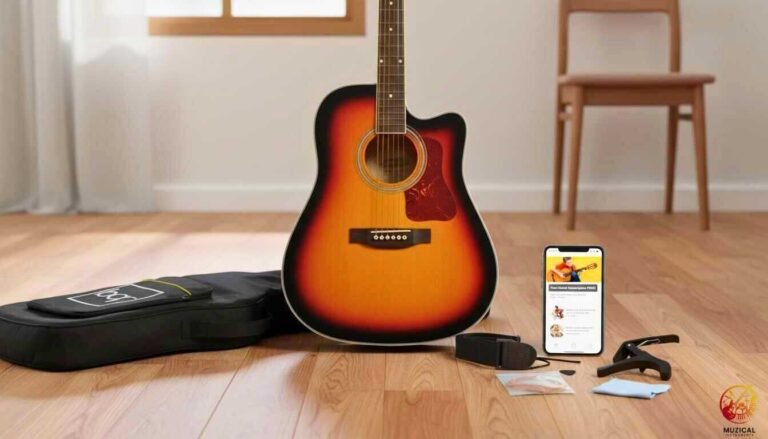
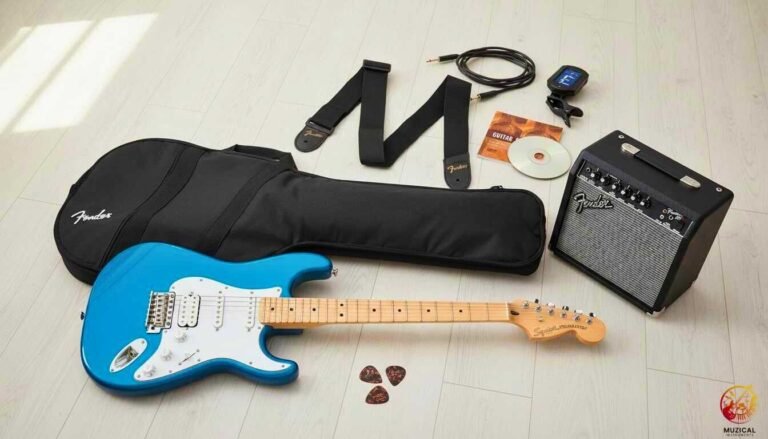
Acoustic vs Electric Guitar for Beginners: Which One Should You Choose?

A clear choice between acoustic vs electric guitar for beginners depends on how you want to learn, how your hands feel on a guitar, and what kind of sound makes you excited to play.
If you love rock solos, get an electric; if you like campfire songs, pick an acoustic.
In this guide, you will learn the differences in cost, comfort, and sound to help you make the right choice.
What Is The Main Difference Between Acoustic And Electric Guitars?
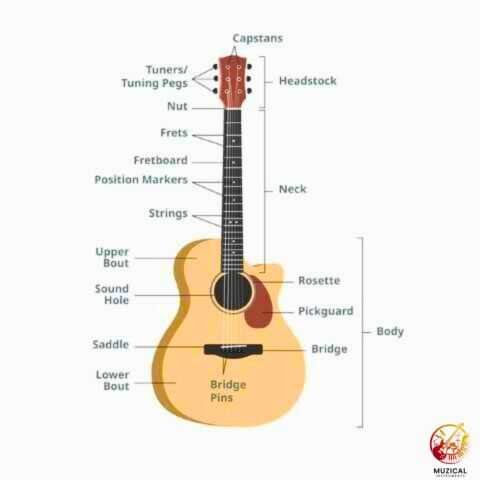
The biggest difference is how they make sound. An acoustic guitar has a hollow body with a sound hole. When you pluck a string, the wooden box vibrates and makes the sound loud naturally. You do not need to plug it into anything.
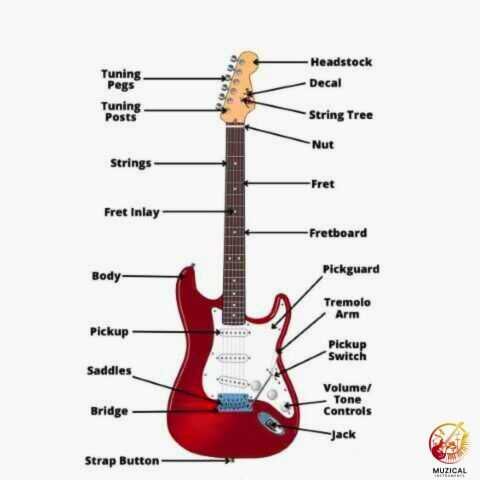
An electric guitar has a solid body that does not vibrate much on its own. It uses “pickups,” which are magnets wrapped in wire. These magnets capture the vibration of the strings and send it down a cable to an amplifier (amp). Without an amp, an electric guitar is very quiet.
This difference changes how you use them. Acoustic guitars are “grab and go.” You just pick them up and play. Electric guitars require a bit of setup with cables and power, but they offer more variety in sound.
Is An Electric Guitar Easier To Play Than An Acoustic?

Many people think acoustic guitars are better for starters, but this is often wrong. Physically, an electric guitar is actually easier to play.
Here is why:
- String Tension: Electric guitars use thinner strings. They are easier to push down against the wood.
- Neck Width: The neck on an electric guitar is usually thinner. This makes it easier for small hands to reach around.
- Body Size: Electric guitars are thinner and sit closer to your body. Acoustic guitars can feel bulky and wide.
Acoustic guitars have “high action.” This means the strings are higher off the neck. You have to press harder to make a clear note. This can hurt your fingertips until you build calluses. If you want the path of least resistance, the electric guitar wins on comfort.
Which Guitar Sound Do You Prefer?
Your favorite music should guide your starter guitar choice. If you buy a guitar that can’t make the sounds you like, you won’t want to practice.
Choose Acoustic If
- You like folk, country, or singer-songwriter music.
- You like artists like Ed Sheeran, Taylor Swift (early years), or Johnny Cash.
- You want a bright, woody sound that fills the room naturally.
- You want to focus on strumming chords and singing along.
Choose Electric If
- You like rock, metal, blues, or jazz.
- You like bands like AC/DC, Metallica, or Nirvana.
- You want to play guitar solos or use effects like distortion.
- You want to experiment with different tones and volume levels.
Acoustic vs Electric Guitar for Beginners: A Side-by-Side Comparison
It helps to see the pros and cons in a simple list. This table breaks down the acoustic vs electric sound and features.
| Feature | Acoustic Guitar | Electric Guitar |
|---|---|---|
| Volume | Loud naturally. Cannot be turned down. | Quiet unplugged. Volume control via Amp. |
| Weight | Very light. Easy to carry. | Heavier due to solid wood and magnets. |
| Strings | Thicker steel or nylon. Harder on fingers. | Thinner nickel or steel. Softer on fingers. |
| Equipment | No extra gear needed. | Needs an amp and a cable. |
| Price | Lower starting cost. | Higher cost for the full bundle. |
| Portability | Excellent. Take it to the beach. | Good, but you need power for the amp. |
What Is The Budget For A Beginner Guitar Setup?
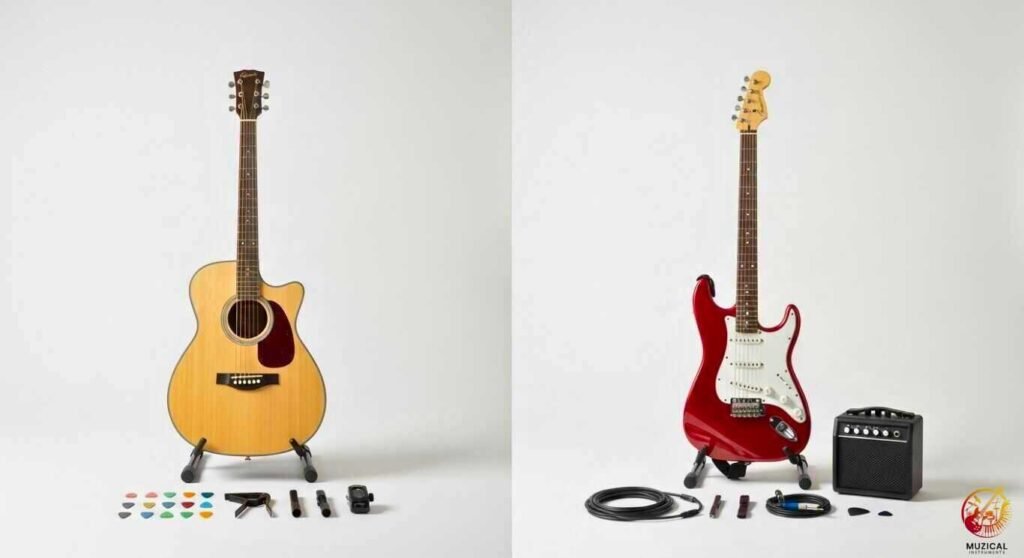
Money is a big factor for most families. When looking at the guitar budget for beginners, acoustic guitars are usually cheaper upfront. You pay for the instrument, and maybe a case. You can get a decent starter acoustic for $150 to $200.
Electric guitars have hidden costs. The guitar might cost $150, but you cannot play it properly without extra gear.
Acoustic Guitar Starter Costs
| Item | Price Range | Notes |
|---|---|---|
| Beginner acoustic guitar | $150-$300 | Yamaha, Fender, Epiphone make solid choices |
| Guitar tuner | $15-$30 | Clip-on tuners work great |
| Extra strings | $10-$15 | Keep a spare set handy |
| Guitar picks | $5-$10 | Buy different thicknesses |
| Gig bag or case | $30-$60 | Protects your investment |
| Total startup cost | $210-$415 | Everything you need to play |
Electric Guitar Starter Costs
| Item | Price Range | Notes |
|---|---|---|
| Beginner electric guitar | $200-$350 | Squier, Epiphone, Ibanez popular brands |
| Practice amplifier | $80-$150 | 10-20 watt amp works perfectly |
| Guitar cable | $15-$25 | Connects guitar to amp |
| Guitar tuner | $15-$30 | Same as acoustic |
| Extra strings | $8-$12 | Electric strings cost less |
| Guitar picks | $5-$10 | Same as acoustic |
| Gig bag or case | $30-$60 | Protection for your guitar |
| Total startup cost | $353-$637 | Complete electric setup |
Electric guitar costs about $150-$200 more because you need the amplifier. That amplifier isn’t optional, without it, an electric guitar sounds tiny and weak.
If you choose electric, look for “beginner gift sets.” These bundles include the guitar, a small amp, a strap, and a cable in one box. They offer great value.
However, do not buy the cheapest option on the shelf. Extremely cheap guitars often have “tuning stability” issues, meaning they sound bad even when you play the right notes.
Can I Learn On A Classical Guitar Instead?
Yes, and this is a great secret for sore fingers. A classical guitar is a type of acoustic guitar, but it uses nylon strings instead of steel strings.
Nylon strings feel like plastic. They are very soft and gentle on your fingertips. They produce a warm, mellow sound. This is the best guitar for beginners who are very young or have sensitive hands.
However, the neck on a classical guitar is very wide. If you have small hands, it might be hard to stretch your fingers across the fretboard. Also, you cannot put steel strings on a classical guitar. It will break the neck. You must stick to the mellow sound of nylon.
Do I Need An Amplifier For An Electric Guitar?
Technically, you can play an electric guitar without an amp. It will make a tiny, quiet sound. This is okay for late-night practice if you don’t want to wake anyone up. But to hear the true sound, you need amplification.
Modern technology has made this easier. You don’t need a giant, heavy box anymore.
Alternatives to big amps:
- Headphone Amps: A tiny device the size of a car key fob. It plugs into your guitar, and you plug headphones into it.
- Computer Software: You can plug your guitar into a computer and use software to sound like a rock star.
- Mini Amps: Small battery-powered speakers that sit on your desk.
These options make the electric guitar benefits accessible even in small apartments.
What Are The Common Mistakes Beginners Make?
Buying your first instrument is exciting, but it is easy to mess up. Here are common traps to avoid during your first guitar buying tips search.
Buying A Guitar That Is Too Big
Guitars come in sizes: Full, 3/4, and 1/2 size. A 7-year-old child will struggle with a full-sized dreadnought acoustic guitar. It will feel like hugging a refrigerator. Check a size chart before buying.
Ignoring The “Action”
Cheap guitars often have strings that are very high off the neck. This makes them impossible to play. If you buy a used guitar, take it to a shop for a “setup.” A technician will lower the strings for you.
Quitting Because Of Finger Pain
Every guitarist gets sore fingertips. This is normal. It lasts for about two to three weeks. Do not switch from acoustic to electric just because of pain. Your skin will get tougher (calluses), and the pain will stop.
Not Buying A Tuner
Guitars go out of tune every time you play. If you don’t have a tuner (or a tuner app on your phone), you will think you are playing wrong, but the guitar is actually just out of tune.
How Does Noise Level Affect Your Choice?
Where do you live? This is a practical question that is often ignored.
The Acoustic Reality
An acoustic guitar has one volume: audible. You cannot turn it down. If you practice in a bedroom with thin walls at midnight, your family will hear you. Strumming hard on steel strings creates a lot of sound energy.
The Electric Advantage
Electric guitars are excellent for silence. If you use headphones, only you can hear the rock concert. The only sound in the room is the quiet “click-clack” of the strings. This is a massive beginner-friendly guitar option for people living in shared spaces or apartments.
Acoustic Vs Electric: Maintenance And Care
You want your instrument to last. Both types need care, but they are different.
Acoustic Care
- Humidity: Wood expands and shrinks. Acoustic guitars are fragile. If the air is too dry, the wood can crack. You may need a humidifier case.
- Simplicity: You rarely have to fix electronics or loose wires.
Electric Care
- Dust: Dust can get into the volume knobs, making them sound scratchy.
- Loose Parts: The input jack (where you plug the cable in) often gets loose. You need to tighten it with a wrench.
- String Changes: Changing strings on some electric bridges can be tricky for beginners.
Beginner Guitar Setup Checklist
Regardless of which acoustic or electric guitar for beginners you choose, you need the right tools. Use this checklist to make sure you have everything on day one.
| Item | Necessary for Acoustic? | Necessary for Electric? | Why do you need it? |
|---|---|---|---|
| Clip-on Tuner | Yes | Yes | Keeps your notes sounding correct. |
| Picks | Yes | Yes | Saves your fingernails and makes clear sound. |
| Strap | Yes | Yes | Lets you play while standing up. |
| Case/Gig Bag | Yes | Yes | Protects the guitar from dust and bumps. |
| Capo | Yes | No (at first) | Helps you sing in different keys. |
| Cable | No | Yes | Connects guitar to the amplifier. |
| Stand | Yes | Yes | Keeps guitar safe when not playing. |
Which Guitar Is Easier To Learn Songs On?
When you start guitar learning tips, you want to play songs quickly.
Chords
Acoustic guitars are great for learning “open chords.” These are the basic shapes like G, C, and D. Because the strings are thicker, they don’t bend out of tune easily when you press them. It teaches you hand strength.
Single Notes And Riffs
Electric guitars are better for “riffs” (like the intro to Smoke on the Water). The lower tension makes it fun to play individual notes quickly. However, because the strings are so light, beginners sometimes press too hard and bend the note sharp, making it sound off-pitch.Shutterstock
Final Verdict: The Kids Beginner Guitar Guide
If you are a parent buying for a child under 12, listen closely.
The biggest hurdle for kids is the physical size of the instrument. A full-size acoustic guitar is very deep. It pushes the child’s shoulder up and can be uncomfortable.
For kids, a 3/4 size electric guitar or a 3/4 size nylon string acoustic is usually best.
- Nylon: No finger pain, but wide neck. Good for focused kids.
- Electric: Cool factor, thin neck, easy strings. Good for kids who want to rock.
Avoid full-size steel-string acoustic guitars for small children. It is the number one reason kids quit.
Final Thoughts
So, when deciding on acoustic vs electric guitar for beginners, there is no single winner. If you want a simple, budget-friendly start and love folk music, grab an acoustic. If you want physical comfort, volume control, and rock sounds, choose an electric.
The most important rule is to buy the one that excites you. Look at pictures of your heroes. What do they play? Buy that type. The best guitar is the one you can’t wait to pick up every day.
FAQ: Acoustic vs Electric Guitar For Beginners
1. Is it harder to learn on an acoustic or electric guitar?
Physically, the acoustic guitar is harder to learn. The strings are thicker and sit higher off the neck, so you need more finger strength to press them down. The electric guitar has thinner strings and a smaller neck, which feels softer and easier for beginner hands. However, some teachers prefer acoustic because it builds strong muscles quickly.
2. Can I start with an electric guitar if I have never played before?
Yes, absolutely! You do not need to “graduate” from acoustic to electric. If you love rock or metal music, you should start on the instrument that makes those sounds. If you buy an acoustic guitar but actually want to play rock solos, you might get bored and quit. The best guitar is the one that makes you want to practice every day.
3. Do I need to buy an amplifier for my first electric guitar?
Technically, no, but you should get one eventually. You can practice an electric guitar unplugged, but it will be very quiet. To hear the real sound and correct your mistakes, you need an amp. If you are worried about money or noise, you can buy a small “headphone amp” that plugs directly into the guitar so only you can hear it.
4. Which guitar is cheaper for a beginner to buy?
An acoustic guitar is usually cheaper to start with because it is a standalone instrument. You just buy the guitar and a case. An electric guitar often costs more upfront because you need to buy the guitar plus a cable and an amplifier. However, many brands sell “starter packs” that bundle everything together for a lower price.
5. Will an electric guitar be too loud for practicing at home?
Surprisingly, an electric guitar is often quieter than an acoustic guitar. An acoustic guitar has a hollow body that projects sound loudly, and you cannot turn it down. An electric guitar is almost silent when you use headphones. This makes the electric guitar a better choice for people living in apartments or with roommates.