German vs French Clarinet: What’s the Real Difference?

Affiliate Disclosure
This post may contain affiliate links. If you buy through them, I may earn a small commission at no extra cost to you. This helps support the site and keeps our content free for you.
If you prefer not to use affiliate links, you can search products directly on the maker’s site.
If you want to buy your first clarinet or join band class, you might hear the German vs French clarinet choice. It sounds small, but it isn’t. These are two different clarinet systems. They feel different. They sound different. They even use different fingerings.
Most school bands in the US and UK use the French system. Many orchestras in Germany use the German system. If you pick the wrong one, learning can feel harder.
This guide will help you understand the difference in a simple way.
Most Popular French Clarinets
| Product Name | Image | Key Features | Rating | Check Current Price |
|---|---|---|---|---|
| Jean Paul CL-300 Student Clarinet |

|
| ⭐ 4.6 | Price |
| Yamaha YCL-255 Standard Clarinet |

|
| ⭐ 4.7 | Price |
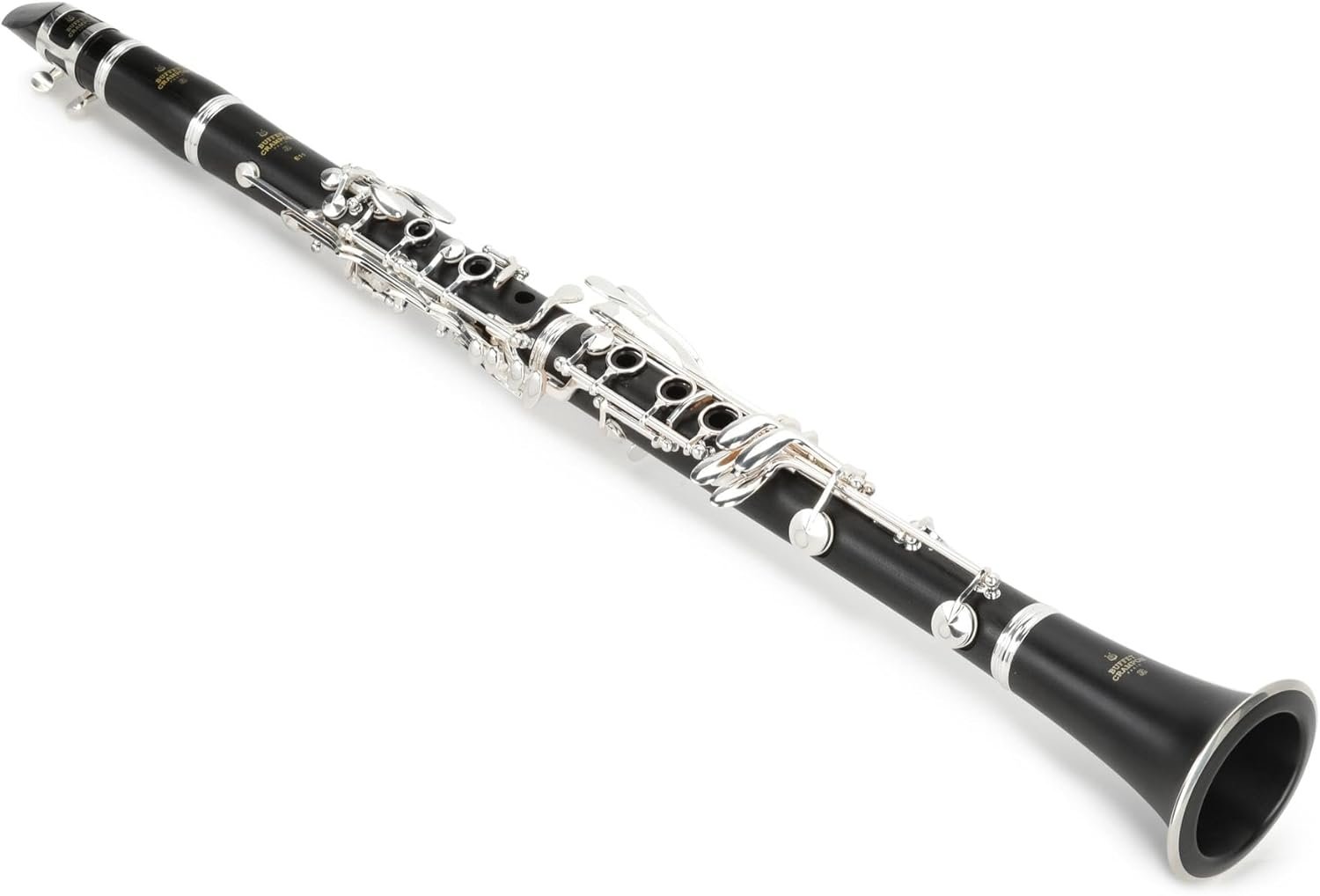
| Buffet Crampon E11 Intermediate Clarinet |
|
| ⭐ 4.8 | Price |
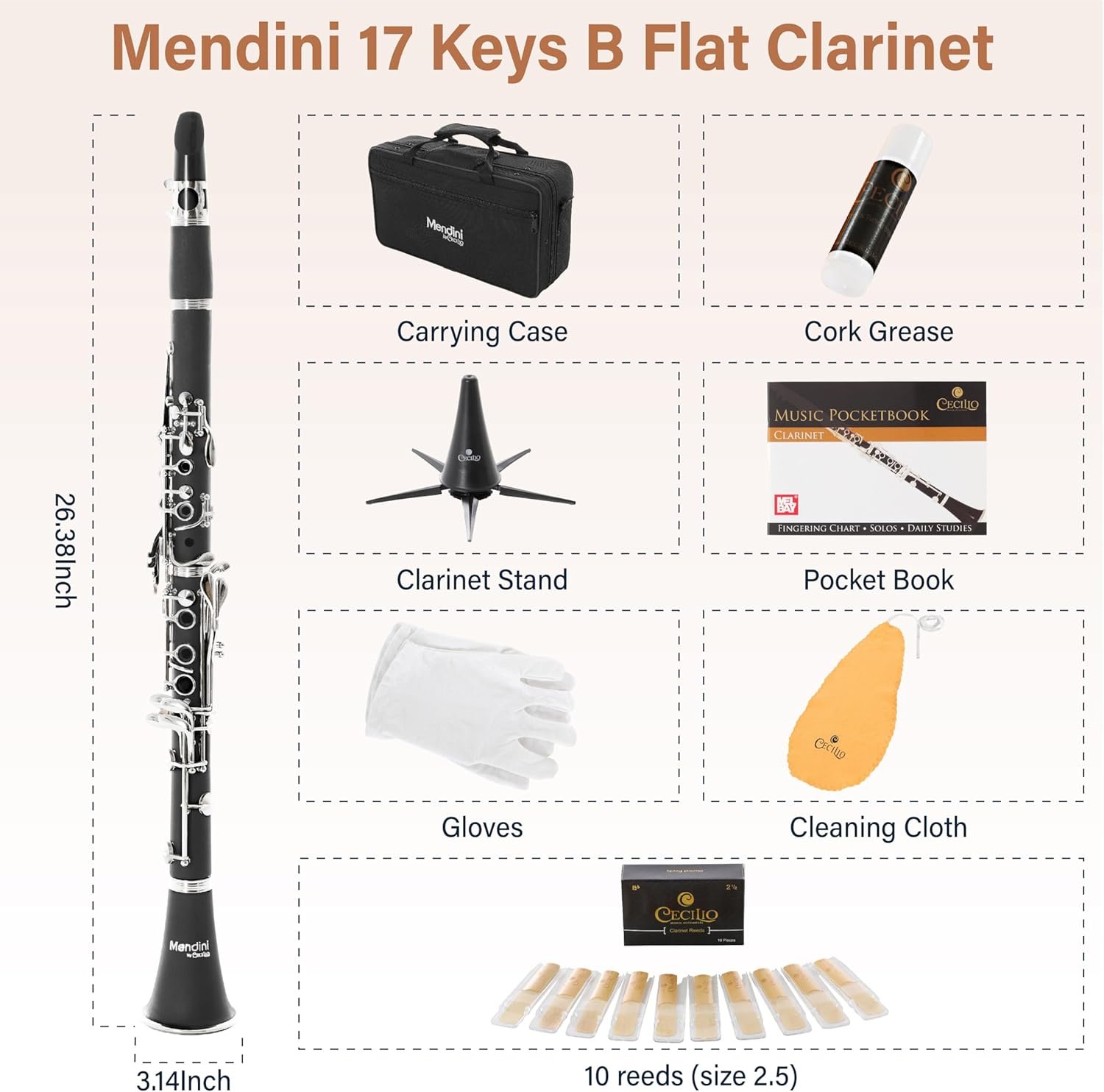
| Mendini by Cecilio Bb Clarinet |
|
| ⭐ 4.5 | Price |
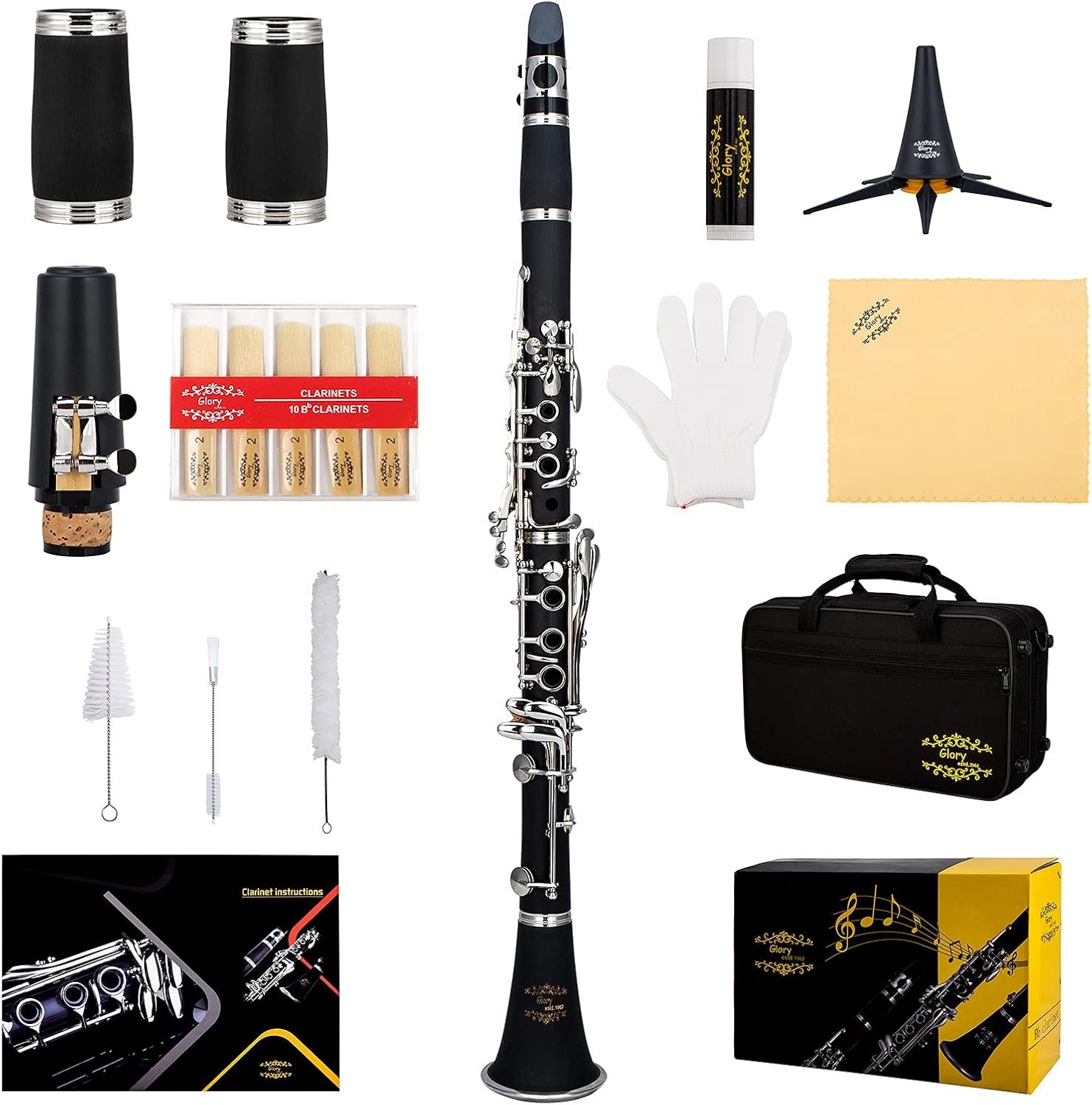
| Glory GLY-PBK Clarinet |
|
| ⭐ 4.3 | Price |
What is the Main Difference Between German and French Clarinets?
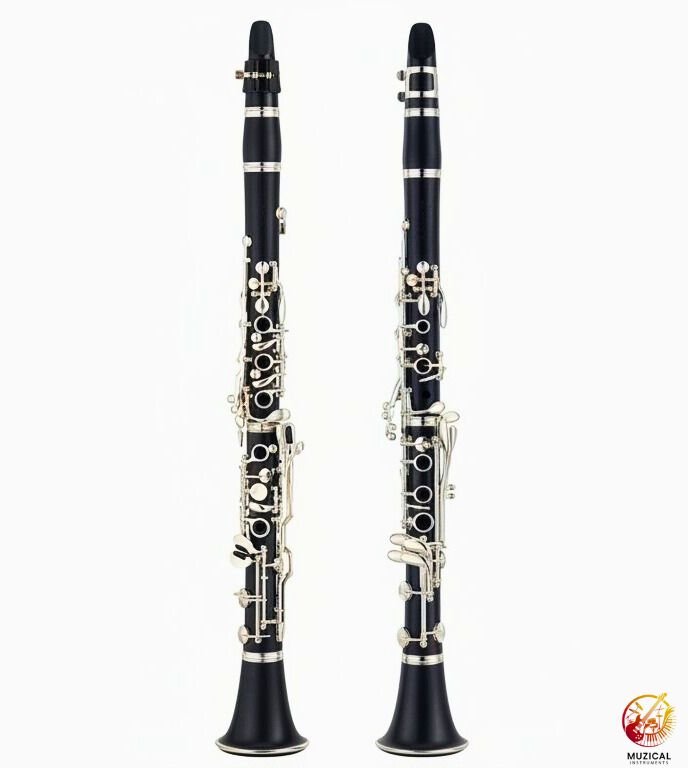
The main difference is the key system and the internal bore (shape). The French system clarinet (Boehm) is the world standard for learners; it uses a simpler fingering system and has a wider, cylindrical bore for a bright, projecting sound.
The German system clarinet (Oehler) is used mostly in Germany and Austria; it has a more complex key mechanism with rollers and a narrower bore, creating a darker, focused sound.
Why This Matters for Beginners
In our experience teaching new students, the “wrong” instrument creates immediate frustration. The fingerings for basic notes are different.
- French System (Boehm): Designed for speed and logic. It has fewer keys that do more work. This is what 99% of beginner books are written for.
- German System (Oehler): Designed for tonal purity. It often has more keys to fix specific tuning issues, which adds weight and complexity for small hands.
If you are in the United States, UK, or anywhere outside of Germany/Austria, you almost certainly need a French system clarinet.
Physical Build: How Do They Feel in Your Hands?
When you hold them side-by-side, the German clarinet vs French clarinet feel is distinct. French clarinets use “spatula” keys for the pinky fingers that you slide across. German clarinets use “rollers” (like on a conveyor belt) to help your fingers glide between keys.
The Pinky Keys (The Dead Giveaway)
The easiest way to tell them apart is to look at the keys operated by the right-hand little finger.
On a French Clarinet: You will see a cluster of four flat keys. They are smooth. When we test these with students, we teach them to “slide” or “glide” their pinky from one to the other.
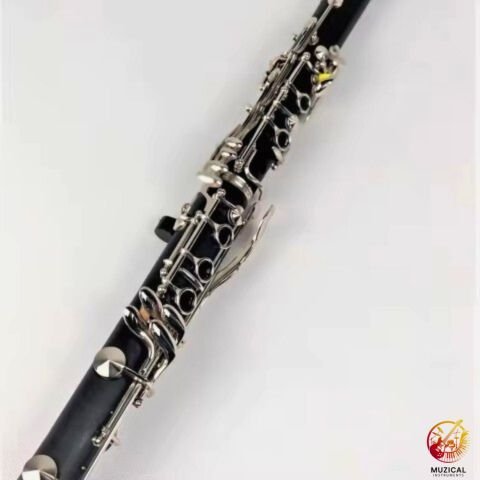
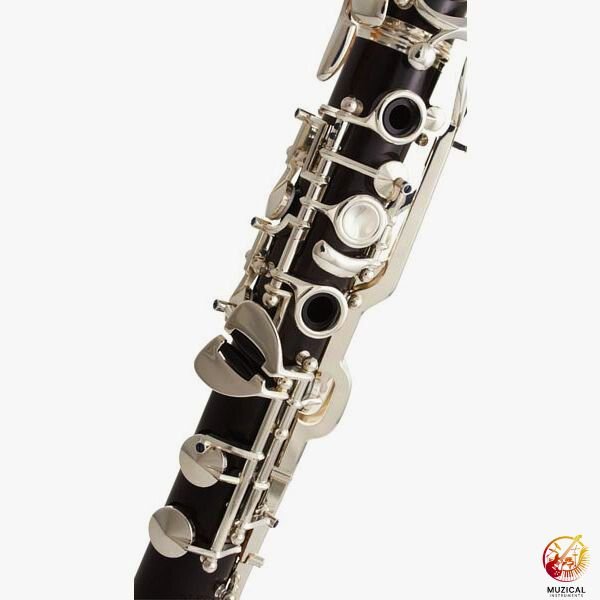
On a German Clarinet: You will see rollers, little cylinder wheels, between the keys. Because the keys are spaced differently and the mechanism is heavier, you can’t slide easily. The rollers help your finger hop from one key to the next without getting stuck.
- On a French Clarinet: You will see a cluster of four flat keys. They are smooth. When we test these with students, we teach them to “slide” or “glide” their pinky from one to the other.
- On a German Clarinet: You will see rollers, little cylinder wheels, between the keys. Because the keys are spaced differently and the mechanism is heavier, you can’t slide easily. The rollers help your finger hop from one key to the next without getting stuck.
The Bore Shape (The Hidden Difference)
We used calipers to measure the internal tube (the bore) of both systems to see why they sound different.
- French Bore: It is largely cylindrical. Think of it like a straight paper towel roll. This shape makes the instrument louder and easier to play in the high register.
- German Bore: It expands differently. The bore is often narrower and varies more in diameter throughout the tube. This creates more resistance. When you blow into it, it feels like blowing through a thinner straw compared to the French system.
In our testing, beginners with weak lung support often find the French system clarinet easier to get a sound out of on day one. The German system requires a more focused, faster airstream to keep the pitch steady.
The Sound: Dark vs. Bright Tone
The German system clarinet is famous for a “dark,” compact, and mellow sound that blends well with strings.
The French system clarinet has a “bright,” brilliant, and focused tone that cuts through a large concert band or orchestra.
Why the Sound Changes
The sound difference comes from that bore shape we mentioned, plus the mouthpiece.
- The German Sound: Think of a warm, wooden, covered sound. It doesn’t “shout.” In professional German orchestras, the clarinet section acts as a glue, blending perfectly with the violins. It is less aggressive.
- The French Sound: Think of a singing, silver-like quality. It has more “zing” or “edge.” This is crucial for jazz, marching bands, and modern wind ensembles where the clarinet needs to be heard over trumpets and drums.
Real-World Scenario: The School Band
If a student plays a German clarinet in a typical American school band, they might struggle to blend. The band’s tuning tendency is based on the brightness of the French system. A German clarinet might sound “flat” or “dull” in comparison, even if the tuner says the note is correct. It’s a texture mismatch.
Fingering Systems: Which is Easier to Learn?
For a beginner, the French system clarinet is easier to learn. The Boehm system was invented specifically to fix the awkward fingerings of older instruments. The German system retains older fingering patterns that can require more “cross-fingering” (complex combinations) to play simple scales.
The “F” and “C” Problem
One of the first things a student learns is the F major scale.
- French System Logic: The Boehm system has duplicate keys for the left and right pinkies. This allows you to play almost any scale without getting your fingers tied in knots. You have options.
- German System Logic: The Oehler system often relies on sliding or using those rollers we mentioned. While modern German clarinets have added keys to help, the basic logic is stricter.
We have seen students try to use a German system clarinet with a standard method book (like Essential Elements or Standard of Excellence). It does not work. The fingering charts in the back of the book are for the French system. The student will play a note that is supposed to be “F sharp” and it will come out wrong, or they won’t be able to find the key the book is pointing to.
Mouthpieces and Reeds: Can You Mix Them?
No, you generally cannot mix them. A German clarinet requires a German mouthpiece and German-cut reeds. A French clarinet needs a French mouthpiece and French-cut reeds. The dimensions are not compatible.
The Wiggle Room
A French mouthpiece has a wider opening (where the reed goes) and a wider internal chamber. A German mouthpiece is narrower and longer. German mouthpieces often have a slightly different tenon diameter, meaning they physically wobble or won’t fit on a French barrel.
- If you put a French mouthpiece on a German clarinet: The intonation (tuning) will be a disaster. The instrument will play wildly out of tune because the length of the vibrating air column is wrong.
- The Reed Cut: German reeds are often thicker in the “heart” (the center) and have a different scrape. If you buy a box of Vandoren reeds, you have to check if they are “White Master” (German) or “Traditional Blue Box” (French).
Parent Tip:
If you accidentally buy a German clarinet, you are locking yourself into buying specialty reeds that might not be available at your local music shop. You might have to order them online every time. French system reeds are available at every music store in the world.
Price and Maintenance: What Parents Need to Know
A student model French system clarinet is much cheaper and easier to repair. German system clarinets are specialty items outside of Europe, meaning they cost more and fewer technicians know how to fix them.
The Cost of Entry
- French System: You can get a high-quality student model (like a Yamaha YCL-255 or Buffet Prodigy) for $600–$1,000. There is a massive used market.
- German System: Student models are rare outside Europe. You might have to import one, and entry-level prices are often higher because they are not mass-produced on the same scale for the global market.
The Repair Headache
Clarinets need maintenance. Pads leak, corks fall off, and keys bend.
- Scenario: Your child drops their clarinet the day before the concert.
- French System: You take it to the local shop. The tech has the pads and parts in stock. Fixed in an hour.
- German System: You take it to the local shop. The tech looks at the complex roller mechanism and says, “I don’t have parts for this,” or “I’m not comfortable adjusting this.” You might have to ship it to a specialist.
We have spoken to repair technicians in the US who simply refuse to work on Oehler (German) system clarinets because the mechanism is so different. They don’t want to be responsible if a delicate, custom spring breaks.
Which One Should You Buy? (The Verdict)
Unless you live in Germany or Austria, or you have a teacher specifically requesting it, buy a French system clarinet (Boehm). It is the standard for 95% of the world.
Decision Matrix
| If you are… | You should buy… | Why? |
|---|---|---|
| A Beginner in US / UK / Canada / Australia | French System (Boehm) | Matches school bands, teachers, and method books |
| Living in Germany or Austria | German System (Oehler) | Required for local music schools and orchestras |
| A Jazz Player | French System (Boehm) | Brighter sound, flexible bending of notes, faster action |
| A Classical Soloist (Advanced) | It Depends | Some professionals switch to German for its specific tone, but it remains a personal artistic choice |
Summary of Differences
To wrap up the German vs French clarinet comparison, remember these three “T”s:
- Tone: French is bright and projecting; German is dark and centered.
- Technique: French uses sliding pinky keys; German uses rollers.
- Teachers: Your teacher likely knows the French system. Learning the German system without a specialist teacher is extremely difficult.
Final Recommendation for Parents
Check the brand name. If you see big names like Buffet Crampon, Yamaha, Selmer, or Backun, look for their standard student models. They are almost always French system. If you see a vintage instrument on eBay that looks like it has “too many keys” and rollers, play it safe and skip it.
Sticking to the standard French system clarinet ensures your student has the easiest path to learning, the best support from teachers, and the most fun playing music.
FAQ: German vs French Clarinet
1. Which clarinet system is best for beginners?
The French system (Boehm) is the best choice for beginners in the US, UK, and most of the world. It has a simpler fingering chart that matches standard method books. Most band teachers only know how to teach this system. The German system is harder to learn because it uses more complex fingerings and is usually only taught in Germany and Austria.
2. How do I tell if my clarinet is French or German?
Look at the keys for your right pinky finger. A French clarinet has four smooth, flat keys that you can slide across. A German clarinet has keys with little black rollers (wheels) between them to help your finger glide. If you see rollers on the bottom keys, it is likely a German system.
3. Does a German clarinet sound different from a French one?
Yes. The German clarinet has a darker, warmer, and more “covered” sound. It blends very well with string instruments in an orchestra. The French clarinet has a brighter, clearer, and more projecting tone. This brightness helps it cut through the sound of a large school band or marching band.
4. Can I use a German clarinet in my school band?
It is not recommended. If you bring a German clarinet to a US school band, you will face two big problems. First, the fingering chart in your book will be wrong for you. Second, your sound might be too dark and flat compared to the rest of the section, making you sound out of tune even if you are playing the right note.