
What is The Best Accordion Size For My Kids?

The best accordion size for your kids depends on their age and body size. Very young kids, ages 3 to 6, do best with a small 8 to 12 bass accordion. Kids ages 7 to 10 feel more comfortable with a 24 or 48-bass model. Older kids, age 11 and up, can handle a 72 to 96-bass accordion, and some can use a full 120-bass size.
Choosing the right accordion size for my kids isn’t just about their age. You need to think about their arm length, hand size, and how strong they are.
This guide breaks down exactly which size fits your child based on their age, strength, and musical goals.
What Size Accordion Should I Buy For A Beginner Child?
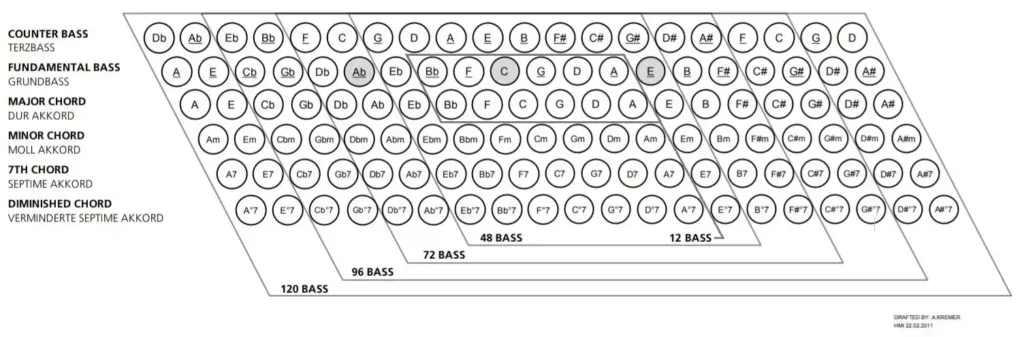
Accordions are measured by the number of buttons on the left hand (the bass side). Even if you buy a “piano accordion,” you still look at the bass number to know the size.
The bass buttons control the accompaniment. More buttons mean the instrument is physically larger and heavier.
- 12 Bass: Very small. Often considered a toy. Good for toddlers (ages 3–5).
- 48 Bass: The standard learner size. It has enough notes for real songs but is light enough for a 7-year-old.
- 72 Bass: A “forever” size. It is heavier but fits older kids (10+) and adults perfectly.
Accordion Size By Age And Weight Chart
This table helps you match your child’s age to the right instrument. Keep in mind that a tall 6-year-old might handle a larger size than a small 8-year-old.
| Child’s Age | Recommended Size | Approx. Weight | Best For… |
|---|---|---|---|
| 3–5 Years | 8 to 12 Bass | 3–5 lbs | Playtime and noise-making. Usually a kids piano accordion. |
| 5–7 Years | 24 to 32 Bass | 8–10 lbs | Early lessons. Good for simple folk tunes. |
| 7–10 Years | 48 Bass | 11–13 lbs | Serious learning. Plays full chords (Major, Minor, 7th). |
| 10–13+ Years | 72 Bass | 16–18 lbs | The “Sweet Spot.” A safe accordion size for kids who are taller. |
| Teens | 96 to 120 Bass | 20+ lbs | Advanced players who can handle the heavy weight. |
Piano Keys vs. Button Keys: Which is Easier?
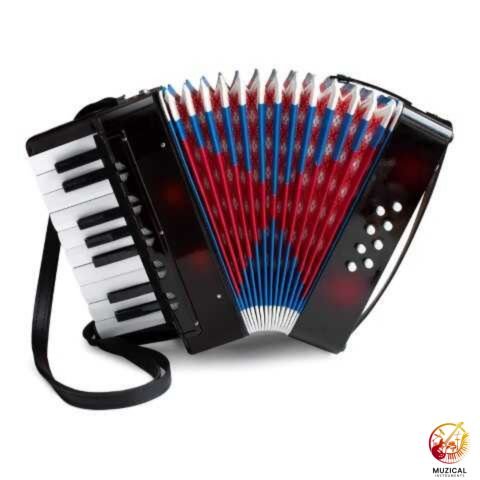
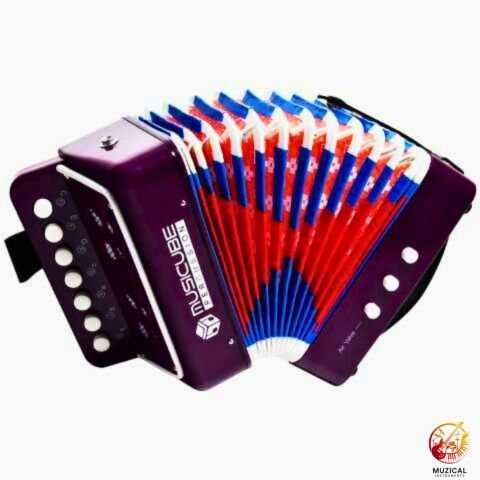
You will see two main types of accordions: Piano and Button. Which one is the best accordion for children?
Piano Accordions These have keys that look just like a piano on the right side.
- Pros: Easy to understand visually. Easier to find a teacher in schools.
- Cons: The keys take up more space, making the instrument wider.
Button Accordions These have round buttons on both sides.
- Pros: Much smaller and lighter than piano accordions. Little fingers can reach more notes easily.
- Cons: Harder to learn at first because the notes aren’t laid out in a straight line.
Verdict: For most beginners in English-speaking countries, the kids piano accordion is the standard choice.
Why Weight Matters More Than Age
A child size accordion is not just about height; it is about strength. An accordion sits on the chest and hangs from the shoulders.
If an accordion is too heavy (over 15 lbs) for a small child:
- They won’t practice: It feels like a chore to lift it out of the case.
- Bad Posture: They will lean backward or hunch forward to balance the weight.
- Fatigue: Their shoulders will hurt after 10 minutes.
How to test the fit: When your child sits with the accordion, their chin should clear the top of the instrument easily. If the keyboard is touching their chin, the instrument is too big.
How Do I Know If an Accordion is Too Big For My Child?
Watch your child’s posture and movement when they hold the accordion. If they’re struggling, the instrument is probably too large.
Check these warning signs:
- Shoulders hunching forward or tilting to one side
- Can’t reach the outer bass buttons without stretching
- Fingers barely reach the far piano keys
- Leaning backward to balance the weight
- Arms getting tired after 5-10 minutes of playing
What Accordion Size Works Best For My 5–7 Year Old?
Most children in this range do best with:
- 8 bass or 12 bass
- Very light bellows
- Narrow body
At this stage, learning rhythm matters more than sound power. Big accordions do not make better players.
Teachers often say this: “If the accordion feels fun, practice follows.”
That is why a beginner accordion for kids should feel like a toy, but play like a real instrument.
What Accordion Size Is Right For Kids Aged 8–10?
This is a growth stage. Hands stretch. Strength improves. Focus lasts longer.
Many kids move to:
- 24 bass accordion
- Medium bellows
- Stronger straps
This size supports simple songs and left-hand patterns. It is a common step in accordion for kids by age progression. Avoid jumping too fast to 48 bass. That jump often causes fatigue.
Should I Buy A Bigger Accordion So My Child Can “Grow Into It”?
This idea sounds smart, but it often fails. Children grow fast, but habits grow faster.
A too-large accordion causes:
- Bad posture
- Poor hand shape
- Short practice sessions
From teaching rooms, this pattern repeats often. Kids learn faster on the right size now, not the future size. You can resell or pass down later. Learning time is more valuable than saving money.
How Can I Check Accordion Fit For Children At Home?
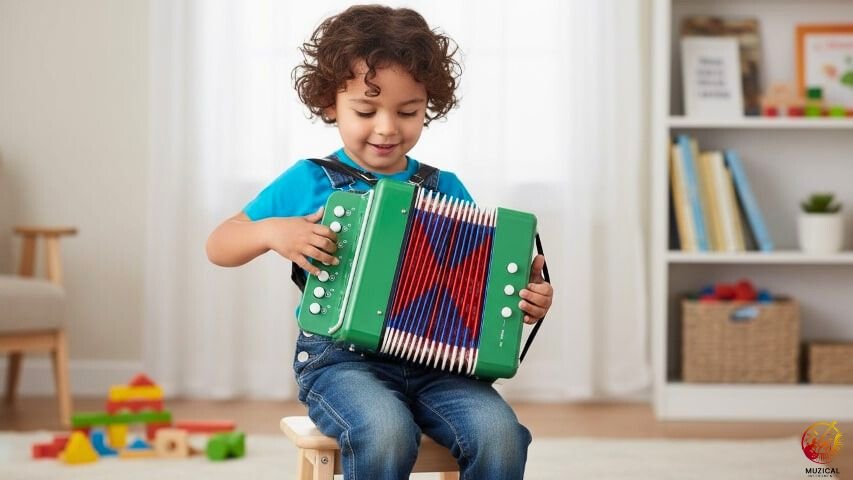
You do not need a teacher for a basic check.
Use this simple fit test:
- Your child wears the accordion
- Arms rest naturally
- Fingers reach keys or buttons
- Bellows move without struggle
Watch closely when they play. If shoulders rise, size is wrong. If wrists bend sharply, size is wrong. Fit should feel natural, not forced.
What Features Should I Look For In A Kids Accordion?
Size comes first. Then details. A good kids accordion buying guide looks for:
- Lightweight build
- Soft shoulder straps
- Adjustable bass strap
- Smooth bellows
- Clean sound, not loud sound
Avoid heavy decorations. Avoid metal-heavy models for small kids. Many brands make child size accordion models now. Hohner, Weltmeister, and Paolo Soprani are well-known names.
Buying Guide: New vs. Used for Beginners
Accordions are expensive machines with thousands of moving parts. Parents often ask if they should buy a cheap new one or an old used one.
| Type | Cost | Pros | Cons |
|---|---|---|---|
| Cheap “Toy” (New) | $30–$60 | Very cheap. Colorful. | Sounds like a harmonica. Breaks fast. Not for lessons. |
| Chinese Student Model (New) | $400–$700 | Shiny and new. No smells. | Resale value drops quickly. |
| German/Italian (Used) | $300–$600 | Best accordion for young beginners. Holds value. Great sound. | Might need repairs (leaky bellows, sticking keys). |
Buying Tip: Look for brands like Hohner or Weltmeister. A used German-made 48-bass accordion is often a better investment than a brand-new generic one.
Final Thoughts
The right accordion size for my kids is usually a 48-bass model for learners aged 7 to 10. It offers all the musical notes they need without breaking their backs.
Remember to check the weight before you buy, and consider a back strap to keep the instrument secure. A comfortable child is a child who practices longer and plays happier.
FAQ: What is The Best Accordion Size For My Kids?
1. What is the best age for a child to start playing the accordion?
Most teachers recommend starting around 6 or 7 years old. By this age, children are strong enough to hold the weight of a 48-bass accordion and can focus on a lesson for 20 minutes. For toddlers (ages 3–5), a small 8-bass or 12-bass model is better for simple play and noise-making.
2.Is the accordion hard for kids to learn?
It is actually easier to start than a violin or trumpet because you make a good sound just by pressing a key. The hardest part is coordination. Your child has to move their left hand, right hand, and the bellows (the middle part) all at different times. It is a bit like learning to pat your head and rub your tummy!
3. How much does a beginner accordion cost?
A good student model usually costs between $300 and $600. Be careful with brand-new accordions that cost less than $100—these are often “accordion toys” that sound thin and break easily. A used German or Italian accordion (like a Hohner) is often the best value for money.
4. Can a child play a full-size 120-bass accordion?
No, a full-size instrument is too heavy (often 20+ lbs). If a child tries to play one, they will have to lean back to balance the weight, which causes bad posture and back pain. It is much better to use a smaller child size accordion (48 or 72 bass) so they can sit up straight and practice comfortably.
5. Should I choose a piano accordion or a button accordion?
For most beginners in the US and UK, a piano accordion is the best choice. It is easier to find teachers and lesson books for this type. However, if your child is very small, a button accordion might be better because the keys are closer together, making it easier for small fingers to reach the notes.
6. What is the difference between a 12-bass and a 48-bass accordion?
A 12-bass accordion is very limited; it can only play simple major chords (happy sounds). It cannot play minor chords (sad sounds). A 48-bass accordion has both, which means your child can play thousands of real songs. Teachers usually prefer the 48-bass because the student won’t outgrow it in just a few months.


