
Best Accordion for Kids: A Parent’s Guide to Easy and Fun Learning

Affiliate Disclosure
This post may contain affiliate links. If you buy through them, I may earn a small commission at no extra cost to you. This helps support the site and keeps our content free for you.
If you prefer not to use affiliate links, you can search products directly on the maker’s site.
Finding the best accordion for kids is not as easy as it looks. In photos, a cheap toy and a real beginner accordion can look the same. But they are very different. One only makes noise. The other helps your child learn real music.
If you choose the wrong one, it may feel too heavy. The bellows may be too hard to pull. Your child could feel upset and quit.
This guide helps you pick the right accordion based on weight, size, and sound.
Quick Verdict: The Top Picks
- Best for Toddlers (Ages 3-5): Hohner Kids Musical Toy Accordion. It is tough, light, and virtually indestructible.
- Best for Learners (Ages 5+): Musicube 17-Key Piano Accordion. It plays like a real instrument but fits a child’s body perfectly.
- Best for Serious Students: Hohner Student X (XS Series). This is a legitimate musical instrument for children ready for lessons.
A Quick Look: Our Top Picks
| Product | Image | Best For | Key Features | Main Drawback | Price |
|---|---|---|---|---|---|
| Hohner Kids Musical Toy |
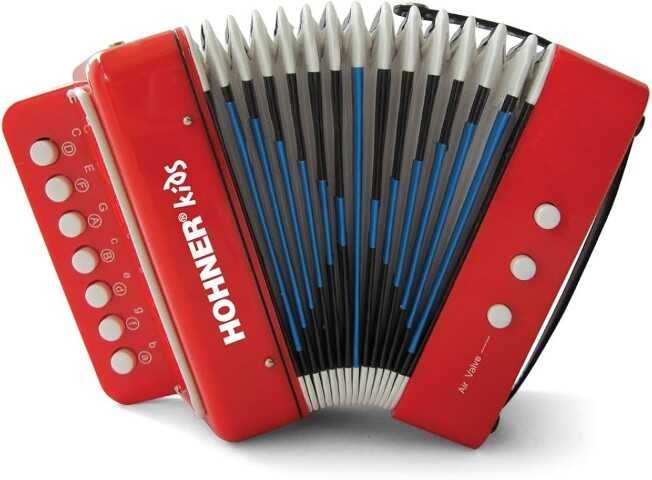
| Toddlers (Ages 2–4) | Very durable with safe rounded edges | Limited notes; not a real instrument | Price |
| Musicube 17-Key Piano |
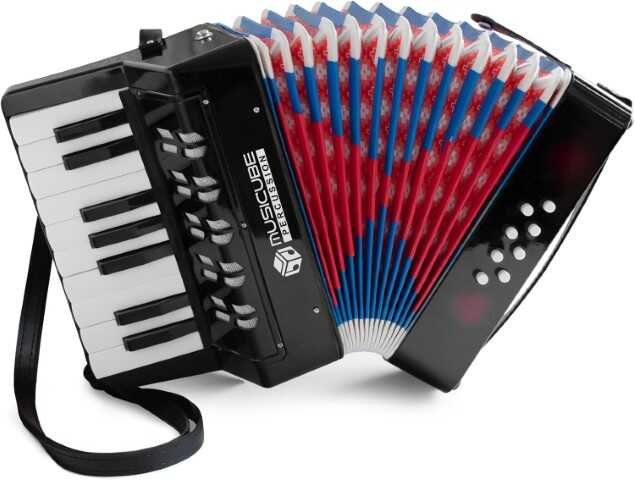
| Beginners (Ages 5+) | Real piano keys and 8 bass buttons | Heavy for very small children | Price |
| Eastar Kids Accordion |
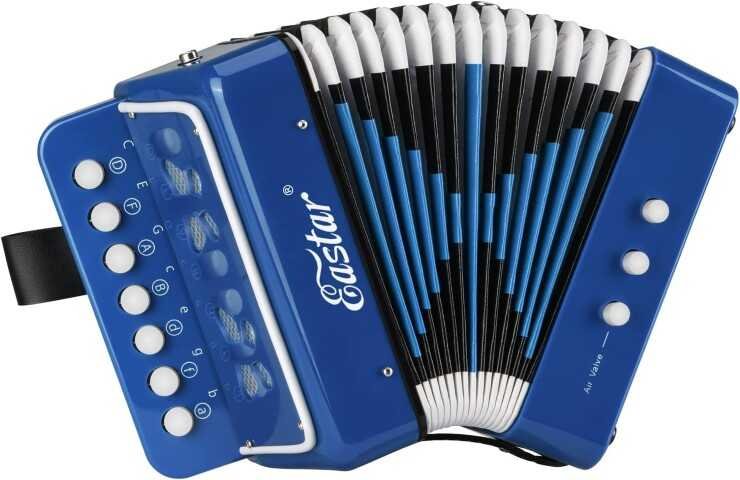
| Casual Fun | Lightweight body and easy-press buttons | Sound can feel airy or weak | Price |
| Hohner Student Series |
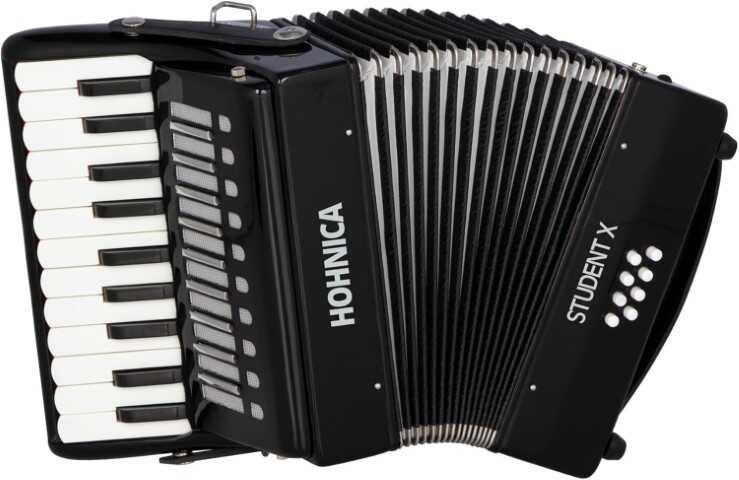
| Serious Lessons | Professional tuning and ergonomic design | Very expensive compared to toy models | Price |
| Woodstock Kid’s Accordion |
| Gift Giving | Numbered keys and songbook included | Bellows feel stiff and hard to pull | Price |
How We Tested: The “Small Hands” Criteria
Before we dive into the reviews, it is important to understand why some accordions fail for kids. In our evaluation of the kids accordion market, we focused on three “deal-breaker” factors:
1. Bellows Resistance (The “Squeeze” Factor)
The bellows are the “lungs” of the accordion. You have to pull them to make sound.
- The Problem: Cheap plastic accordions often have incredibly stiff bellows. A 4-year-old simply doesn’t have the arm strength to pull them while pressing keys.
- The Standard: We looked for bellows made of kraft paper or flexible vinyl that offer low resistance. If a child has to fight the instrument, they will quit.
2. Weight Distribution
A standard adult accordion weighs 15 to 20 pounds. That is crushing for a child.
- Toy Ideal: Under 2 lbs.
- Learner Ideal: 3 to 5 lbs.
- Why it matters: If the instrument is too heavy, the child cannot stand straight. They will hunch over, leading to bad posture and fatigue.
3. Button vs. Piano Keys
- Piano Keys: Best for children who might transition to piano later. It visualizes the music clearly.
- Buttons: Great for folk music and durability (buttons don’t snap off as easily as keys), but the learning curve is steeper for reading music.
1. Hohner Kids Musical Toy Accordion
Best For: Toddlers and rough play (Ages 3+)
Quick Specs:
- Keys: 7 Treble Buttons
- Bass: 2 Bass Buttons
- Weight: ~1.3 lbs
- Material: Plastic body with heavy-duty bellows
If you want to introduce music without spending a fortune, the Hohner Kids Musical Toy Accordion is the industry standard. Hohner is a legendary harmonica and accordion brand, and they brought that engineering pedigree to this toy.
The Experience: Built for Abuse
In our hands-on analysis, the first thing we noticed was the build quality. It feels dense and solid. We have seen this model dropped, sat on, and dragged by the strap, and it keeps playing. It is designed specifically for the chaotic energy of a toddler.
Sound & Playability
It doesn’t sound like a grand accordion. It sounds more like a large, polyphonic harmonica. This is because it uses simple brass reeds. Crucially, it is loud enough to be fun for the child but not so piercing that it becomes a headache for parents. The 7 buttons play a C-scale, meaning no matter what buttons the child mashes, it generally sounds harmonious.
Real-World Scenario:
Imagine a 3-year-old marching around the living room. They want to make noise now. This accordion responds instantly. The strap is just a thumb loop, which is perfect because small kids don’t have the patience to strap on a full harness.
Choose this if:
- You are buying for a child under 5 years old.
- You want a toy that survives rough handling and drops.
- You want an instrument that sounds “in tune” even when mashed randomly.
Avoid this if:
- You want your child to learn specific songs (the 7-key range is very limiting).
- You are looking for a “real” instrument for music lessons.
2. Musicube 17-Key Piano Accordion
Best For: Kids starting to learn music (Ages 5-9)
Quick Specs:
- Keys: 17 Piano Keys (Right Hand)
- Bass: 8 Bass Buttons (Left Hand)
- Weight: ~3.5 lbs
- Build: Food-grade ABS Resin with Kraft Paper Bellows.
The Musicube 17-Key Piano Accordion bridges the gap. It is not just a toy; it is a working beginner accordion for kids that functions like the real thing.
The Experience: A Mini-Orchestra
This is where music starts to happen. We love that this uses piano-style keys on the right hand. If your child has ever poked at a piano, they will understand this interface immediately. With 17 keys, they have a range of over two octaves, which allows them to play real songs like “Twinkle Twinkle Little Star,” “Happy Birthday,” or simple Christmas carols.
The “Stiff Bellows” Break-In
Out of the box, we found the bellows to be quite stiff.
The Problem: The kraft paper and brass reed layout creates a vacuum. A 5-year-old might struggle to pull the accordion open fully on day one.
The Fix: Before handing it to your child, you (the adult) need to “pump” the instrument. Spend 5 minutes fully extending and compressing the bellows (while holding a key down). This loosens the paper fibers and reduces the resistance by about 30%, making it playable for small arms.
The “Bass” Advantage
Unlike the 2-button toys, this has 8 bass buttons. This is a game-changer for learning. It allows the child to play a melody with the right hand and a rhythmic accompaniment with the left. This coordination is the heart of accordion playing.
Construction & Feel
It is made of food-grade ABS resin, making it safe and durable. The bellows are made of kraft paper and brass reeds, giving it a surprisingly rich, reedy tone that sounds authentic. The adjustable side strap is crucial, it keeps the left hand locked in place so the child can pull the bellows without losing their grip on the bass buttons.
Sound Check
This does not sound like a kazoo. It has a “Wet” Musette Tone (a slight vibrato), which sounds surprisingly authentic to French or Polka styles. It is loud enough to perform in a living room concert but not ear-piercing.
Choose this if:
- Your child has expressed a specific interest in learning the accordion.
- You want an instrument capable of playing actual melodies and chords.
- You want the best balance between price and performance.
Avoid this if:
- The child is very small or weak (3.5 lbs can be heavy for a petite 4-year-old).
- You need a professional instrument for advanced exams.
3. Eastar Kids Accordion (10 Keys)
Best For: Travel and small hands (Ages 4-7)
Quick Specs:
- Keys: 10 Piano Keys
- Bass: 3 Bass Buttons
- Weight: ~1.9 lbs
- Dimensions: Compact (approx 7×7 inches)
The Eastar Kids Accordion is a smart compact option. It sits right between the Hohner toy and the Musicube 17-key.
The Experience: The Travel Companion
This small accordion for kids is designed to be gripped easily. The buttons are spaced well for small fingers, but the unit is physically smaller than the Musicube. We noticed the hand strap is made of an eco-friendly material that is soft on the skin, preventing rubbing during long play sessions.
Performance Check
The sound is bright and clear. Because it has 10 keys, you have a slightly wider range than the 7-key toys, but you are still limited to one key signature (usually C major). The 3 bass buttons allow for the tonic, dominant, and subdominant chords, basically the three chords needed to play almost any simple folk or pop song.
Durability
Eastar uses a strengthening technique in the plastic molding. It feels rigid. The bellows are responsive, though they may need a “break-in” period of a few days to loosen up completely.
Choose this if:
- You want something more capable than a toy but lighter than the 17-key models.
- Space is an issue, or you want an instrument for road trips.
- You are on a strict budget but want piano keys.
Avoid this if:
- You dislike the sound of “clicking” keys (the plastic keys can be clacky).
- Your child wants to play complex songs with accidentals (sharps and flats).
4. Hohner Student X Accordion (Hohner XS/Bravo)
Best For: Serious music students (Ages 8+)
Quick Specs:
- Keys: 21-26 Piano Keys (Depending on specific sub-model)
- Bass: 15+ Bass Buttons
- Weight: ~6-8 lbs (Lightweight for its class)
- Design: Ergonomic curved keyboard
If you are looking for an accordion for children who have a teacher, the Hohner Student X (often referring to the Hohner XS or Bravo series) is the top tier. These are real instruments, not adaptations of toys.
The Experience: Professional Grade
Hohner designed the XS specifically for children. It uses a revolutionary material that is 60% lighter than standard accordions. It is also ergonomic, meaning the keyboard is curved to fit the radius of a child’s body. This is a massive feature because it prevents the back pain that often discourages young players.
Sound Quality
This sounds like a professional accordion. The reeds are high quality German-engineered components. You get rich, booming bass and singing treble notes. It holds its tuning very well, unlike the cheaper plastic models which can drift out of tune if the temperature changes.
Investment Value
This is an instrument that holds its resale value. If your child plays this for two years and then quits or upgrades, you can resell a Hohner XS for a significant portion of what you paid.
Choose this if:
- Your child is taking formal lessons with a music teacher.
- You want an instrument that encourages proper posture and technique.
- Budget is not the primary concern.
Avoid this if:
- You are buying a “casual gift” (the price is too high for a whim).
- The child is under 7 years old (it is physically too large).
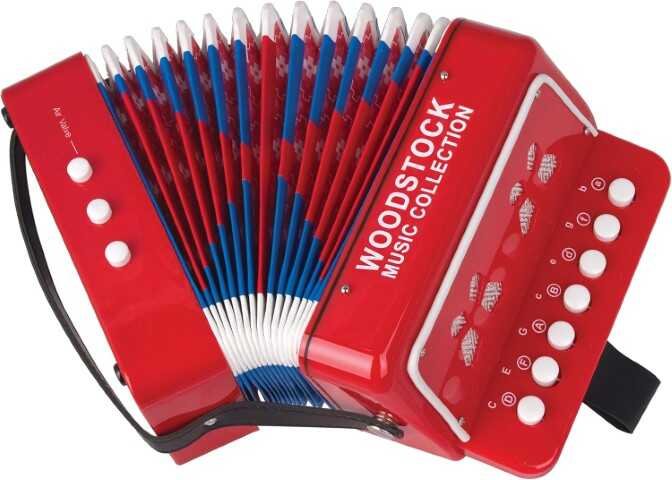
5. Woodstock Kid’s Accordion
Best For: Simple folk fun (Ages 4+)
Quick Specs:
- Keys: 7 Treble Buttons
- Bass: 2 Bass Buttons
- Type: Diatonic (Push/Pull creates different notes)
- Finish: Classic Red/Wood styling
Woodstock is famous for wind chimes and natural instruments. The Woodstock Kid’s Accordion is a simple, diatonic-style squeezebox that harkens back to traditional folk instruments.
The Experience: Diatonic Learning
This is a diatonic instrument. This means that one button makes a different sound when you push the bellows in versus when you pull them out. This is how harmonicas work.
- The Benefit: It is incredibly efficient. You get 14 notes from just 7 buttons. It forces the child to listen to the relationship between the bellows direction and the sound, which is excellent ear training.
Instructional Value
We found the instruction sheet included is actually helpful. It uses a “play by number” system that helps kids play a song within minutes. The aesthetic is also lovely, it looks like a classic instrument rather than a neon plastic toy.
Choose this if:
- You want to develop your child’s “musical ear” rather than just finger dexterity.
- You prefer a classic, folk-style instrument.
- The child already plays harmonica (the logic is similar).
Avoid this if:
- Your child is easily frustrated (the push/pull logic can be confusing at first).
- You want them to learn standard piano theory later.
The “Hidden Gem” Strategy: Buying Used?
If the prices of the Hohner Student X or Musicube seem high, many parents consider buying used.
- Our Advice: Be very careful. Old accordions (especially those found in attics) often have “leaky bellows.”
- The Test: If you buy used, strap it on and pull the bellows without pressing any keys. If the bellows open easily and you hear air hissing, it is leaking. A good accordion should have vacuum resistance, the bellows shouldn’t move much if no keys are pressed. For kids, a new reliable model is usually better than a dusty antique.
Final Thoughts
For most families, the choice comes down to age and intent.
- For pure fun (Ages 3-5): Get the Hohner Kids Musical Toy. It is a low-risk, high-fun purchase that will survive the playroom.
- For budding musicians (Ages 5-9): The Musicube 17-Key is the undisputed winner. It offers the best balance of “real instrument” feel with a “toy” price tag. It is the perfect accordion for children to test the waters before committing to expensive lessons.
- For Serious Students: Invest in the Hohner Student Series. It holds its value and supports real learning.
FAQ: Common Questions Parents Ask About Best Accordion for Kids
1. Is a 17-key accordion enough to play real songs?
Yes. A 17-key accordion typically covers a range from C to E (over 2 octaves).
What you can play: This is plenty of range for standard folk songs, nursery rhymes, and simple pop melodies like “Baby Shark” or “Twinkle Twinkle Little Star.”
What you can’t play: You will run out of keys for complex classical pieces or songs with key changes (modulations), but for a 7-year-old beginner, 17 keys are sufficient for the first 1-2 years of learning.
2. Why are the bellows so hard to pull?
This is the #1 complaint with new accordions.
The Cause: New bellows are stiff because the kraft paper pleats haven’t been flexed yet. The vacuum seal is tight.
The Fix: Do not let your child struggle alone. An adult should “break in” the bellows by spending 5-10 minutes fully opening and closing the instrument (while holding down a key to release air). This softens the material and makes it 30% easier for a child to use.
3. What do the bass buttons actually do?
On a beginner accordion (like the Musicube 8-bass), the buttons are split into pairs.
Fundamental Row (Closest to bellows): Plays a single low note (e.g., C, G, F).
Chord Row (Outer row): Plays a full Major chord (e.g., C Major, G Major).
How to play: You hit the “Fundamental” on beat 1, and the “Chord” on beat 2. This creates the classic “Oom-Pah” sound automatically.
4. Can my child learn on a toy accordion first?
It depends on the “Toy.”
Yes: If it is a 7-button diatonic toy (like the Hohner Kids), it is great for rhythm and ear training, but they won’t learn standard piano notes.
No: If it is a cheap plastic imitation that doesn’t play a scale, they will learn nothing. Stick to the models listed above (Hohner, Musicube, Eastar) to ensure it is actually a musical instrument.
5. How heavy is too heavy for a 5-year-old?
Rule of Thumb: The instrument should not weigh more than 10% of the child’s body weight.
The Limit: For most 5-year-olds, anything over 4 lbs will cause them to hunch over, leading to bad posture and frustration. The Musicube (3.5 lbs) is the safe upper limit for this age group.


