
7 Common Mistakes When Buying Accordion for Kids

An accordion is a “wearable” instrument. Your child must wear it like a backpack. If it does not fit, they cannot play it. If it is too heavy, it will hurt.
Making mistakes when buying accordion for kids is easier than you might think. Many parents accidentally choose an instrument that is too heavy, too complex, or in poor condition, which can cause a child to quit music within months.
This guide will teach you exactly how to pick the right size, type, and quality instrument so your child loves to play from day one.
1. Why Is Choosing The Wrong Size The Most Common Mistake?
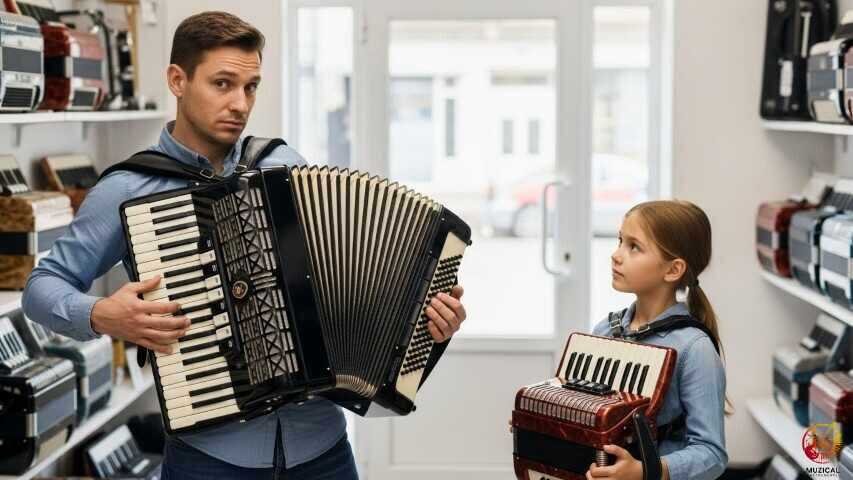
The biggest error parents make is buying an instrument that is physically too large. This is often called the “grow into it” mistake. Parents think, “If I buy a bigger one now, I won’t have to buy another one later.”
This logic works for oversized t-shirts, but not for accordions.
An accordion is a wearable instrument. It sits on your child’s chest. If the accordion is too big, the chin will rest on the keyboard. This makes it impossible to see the keys. It also forces the child to lean back to balance the weight. This causes back pain and bad posture.
A wrong accordion size for kids leads to fatigue. If an 8-year-old tries to play a full-size 120-bass accordion, it feels like they are wearing a backpack full of bricks on their front. They will get tired after five minutes. If practicing hurts, they will stop doing it.
Rule of thumb: When seated, the bottom of the keyboard should rest on the child’s thigh, and the top should not touch their chin.
Quick Sizing Guide for Kids
Here is a simple breakdown to help you match your child’s age to the right instrument size.
| Child’s Age (Approx.) | Recommended Bass Buttons | Keyboard Size | Weight (Approx.) |
|---|---|---|---|
| 4–6 Years | 12 Bass | 25–26 Keys | 5–8 lbs |
| 6–9 Years | 48 Bass | 26–30 Keys | 10–13 lbs |
| 9–12 Years | 72 Bass | 34 Keys | 14–17 lbs |
| Teens / Adults | 96 or 120 Bass | 37–41 Keys | 18–22+ lbs |
Note: Every child grows differently. Use this table as a starting point, but always try to have the child hold the instrument before you buy.
2. Is It Okay To Start With A Toy Accordion?
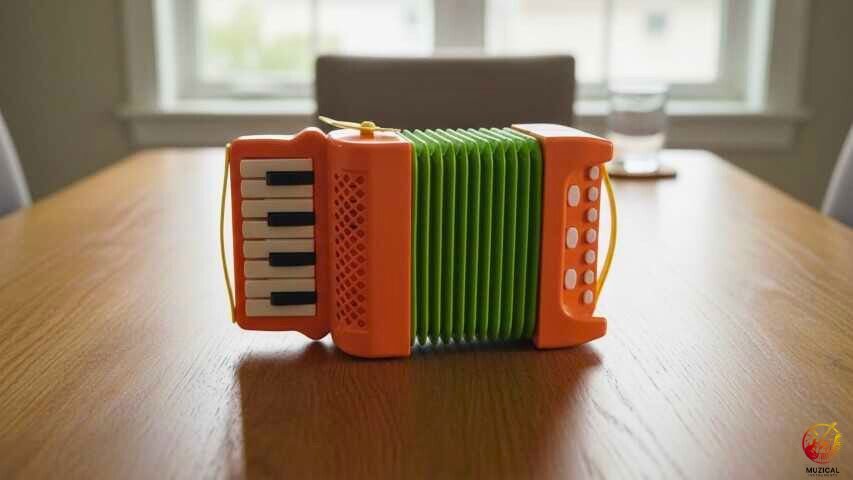
Many parents fall into the buying toy accordion mistake. You see a cute, colorful plastic accordion online for $40. It claims to be a “beginner instrument.”
Please avoid these.
Toy accordions are usually made of cheap plastic. They do not use real accordion reeds. Instead, they use harmonica-style reeds or plastic noisemakers. They require a huge amount of air to make a sound. A child has to pull the bellows extremely hard just to get a squeak out.
This is the “frustration trap.”
Real accordions use steel or brass reeds mounted on wax. They respond to gentle air pressure. When a child presses a key on a real instrument, the sound is instant and rewarding. On a toy, the sound is wheezy and out of tune.
If you buy a toy, you aren’t testing if your child likes music. You are testing their patience. If you are on a budget, look for a used “student model” from a reputable brand like Hohner or Weltmeister rather than a new toy.
3. Do Beginners Really Need 120 Bass Buttons?
This is a classic case of wrong button count accordion for kids.
The buttons on the left side are called “bass buttons.” A full-size professional accordion has 120 of them. Because 120 is the “maximum,” parents often assume it is the “best.”
However, a beginner child only uses about 4 to 6 of those buttons for the first year of lessons.
The more buttons an accordion has, the bigger and heavier it gets. A 120-bass accordion is huge. It is meant for adults with full arm reach.
For a child, a 48-bass or 72-bass model is perfect.
- 12 Bass: Very light, but limits what songs you can play quickly. Good for toddlers.
- 48 Bass: The “Goldilocks” size. It has enough range to play most folk and pop songs but remains lightweight.
- 72 Bass: Great for older kids (10+) who want to play more complex music without the bulk of a full-size model.
Avoid the advanced accordion for beginner child trap. Start small. It makes learning the physical motion of pumping the bellows much easier.
4. What Are The Risks Of Buying A Used Accordion?
Accordions are mechanical machines. They have thousands of parts inside. Buying a used one without checking it is risky.
One of the biggest things parents should avoid when buying accordion is ignoring the “bellows compression.”
The bellows are the lungs of the accordion. They must be airtight. If they leak, air escapes without making sound. This means the child has to pull twice as hard to get half the volume. This is exhausting for little arms.
The Smell Test:
Always smell a used accordion. If it smells like a basement or mildew, do not buy it. That smell comes from mold growing on the internal cardboard and leather and wax. You cannot air it out. It is a health hazard for your child to breathe that in while playing.
The Tuning Issue:
Old accordions often go “out of tune.” The wax holding the reeds inside can dry out and crack. Fixing this costs hundreds of dollars. Sometimes the repair costs more than the accordion itself.
The Used Accordion Checklist
Take this list with you if you go to see a used instrument.
| Part to Check | What to Look For | Good Sign | Bad Sign |
|---|---|---|---|
| Bellows | Hold it up by the straps without pressing keys. | Bellows stay closed or open very slowly. | Bellows slide open quickly (Air leak!). |
| Keys | Press every single piano key. | Keys are level and pop back up fast. | Keys stick down or sit at uneven heights. |
| Smell | Sniff the bellows when pumping air. | Smells like wood, leather, or nothing. | Smells musty, moldy, or like “old basement.” |
| Straps | Check the leather condition. | Flexible and soft. | Cracked, stiff, or taped together. |
5. Piano Accordion Vs. Button Accordion: Which Is Best?
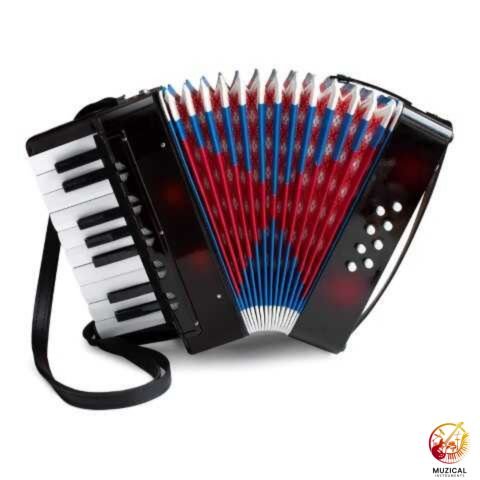
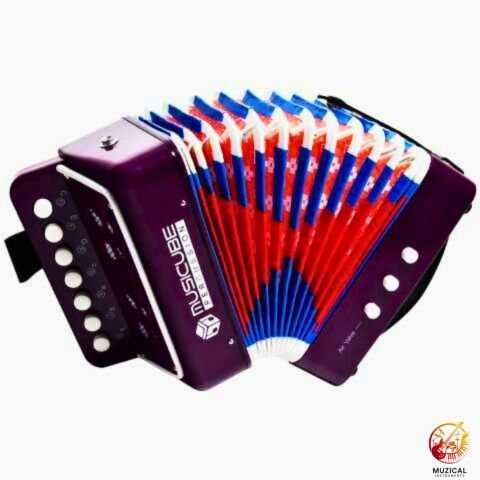
Another area of confusion is the wrong accordion type for kids.
There are two main types of keyboards for the right hand:
- Piano Accordion: Looks like a piano keyboard.
- Chromatic Button Accordion: Has rows of round buttons.
In the United States and UK, the piano accordion is much more common. Most teachers teach this style. If your child already knows a little piano, this is the easiest transition.
However, in parts of Europe and Latin America, the button accordion is king.
The mistake parents make is buying a button accordion because it looks cool or was cheaper, only to find out there are no teachers in their city who know how to play it.
Action Tip: Before you buy, find a teacher. Ask them what type they teach. Buy the instrument the teacher recommends. This solves the beginner accordion mistakes for kids regarding instrument type instantly.
6. Why Do Straps Matter So Much For A Child?
You might think straps are just accessories, but accordion strap issues for kids are a real problem.
Old accordions often come with thin, stiff leather straps. These dig into a child’s shoulders. It hurts. If the accordion is uncomfortable, the child will wiggle around and develop bad posture.
For kids, you need:
- Wide, padded shoulder straps: These distribute the weight evenly.
- A back strap: This is a small strap that connects the two shoulder straps across the upper back. It prevents the straps from slipping off narrow shoulders.
Many parents forget the back strap. Without it, the child spends half their practice time hunching their shoulders just to keep the accordion from falling off. A $15 back strap can save months of frustration.
7. How Much Should I Spend To Avoid “Cheap Accordion Problems”?
Price is tricky. You don’t want to overspend, but cheap accordion problems for kids are common.
If you see a brand new accordion for $200, be suspicious. Quality manufacturing takes time.
The Sweet Spot:
- New Student Models: Usually run between $600 and $1,500. Brands like Hohner (Bravo series) or Roland (V-Accordion) are safe bets.
- Used Student Models: You can often find high-quality German or Italian accordions (like Weltmeister or Scandalli) for $300–$600.
If you cannot afford a good instrument yet, look for a rental program. Many music shops rent accordions for $30–$50 a month. This is a brilliant way to avoid first accordion buying mistakes. It lets your child try a high-quality instrument without you committing to the full price. If they quit after two months, you simply return it.
Wrapping Up
Avoiding these mistakes when buying accordion for kids comes down to prioritizing comfort over size. A smaller, lighter accordion that is fun to play is infinitely better than a “professional” one that is too heavy to lift.
Remember to check for air leaks, avoid plastic toys, and get the right strap setup. The goal is to make the instrument feel like a natural extension of your child’s body, not a burden they have to carry.
FAQ: Common Mistakes When Buying Accordion For Kids
1. What is the best age for a child to start playing the accordion?
Most teachers suggest starting around age 6 or 7. At this age, children are usually tall enough to hold a small “12-bass” accordion comfortably. They also understand the alphabet well enough to learn musical notes. If your child is younger but loves music, let them play with a toy version just for fun until they are big enough for the real thing.
2. Is the accordion hard for kids to learn?
It looks complicated, but it is actually very logical. The right hand plays keys just like a piano. The left hand presses buttons to make chords. The trickiest part is moving the bellows (the squeezing part) smoothly. Most kids pick it up quickly because it feels like a game. It is often easier than learning the violin or trumpet.
3. How much should I spend on a beginner accordion?
Try to avoid “brand new” accordions that cost under $200, as they are often poorly made. A good quality used student accordion usually costs between $300 and $600. If that feels like too much money right now, ask a local music shop about renting one. Renting usually costs about $30 to $50 a month and is a safe way to start.
4. How do I know if an accordion is too big for my child?
Watch your child when they sit down with the instrument. If the top of the accordion touches their chin, it is too tall. If they have to lean their body backward to balance the weight, it is too heavy. A correct fit allows the child to sit up straight with their feet flat on the floor.
5. Can a child learn accordion without a teacher?
It is possible, but having a teacher is much better. An accordion is heavy and requires good posture. A teacher makes sure your child sits correctly so their back doesn’t hurt. They also stop bad habits before they stick. If you can’t find a teacher nearby, look for online video lessons made specifically for kids.


