
Accordion Care for Kids: Easy Home Tips for Parents

Accordion care for kids is easy when you follow a few simple steps. Keep the accordion clean. Store it flat in a cool, dry place. Always loosen the bellows straps after playing. These small habits help the accordion last for many years.
In this guide, you will learn how to clean your child’s accordion, store it the right way, and protect it from damage.
Why Does My Child’s Accordion Need Special Care?

Accordions are delicate instruments with many moving parts. Heat, dust, and moisture can damage them. Unlike a toy keyboard, an accordion has soft bellows, metal reeds, and small parts that can break easily.
Kids often move fast and play rough. One drop can crack buttons, tear the bellows, or knock the sound out of tune. Fixing bellows damage can cost a lot of money.
Good care habits protect your accordion and keep the sound clear. When kids learn to care for their instrument early, they also learn responsibility and enjoy practice more.
How Do I Clean a Kids Accordion Without Damaging It?
Cleaning a kid’s instrument does not have to be hard. The main goal is to keep dust and sticky stuff away from the keys.
You should wipe the keys after every practice session. Use a soft, dry cloth. A microfiber cloth works best because it grabs dust without scratching the plastic. Do not use water or wet sprays on the keys. Water can drip inside and rust the metal reeds.
The “Pizza Hands” Rule
Teach your child to wash their hands before they play. Food grease and sugar are the enemies of an accordion. If sticky residue gets on the keys, dirt sticks to it. Over time, this makes the keys stuck or slow. A quick hand wash is the best accordion cleaning tip you can give them.
Dusting the Body
Dust can settle in the cracks of the grill (the front part). You can use a clean, dry paintbrush to sweep the dust away. Do this gently. It stops dust from getting sucked inside when the bellows move.
| Cleaning Tool | How to Use It | Warning |
|---|---|---|
| Microfiber Cloth | Wipe keys and body daily | Do not use water or soap |
| Dry Paintbrush | Dust the grill and corners | Use soft bristles only |
| Cotton Swab | Clean hard-to-reach spots | Don’t push it inside holes |
What’s the Right Way to Store a Kids Accordion at Home?
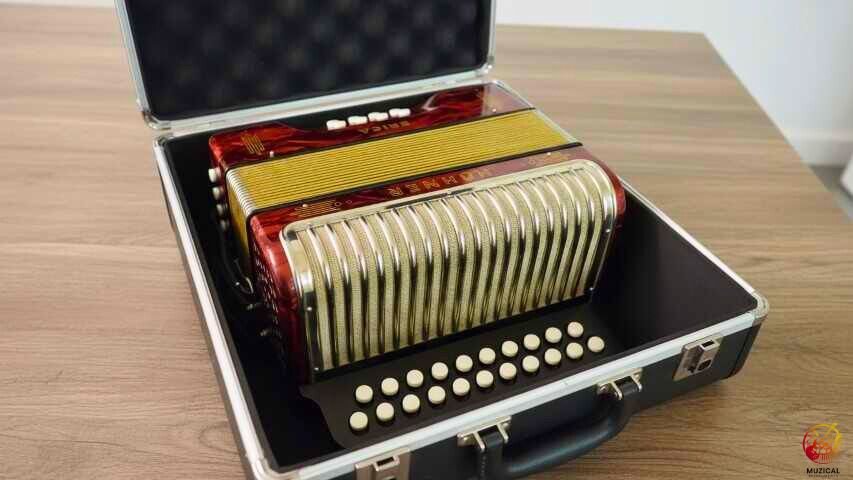
Finding the right spot to store kids accordion safely matters just as much as how they play it. The accordion is made of wood, metal, and wax. These materials hate extreme changes in weather.
The Case is Home
The accordion should always live in its case when not in use. It protects against dust, pets, and accidental bumps. If you leave it on the floor or a chair, someone might trip over it. A hard case is usually better than a soft gig bag for children’s accordion maintenance, especially for younger kids.
Watch the Temperature
Never leave the accordion in a car. A hot car can melt the wax that holds the reeds in place. If the wax melts, the reeds fall out, and the instrument won’t make sound. A cold car is bad too. Cold makes the wax brittle and crack.
Keep the instrument in a room where you feel comfortable. If it is too hot for you, it is too hot for the accordion. Avoid spots near radiators, heaters, or drafty windows.
How Do I Protect The Accordion Bellows From Damage?
The bellows are the folded part in the middle that looks like a fan. They act like the lungs of the instrument. Accordion bellows care is vital because replacing them is very expensive.
The “Air Button” Rule
This is the most important rule for kids accordion care. Never pull or push the bellows without pressing a key or the air button. The air button lets air flow in and out silently.
If you force the bellows open without letting air move, you create too much pressure. This can burst the bellows or cause air leaks. Teach your child to always find the air button (usually on the left side) before opening the instrument.
Wear the Right Clothes
Believe it or not, clothing can hurt the bellows. Zippers, big belt buckles, and buttons can scratch the back of the bellows as your child plays.
Try to have your child wear a soft shirt or put a “backpad” on the instrument. A backpad is a cover that snaps onto the back of the accordion. It acts as a shield between the zipper and the bellows.
What Are Common Accordion Care Mistakes To Avoid?
Parents and new students often make simple mistakes that can cause big problems later. Knowing these accordion care mistakes to avoid will save you money.
Mistake 1: Storing it upside down
The accordion should sit on its feet (the bottom pads). Do not store it leaning on the keys or the strap side. This puts weird pressure on the buttons and can bend them.
Mistake 2: Picking it up by the straps
Only pick up the accordion by the handle on the case or by grabbing the main body. Never pick it up by the shoulder straps. The straps are for wearing, not carrying. The weight of the accordion can snap the strap buckles if you yank them.
Mistake 3: DIY Repairs
If a key gets stuck or a note sounds weird, do not try to open it up. The inside of an accordion is very complex. It has hundreds of tiny parts. Using a screwdriver without training often causes more damage. Always take it to a professional for how to care for a child’s accordion repairs.
How Do I Maintain The Shoulder Straps?
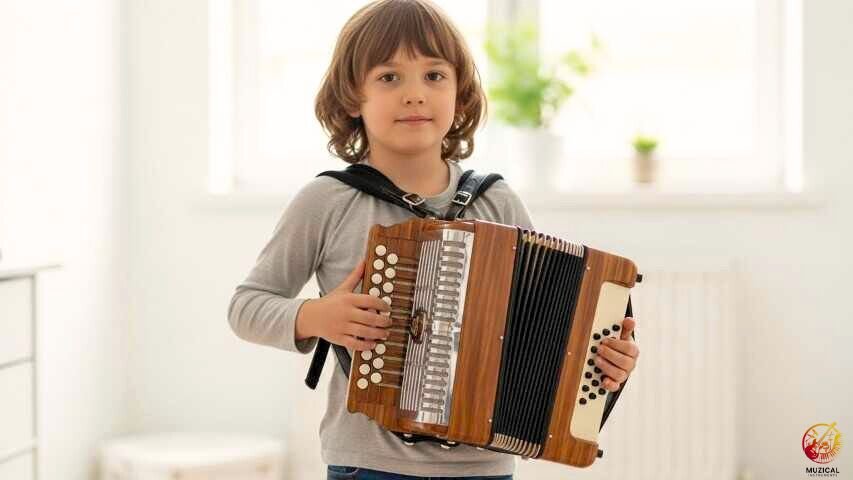
Accordion strap care is often ignored, but good straps make playing easier. If the straps are old and stiff, they hurt your child’s shoulders.
Check for Wear and Tear
Look at the leather or nylon straps once a month. Check where they hook onto the accordion. If the material looks thin or ripped, replace them. You do not want a strap breaking while your child is standing up to play. The instrument could fall and break.
Keep Them Straight
When putting the accordion in the case, make sure the straps are not twisted. Twisted straps are uncomfortable. Also, ensure the metal buckles on the straps don’t scratch the accordion body inside the case. Some people put a small cloth over the keys to stop the straps from rubbing against them.
What Is The “5-Minute Pre-Play Checklist”?
To make beginner accordion care guide steps stick, turn them into a routine. Before your child starts their practice, run through this quick list. It teaches responsibility.
- Clean Hands: Are hands washed and dry?
- Zipper Check: Is the jacket or shirt zipper covered?
- Strap Check: Are the straps straight and locked in?
- Air Button: Locate the air button before pulling.
- Posture: Sit up straight to keep the bellows moving freely.
This checklist helps protect accordion from damage every single day. It becomes muscle memory for the child.
Why Does My Child’s Accordion Sound Out Of Tune?
Sometimes, even with great care, the instrument sounds funny. This is a common worry in children’s accordion maintenance.
It Might Be the Weather
Wood expands and shrinks with humidity. If the weather changed drastically recently, the accordion might sound a bit “off.” Usually, it settles back down when the weather stabilizes.
Stuck Reeds
If one note plays constantly without pressing a key, a reed might be stuck. This happens if dust gets inside. Do not hit the accordion to “fix” it. This requires a repair shop.
Bellows Leaks
If your child has to pull really hard to get sound, the bellows might have a hole. Air is escaping. This is essentially a flat tire for an accordion. You can test this by holding the accordion tight (without pressing keys) and seeing if the bellows slide open on their own. If they fall open fast, you have a leak.
| Problem | Likely Cause | What to Do |
|---|---|---|
| Key sticks down | Dirt or sticky residue | Wipe key; call pro if stuck deep |
| Note plays continuously | Stuck reed inside | Needs professional repair |
| Bellows open too fast | Air leak / Hole | Check corners; needs repair |
| Musty smell | Damp storage | Air it out; use silica gel packets |
How Should I Transport The Accordion To Lessons?
Taking the instrument to lessons is a risky time for damage. A child beginner instrument care plan must include travel safety.
Car Travel
Place the accordion case in the trunk or on the floor of the backseat. Do not put it on the seat itself. If you brake hard, the case will fly forward. The floor is the safest spot. Lay it flat so it doesn’t tip over.
School Bus Safety
If your child takes the bus, the accordion needs a very sturdy case. Soft bags offer zero protection if another kid steps on it. Tell your child to keep the case between their legs or under the seat, not in the overhead bin where it can fall.
Final Thoughts
Proper accordion care for kids is simple if you stay consistent. Keep the instrument clean, store it in a room with a stable temperature, and teach your child to respect the bellows. These small steps prevent big damage.
By following these easy home tips for parents, you ensure the music keeps playing and your investment stays safe.
FAQ: Accordion Care for Kids
1. How often should I tune my child’s accordion?
You don’t need to tune an accordion very often. Unlike a guitar, it stays in tune for a long time. Most student accordions only need tuning every 5 to 10 years. If one specific note sounds “sour” or wrong, it might just need a quick repair instead of a full tuning.
2. Can I use water or soap to clean the accordion?
No, never use water, soap, or spray cleaners. Moisture is dangerous for accordions. It can rust the metal reeds inside and make the wood swell up. Just use a clean, dry microfiber cloth to wipe away dust and fingerprints.
3. How long does a well-cared-for accordion last?
If you keep it dry and safe, an accordion can last for decades. Many people still play instruments that are over 50 years old. The internal parts like wax and leather might need a refresh after many years, but the instrument itself is very tough.
4. Why do accordion keys sometimes get stuck?
This usually happens because of dirt, dust, or sticky food residue. This is why washing hands before playing is so important. Sometimes, if the room is very humid, the wood can swell slightly and pinch the keys. If a key stays stuck, ask a professional to look at it.
5. What is the correct position to store an accordion?
Always store the accordion sitting on its “feet.” These are the little rubber or metal pads on the bottom of the bass side. Do not lay it flat on its back or front. Keeping it on its feet stops the leather valves inside from curling up or getting damaged.


