How to Store Your Piano Tuning Kit to Make It Last Longer

Store your piano tuning kit in a dry, temperature-controlled space using a padded case or tool roll to protect delicate instruments from rust, damage, and wear. Proper storage can extend your tools’ life by decades and save you hundreds of dollars in replacements.
This guide will show you exactly how to organize, clean, and protect your tools so they last for decades.
What Is A Piano Tuning Kit?
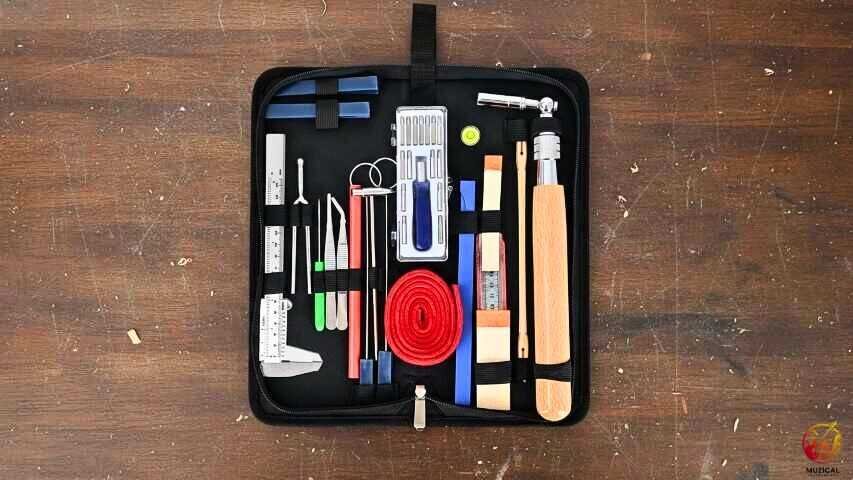
A piano tuning kit is a set of tools you use to adjust a piano’s pitch. It usually includes:
- Tuning hammer (sometimes called tuning wrench)
- Rubber mutes
- Temperament strip
- Tuning fork
- Other small tools like wedges and screwdrivers included in some kits
These tools should stay clean, dry, and protected. If not, they can wear out quickly.
Quick Guide: Material Care
| Material | Main Threat | Storage Solution |
|---|---|---|
| Steel (Hammer/Tips) | Rust & Moisture | Wipe dry; use silica gel packs. |
| Wood (Handles) | Dryness & Cracks | Keep away from heaters; use occasional wood polish. |
| Felt (Mutes) | Compression (Squashing) | Store loosely; do not stack heavy items on top. |
| Rubber (Wedges) | Heat & Sunlight | Keep in a dark, cool case to prevent melting/cracking. |
Why Does Proper Storage Matter?
Your tuning kit is an investment. A good tuning hammer alone can cost hundreds of dollars. If you store these tools incorrectly, three bad things happen:
- Rust: Metal parts corrode, making them weak and ugly.
- Warping: Wooden handles can crack or bend if the air is too dry or too wet.
- Compression: Felt mutes (the red strips used to silence strings) get squashed and stop working if packed too tight.
Taking five minutes to pack your kit correctly saves you money on replacements later.
What Is The Best Way To Store A Piano Tuning Kit?
The most important step is choosing the right container. You should never leave tools loose in a drawer where they can bang against each other.
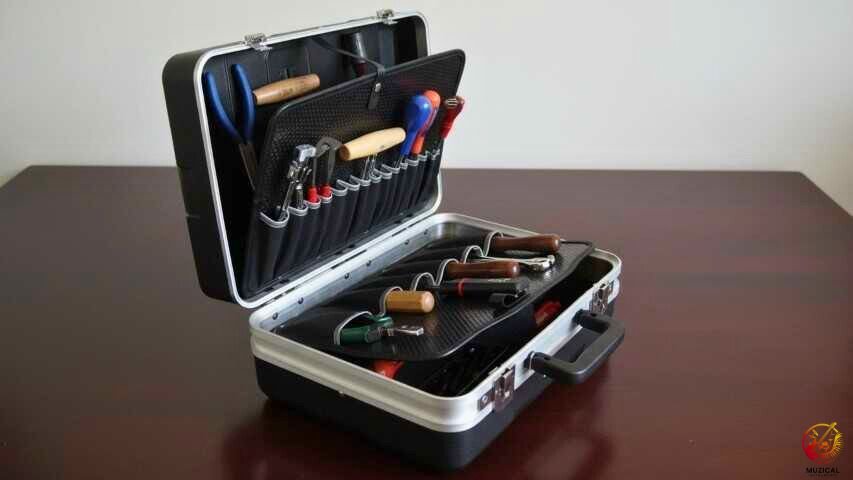
The Tool Roll vs. The Hard Case
Most beginners start with a “tool roll“, a piece of cloth or leather that rolls up. These are great for saving space, but they offer zero protection if you drop them.
- For Home Users: A tool roll is fine if you keep it inside a drawer.
- For Traveling Tuners: Use a padded hard case (like a camera case or specific tuning kit bag). This protects the tools from bumps and drops.
Pro Tip: If you use a tool roll, make sure the metal tip of your tuning hammer does not touch the wooden handle of another tool. Metal scratches wood easily!
Store Tools In A Dry Place
Humidity and moisture cause rust on metal tools like the tuning hammer and wrench. Long-term exposure to humidity makes steel parts weak and sticky. Store tools in a dry room, away from wet basements or open windows.
Use The Original Bag Or Case

Many kits come with a tuning kit bag or case for storage and transport. Always return each tool to its case after use. The case keeps parts organized and protected from dust and scratches.
Keep Them Away From Heat And Sunlight
Extreme heat and sunlight can damage wooden handles and plastic parts. Avoid storing your tuning kit near heaters, radiators, or in direct sunlight.
What Should You Do After Using Your Tools?
After every tuning session:
- Wipe tools with a dry, soft cloth to remove oil and fingerprints.
- Check for rust spots or dust.
- Place everything back in the case immediately.
These simple steps help prevent damage and rust.
How To Store Specific Tuning Kit Tools
Different tuning kit parts need special care.
Tuning Hammer And Wrench Care
Metal tools can rust if they get wet.
- Always dry them after use.
- If you live where the air is humid, add a silica gel pack in the case.
- Don’t stack other metal tools on top of each other.
Even tiny water droplets can start rust. Keep them dry.
Rubber And Felt Tools (Mutes & Wedges)
Rubber mutes and felt tools collect dust and oil.
- Clean them with a soft dry cloth.
- Don’t squeeze or bend them too much.
- Store them in a separate pouch inside your kit.
Rubber can break down faster if it stays in contact with oily tools.
Temperament Strip And Other Small Parts
Temperament strips and small wedges are soft parts.
- Fold them carefully.
- Put them in a small pocket inside the case.
- Avoid sharp bends.
If these parts get bent or torn, they won’t work right.
How Do You Prevent Rust On Tuning Tools?
Rust is the enemy of any tuning kit maintenance plan. Piano tools are made of steel, and steel loves to rust when there is moisture in the air.
Use Silica Gel Packs
You know those little “Do Not Eat” packets that come in shoe boxes? Save them! Throw two or three silica gel packs into your tuning kit bag or case. They soak up moisture and keep your tools dry.
The “Touch And Wipe” Rule
Every time you touch metal, your fingers leave behind oils and salt. Over time, this causes rust.
- The Rule: After you finish tuning, wipe the metal parts of your hammer with a dry microfiber cloth.
- Deep Clean: Once a month, put a drop of machine oil on a cloth and lightly wipe the metal. This creates a shield against the air.
How Do I Clean My Tuning Hammer?
The tuning hammer is the star of your kit. It needs special piano tuning hammer care.
- Check the Tip: The “star” tip that goes on the pins can get loose. Before you store it, gently check that the tip is screwed on tight.
- Clean the Handle: If your handle is wood, wipe it with a soft cloth. If it is plastic or carbon fiber, you can use a slightly damp cloth to remove sticky hand sweat.
- No Water on Metal: Never use water to clean the metal shaft. If it has sticky residue, use a tiny bit of rubbing alcohol on a cloth, then dry it immediately.
Warning: Never use WD-40 on your tuning tools. If WD-40 gets on a piano tuning pin, it can ruin the pinblock by making it too slippery to hold a tune.
Common Tuning Kit Storage Mistakes
Here is a simple table to help you avoid common mistakes.
| Common Mistake | Why It’s Bad | Better Option |
|---|---|---|
| Leaving tools out in the open | Collect dust and moisture | Store in a case or box |
| Storing in a damp basement | Causes rust | Keep in dry, cool place |
| Mixing tools with other heavy tools | May dent or bend parts | Use a separate kit case |
| Not cleaning after use | Oils and sweat cause corrosion | Wipe tools before storing |
Tuning Tools Care Tips
Here are some tuning kit care tips you can use every time:
- Use a brief brush or cloth to clean tools.
- Add silica gel packets in the case to absorb moisture.
- Tighten loose handles on tuning hammers early.
- Label parts if your kit has many pieces.
- Don’t stack heavy items on top of your tuning tools.
These steps help prevent rust on tuning tools and keep everything safe.
Should You Clean Tools With Oil or Chemicals?
No. Don’t soak tuning tools in oil or chemicals. These can damage metal and wood. For stubborn grime, use a slightly damp cloth, then immediately dry it. Always err on the side of dryness.
Tuning Kit Storage for Long-Term Use
If you plan to store a piano tuning kit for a long time:
- Store tools in a sealed hard case.
- Add moisture absorbers (like silica gel).
- Keep them in a place with a stable temperature.
This approach is good for professionals or students who store kits between jobs.
Final Thoughts
Learning how to store your piano tuning kit isn’t complicated, but it requires consistency. Remember to keep your tools dry, give your mutes space so they don’t get squashed, and never leave your gear in the car.
If you take care of your tools, they will take care of the piano, ensuring you get a clean, stable sound every time you tune.
FAQ: How to Store Your Piano Tuning Kit
1. How long does a piano tuning hammer last?
If you buy a good one and keep it dry, the handle and shaft can last a lifetime. The only part that wears out is the “tip” (the star-shaped socket). If the tip starts slipping on the pins, you don’t need a new hammer. You can usually just unscrew the old tip and buy a replacement.
2. Can I wash my felt piano mutes?
No, never use water on felt mutes. Water makes the wool shrink and get hard. If your mutes are dirty, use a dry, soft toothbrush to gently brush away the dust. You can also use a piece of sticky tape to lift off dirt without damaging the material.
3. Should I oil my tuning tools?
You can use a tiny drop of oil on the metal shaft to stop rust, but be very careful. Wipe it off almost completely so it feels dry. Crucial: Never get oil on the tip of the hammer or near the piano pins. Oil can ruin a piano by making the pins too slippery to hold a tune.
4. Is it okay to leave my tuning kit in the car?
No, this is one of the worst things for your tools. Cars get very hot in summer and cold in winter. These temperature changes cause condensation, which leads to rust. The heat can also warp wooden handles and melt rubber wedges. Always bring your kit inside.
5. What is the best way to carry tuning tools?
While many kits come in a roll-up pouch, a hard case is safer. A padded camera bag or a small hard-shell toolbox works best. These protect your expensive hammer if you accidentally drop the bag. Make sure the case has pockets so the metal tools don’t bang against the wooden ones.