How to Wash an Upright Piano Cover the Right Way and De-Wrinkle It

A clean cover keeps your upright piano dry, safe, and dust-free. When you wash an upright piano cover the right way, you protect the fabric, padding, and stitching. You also keep wrinkles away, so the cover looks neat and fits well.
In this article you will learn how to clean piano cover fabric, how to remove wrinkles from piano cover materials, and how to dry and iron your cover without harm. You will also see real care mistakes to avoid, plus simple steps you can do at home.
Why Should You Clean Your Upright Piano Cover Regularly?

A piano cover keeps dust, moisture, pet hair, and sunlight off your instrument. Over time, the cover traps dirt and oils from hands. Small dust grains act like sand and rub into the surface. When this sits too long, it turns into fine grime that becomes harder to remove.
Cleaning the cover helps you:
- Keep the piano finish safe
- Reduce mold risk
- Make the cover last longer
- Stop wrinkles from setting
- Avoid musty smells in humid rooms
If you live in a warm or humid place, you may even notice the cover feeling damp at times. Regular care keeps the fabric healthy.
What Is The Safest Way To Wash An Upright Piano Cover At Home?
Here we move slowly through the process, so you know exactly what to do.
1. Check The Care Label First
Most piano cover makers such as Jansen, Yamaha, and CPS Imports attach a small tag inside the seam. It tells you if the cover is:
- Machine-wash safe
- Hand-wash only
- Dry-clean only
- Not for heat drying
If your tag is missing, treat the cover like delicate fabric.
2. Remove Dust Before Washing
Do this gently. A dry microfiber cloth or a soft vacuum brush is enough. You don’t want dirt water soaking into the lining.
3. Pick The Right Cleaning Method
Here’s a simple table to guide you:
Piano Cover Washing Guide By Fabric Type
| Fabric Type | Best Washing Method | Water Temp | Notes |
|---|---|---|---|
| Quilted polyester (most common) | Gentle machine wash | Cold | Safe cleaning for piano covers; avoids color fade |
| Padded cotton blend | Hand wash | Cold to lukewarm | Padding gets heavy when wet; dry slowly |
| Velvet or velour | Hand wash or dry clean | Cold | Never twist or wring |
| Waterproof nylon | Machine wash | Cold | Use mild soap; no bleach |
| Heavy-duty padded covers | Spot clean or hand wash | Cold | Padding may trap water if submerged |
4. Use Mild Soap
Choose a gentle detergent. Harsh chemicals break the fibers and make wrinkles harder to remove later.
5. Wash Slowly And Lightly
- If machine-washing: use the delicate cycle
- If hand-washing: move the cover gently in the water
- Never scrub hard or twist the fabric
A slow wash protects seams and padding.
How Do You Dry A Piano Cover Without Harming The Shape?
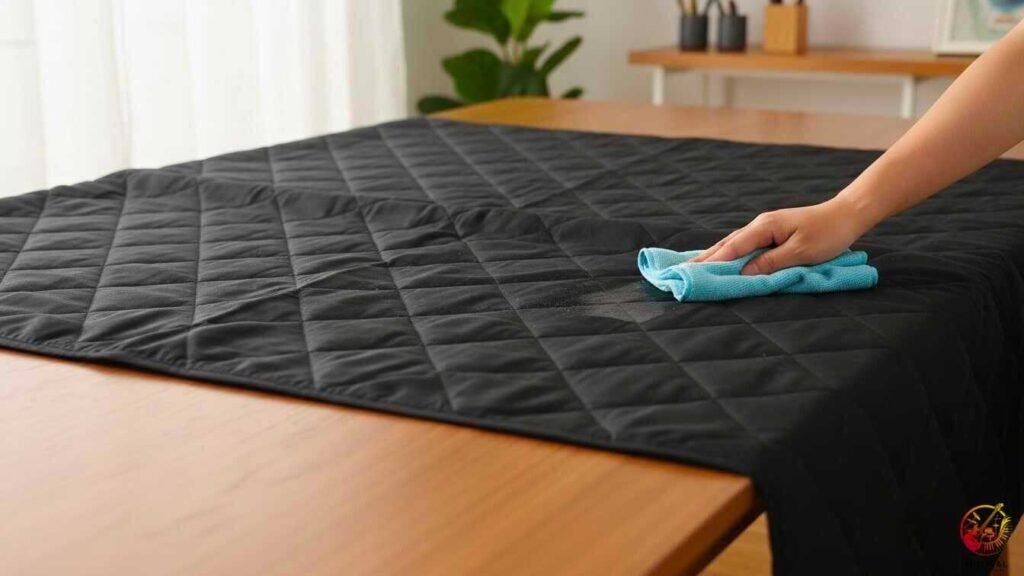
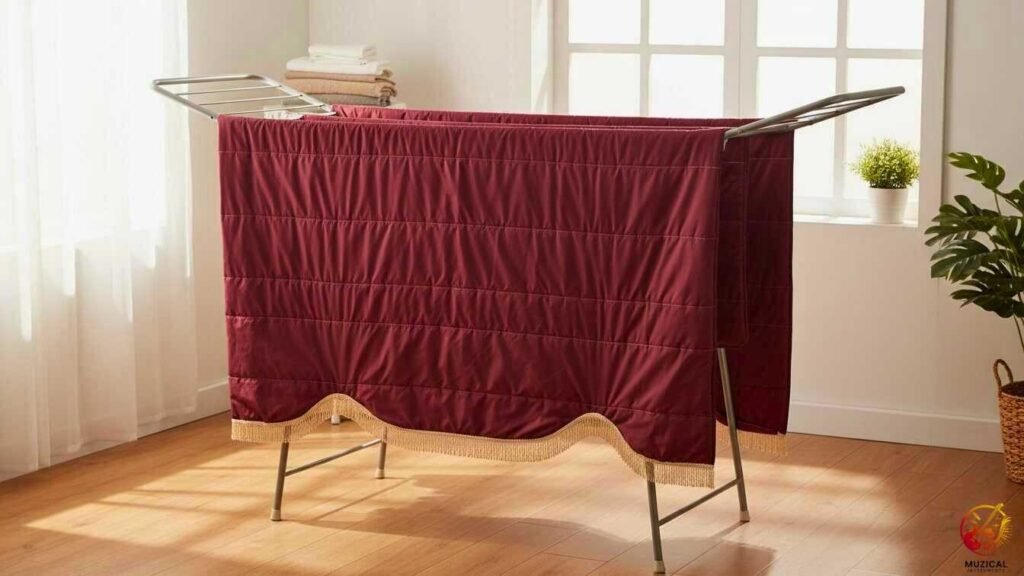
Drying is where most people make mistakes. When you dry the cover wrong, you get deep wrinkles, stretched corners, or bent padding.
Air Drying Is The Best Choice
Lay the cover flat on a clean surface. Keep it out of direct sunlight. Sunlight can shrink synthetic layers and fade colors.
Never Hang From One Side
If you hang the cover from one corner, the padding pulls downward. That creates uneven shape and long wrinkles.
Use towel support
Place dry towels under the cover to absorb water faster. Change them every few hours.
Avoid Dryers Unless The Label Says Okay
Most padded piano covers cannot handle dryer heat. The fibers melt or shrink quickly.
How Do You Remove Wrinkles From A Piano Cover After Washing?
Wrinkles happen when fabric dries unevenly. You can fix them, but you must be gentle.
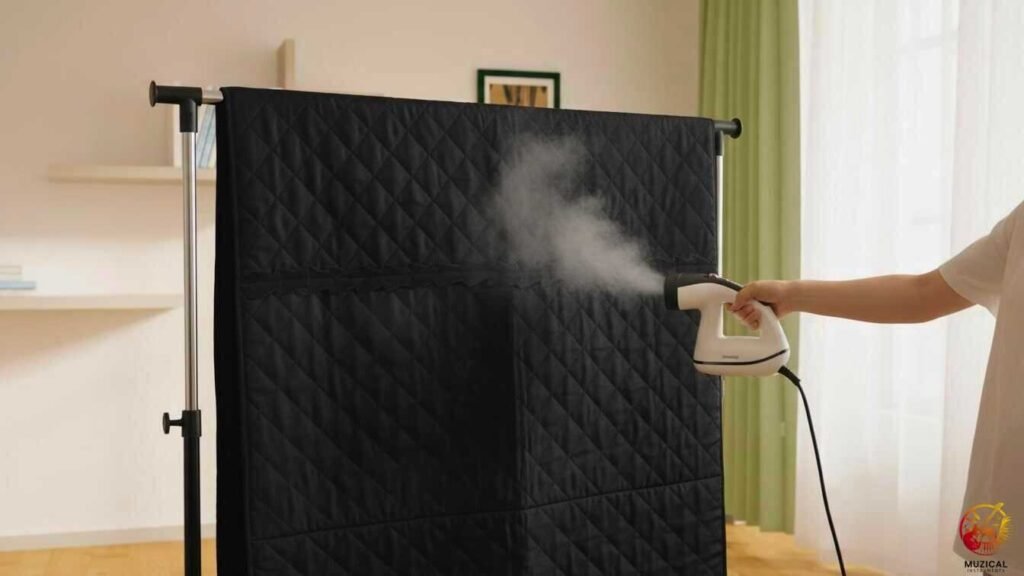
Use A Steamer
A handheld steamer is the safest choice. Move the steamer slowly over the wrinkled areas. Keep a little distance so the steam spreads lightly.
What If You Want To Iron The Piano Cover?
You can iron, but do it carefully:
- Put a thin cotton cloth on top of the cover
- Use low heat
- Keep the iron moving
- Do not press hard on padded sections
This helps you flat out the wrinkles without burning the material.
Why Is Steaming Better?
Steam relaxes the fibers instead of flattening them with weight. It also avoids shine marks, which show up on dark covers.
How Do You Keep Wrinkles From Coming Back?
Wrinkles form when you fold the cover the same way every time or store it while damp.
Here are simple habits that work:
- Fold the cover in different directions each time
- Make sure it is fully dry before storing
- Avoid tight rolls or sharp creases
- Keep it in a dry, cool place
- Store it with light tissue between folds
These small steps keep the cover smooth.
What To Avoid When De-Wrinkling
| What to Avoid | Why It’s Risky / What Happens |
|---|---|
| High heat (hot iron, dryer without caution) | Fabric may shrink or warp; seams may weaken |
| Folding tightly when storing | Deep creases form hard to smooth later |
| Applying water directly or soaking | Fabric may stretch, deform, or shrink |
| Harsh chemicals or bleach | Weakens fibers, may discolor or damage fabric |
If you are unsure whether your cover fabric tolerates iron or steam, treat it as delicate: choose hanging + steam-bath method instead of direct ironing.
What’s The Best Way To Clean A Padded Piano Cover?
Padded covers protect the piano from bumps. But they can also hold water and take longer to dry.
Key Steps
- Avoid soaking the cover too long
- Squeeze water out gently (never twist)
- Dry flat so padding settles evenly
- Do not apply heat directly on padding
- Use a fan to improve airflow
When To Spot Clean Instead
If only one small area is dirty, dab it with a mix of mild soap and water. This stops moisture from spreading inside the padding.
How do you clean a waterproof piano cover?
Waterproof covers are usually made of nylon or PVC-coated fabric. They resist water, but they do trap sweat, dust, and oil.
Simple Method
- Wipe with a damp cloth first
- For deeper cleaning, use gentle soap
- Rinse lightly and dry with a towel
- Air dry completely
Avoid bleach. Bleach weakens waterproof layers.
What Cleaning Mistakes Should You Avoid?
Most people do not pay attention to this, but these mistakes matter for long-term care.
Common Errors
- Using hot water
- Adding bleach or strong stain removers
- Twisting the fabric
- Drying in direct sunlight
- Storing the cover while damp
- Hanging the cover by one corner
- Using a high-heat dryer
Each mistake shortens the life of your cover.
How Often Should You Wash Your Upright Piano Cover?
Most homes need washing every 3–4 months. If you live in a humid city like Lake Charles, New Orleans, Houston or Miami, wash every 2–3 months. Humidity builds moisture faster.
If you have pets, wash more often to keep fur and oils away from the piano surface.
What Is The Best Way To Store Your Piano Cover After Cleaning?
A clean cover must stay dry and smooth in storage. Otherwise, wrinkles return.
Here are good storage steps:
- Fold gently along soft lines
- Do not stack heavy items on top
- Use a breathable storage bag
- Avoid sealed plastic bags (trap moisture)
- Keep it away from heat sources
A dry, cool shelf is ideal.
Why Does Fabric Choice Matter When Washing An Upright Piano Cover?
Different covers react differently to water and heat. Knowing your fabric helps you choose the right cleaning method.
Fabric Reaction To Water, Heat, And Wrinkles
| Fabric Type | Water Reaction | Heat Reaction | Wrinkle Risk |
|---|---|---|---|
| Polyester | Very stable | Low heat only | Low |
| Cotton blend | Absorbs a lot | Shrinks with heat | Medium |
| Velvet | Sensitive | Loses texture | High |
| Nylon | Dries fast | Can melt | Low |
| Heavy padding | Holds moisture | Deforms with heat | High |
This table helps you choose safe cleaning steps and prevent damage.
How Do Professionals Clean Large Or Heavy Upright Piano Covers?
Piano technicians and cover suppliers often use three steps:
- Dry brushing to remove fine dust
- Foam cleaning using gentle soap whipped into bubbles (foam cleans without flooding the padding)
- Air drying with fans to keep the padding flat
These steps reduce water load and protect stitching. It’s a method used in many repair studios and piano shops in places like Los Angeles, London, and Tokyo.
You can copy this method at home if your cover is thick.
Should You Use Fabric Softener?
No. Fabric softener leaves a thin film on synthetic materials. That film traps dust faster and attracts moisture. The cover then smells musty sooner.
What Should You Do If Your Piano Cover Smells After Washing?
A smell often means moisture got trapped inside.
Try this:
- Air dry for 24–48 hours
- Place it in a sunny room (not direct sun)
- Use baking soda: sprinkle lightly, wait 4–6 hours, shake off
If the smell stays, padding may be soaked deep. You may need a full re-wash with gentle handling.
What If The Color Fades After Washing?
Color fading happens when:
- Water was too hot
- The cover dried in strong sun
- Strong detergent was used
To prevent fading next time, wash in cold water and dry in the shade.
Can Ironing Damage Your Piano Cover?
Yes, if you use high heat. Some fibers melt or harden when heated. Always use low heat and place a cloth between the iron and the cover.
If the cover is velvet or velour, never iron. Only steam.
How To Wash Upright Piano Cover Safely If It Has Embroidery Or Logos?
Many covers include brand logos like Steinway, Yamaha, or Kawai. These threads can loosen if rubbed too hard.
Use these steps:
- Hand wash the area lightly
- Do not scrub the embroidery
- Press water out with a towel
- Dry flat
This keeps the letters sharp.
Quick Troubleshooting Table
Common Issues and Fixes
| Problem | Likely Cause | Fix |
|---|---|---|
| Deep wrinkles | Dried too fast or folded tight | Steam slowly; refold loosely |
| Musty smell | Stored damp | Air dry 2 days; use baking soda |
| Stiff fabric | Used strong detergent | Re-wash with mild soap |
| Uneven padding | Hung to dry | Lay flat and reshape by hand |
| Color fade | Washed in hot water | Cold wash next time |
Final Thoughts
When you wash an upright piano cover fabric the right way, you protect your piano, keep the cover smooth, and make it last for years.
You now know how to clean the piano cover safely, how to dry it, and how to remove wrinkles without harming the fabric.
Follow these steps, avoid the common mistakes, and you will keep your cover looking fresh and neat.
If you want your piano to stay clean and healthy, start with caring for the cover today.
FAQ: How To Wash An Upright Piano Cover
1. Can I put my piano cover in the washing machine?
It depends on the fabric. If your cover is made of soft velvet or thin nylon, you can usually wash it on the “Delicate” cycle with cold water. However, if you have a heavy Mackintosh or padded cover, do not put it in the machine. The heavy material can damage the washing machine drum, and the spinning can ruin the cover’s padding.
2. How do I get wrinkles out of my piano cover without an iron?
The safest way is to simply put the cover on your piano. Over one or two weeks, the weight of the fabric will naturally pull the wrinkles out. If you need it smooth right away, use a handheld steamer. Hold the steamer about 6 inches away from the fabric so you don’t overheat it.
3. Is it safe to iron a piano cover?
You have to be very careful. Never iron directly on the top side of the cover. Turn it inside out and use the lowest heat setting. Always put a thin cotton towel or pillowcase between the iron and the cover to act as a shield. If your cover is made of vinyl or has a waterproof backing, do not iron it at all, it will melt.
4. How often should I wash my piano cover?
You don’t need to wash it very often. It is best to vacuum it gently with a soft brush attachment once a month to remove dust. You only need to do a full wash with water once every year or two. Washing it too often can make the fabric fade or wear out faster.
5. Can I dry clean my piano cover?
No, you should avoid dry cleaning. Dry cleaners use strong chemicals to clean clothes. These chemicals can strip away the waterproof coating or damage the soft backing of your piano cover. It is much safer to vacuum it or hand wash it gently in a bathtub.