Full Drop vs Half Upright Piano Cover: Which Style is Right for You?

A full drop piano cover keeps your whole upright safe from top to bottom. A half cover protects the keyboard and upper body only. When you compare full drop vs half upright piano cover options, it really comes down to how much protection you need.
Many people pick a full drop cover because it blocks dust, moisture, and scratches. But a half cover is handy if you play every day and want quick access to the keys.
Both covers work well in the right setup. You just need to match the cover to your space and your habits. This makes it easy to keep your piano clean and in good shape.
In this article, you will find:
- The key differences between cover styles.
- Which cover works best for pet owners and parents.
- How materials like vinyl and velvet compare.
- How climate affects your choice.
Feature Comparison: Full Drop vs. Half Upright Piano Cover
This table compares the piano cover features side-by-side to help you decide.
| Feature | Full Drop Cover | Half Cover |
|---|---|---|
| Dust Protection | Excellent (100% coverage) | Good (Top and keys only) |
| Scratch Protection | Protects legs, sides, and bench | Protects top and keyboard only |
| Setup Time | Takes 1–2 minutes to remove | Takes 10 seconds to flip up |
| Sunlight Block | Total block (prevents fading) | Partial (legs may fade) |
| Weight | Heavy (especially if padded) | Lightweight |
| Best User | Travelers, Schools, Cat Owners | Daily Students, Teachers |
What Is The Main Difference Between Full And Half Covers?
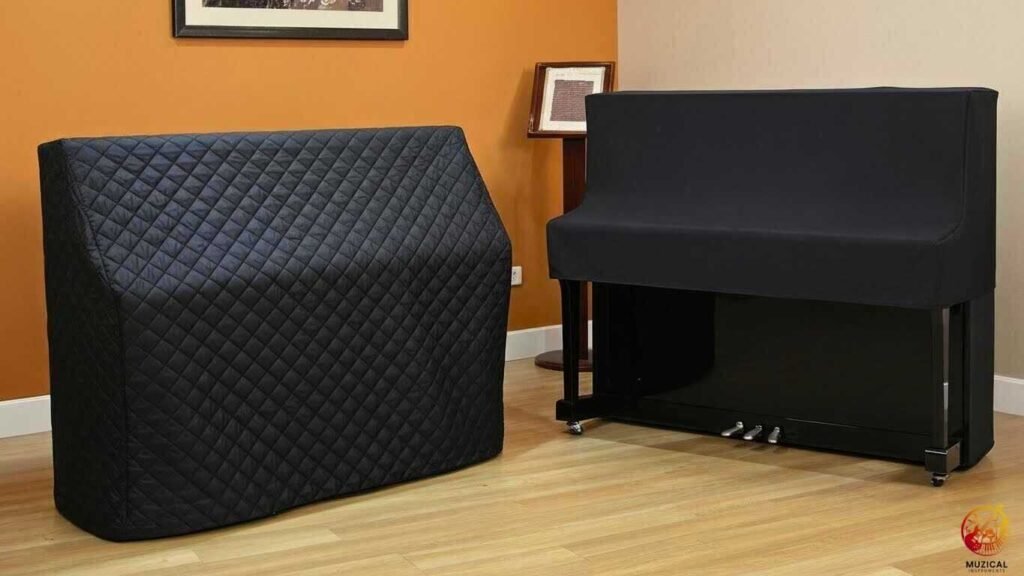
The primary difference is coverage area. This seems simple, but it changes how you use the piano every day.
Full Drop Piano Cover
This style covers the piano completely. It goes over the top and hangs all the way to the floor. It covers the keys, the body, the pedals, and the legs. It is like a full coat for your instrument.
- Best for: Long-term storage or high-traffic rooms.
- Protection Level: Very High.
- Effort: Requires more effort to take on and off.
Half Cover (Mackintosh/Top Cover)
This style covers the top lid and hangs down to cover the keyboard. It stops just below the keybed. The bottom panel, legs, and pedals remain visible.
- Best for: Daily players who want quick access.
- Protection Level: Medium.
- Effort: Very easy to flip up and play.
Both upright piano cover styles serve a purpose. Your choice depends on what dangers your piano faces in your home.
When Should I Choose A Full Drop Piano Cover?
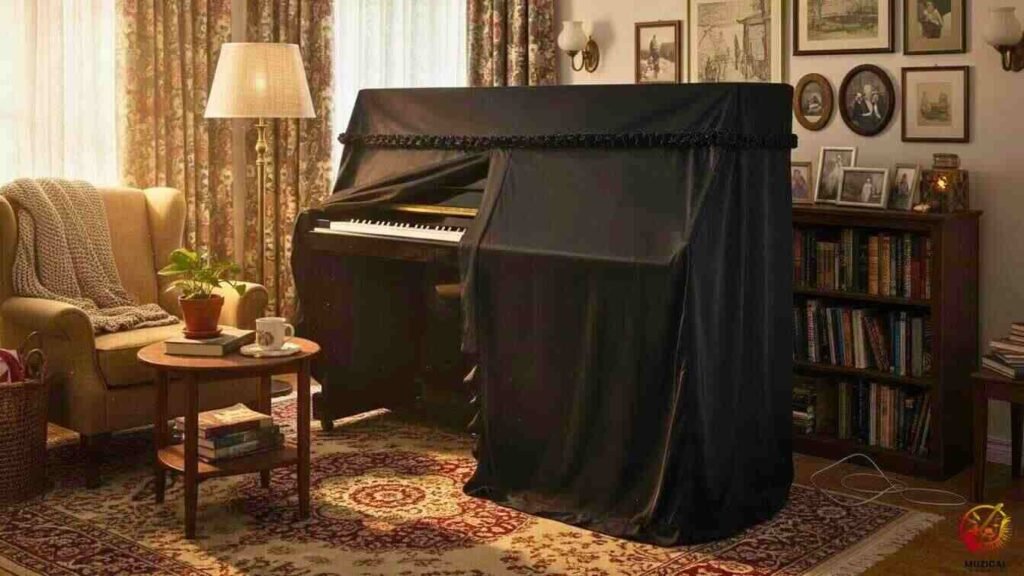
You should choose a full drop cover if protection is your number one goal. This is the best piano cover for upright pianos that live in busy homes or near windows.
Protection from the Environment
Dust is not just dirt. It is abrasive. When dust gets inside the piano action (the moving parts), it can make keys stick. A full drop cover stops dust from entering through the pedals and the bottom of the case. It seals the piano almost completely.
The “Pet Factor”
Do you have a cat? Cats love to scratch vertical surfaces. They also love to rub against piano legs. A thick piano cover that goes to the floor protects the wood finish from claws and fur. If your dog runs through the house, a full cover protects the pedals from getting bumped or chewed.
Sunlight and Heat
Direct sunlight is dangerous for pianos. UV rays fade the wood finish. More importantly, heat dries out the soundboard. This can cause cracks. A full drop piano cover blocks light from hitting any part of the piano. If your piano sits near a window or a heating vent, you need this full coverage.
Key benefits of Full Drop
- Total Dust Seal: Keeps internal mechanics clean.
- Thermal Insulation: Helps keep temperature stable.
- Physical Barrier: Stops scratches on legs and sides.
- Water Protection: Essential if you buy a waterproof piano cover.
Why Might A Half Cover Be The Better Choice?
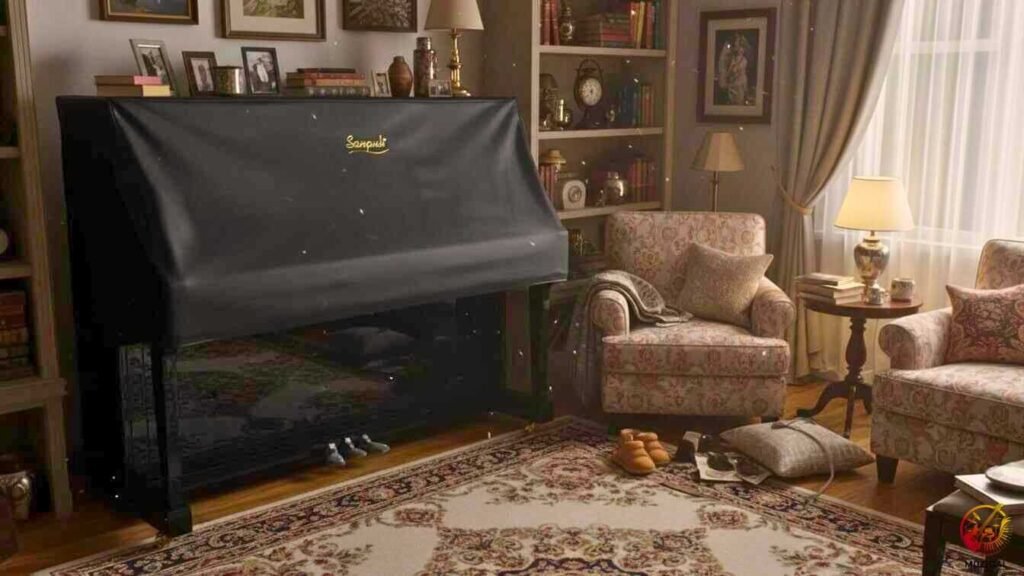
A half cover is often the practical choice for students and teachers. The best cover is the one you actually use.
Ease of Access
If you practice for 30 minutes every day, a heavy full cover can be annoying. You have to lift it off the whole instrument and find a place to put it. A half cover is different. You often just fold it back. It stays on the top of the piano while you play. This removes a barrier to practice.
Aesthetics and Style
Upright pianos are beautiful furniture. You might want to show off the legs and the pedal design. A half cover protects the most sensitive part (the keys and top vents) but keeps the piano looking like a piece of furniture rather than a stored box.
Cost and Weight
Half covers use less fabric. This often makes them cheaper than full covers. They are also lighter. An elderly player or a young child can handle a half cover easily. A heavy, padded full cover can weigh several pounds and be hard to manage.
Key benefits of Half Cover
- Speed: You can start playing in five seconds.
- Look: Shows off the instrument’s design.
- Airflow: Allows the bottom of the piano to breathe easily.
- Price: Generally lower cost.
What Materials Are Best For Piano Covers?
The fabric you choose is just as important as the style. Different materials offer different types of piano body protection.
Vinyl (PVC)
Vinyl is a common choice. It is tough and usually waterproof.
- Pros: Wipes clean with a damp cloth. Great against spills.
- Cons: Can look cheap. It traps heat if not lined with soft fabric.
- Best for: Schools, churches, or homes with messy toddlers.
Quilted Nylon (Padded)
This is often called a padded piano cover. It has a soft outer layer, a batting (padding) middle, and a soft lining.
- Pros: Offers impact protection. If you bump the piano with a vacuum cleaner, the padding absorbs the hit.
- Cons: Bulky to store.
- Best for: High-traffic living rooms and moving.
Velvet or Suede
These are the fancy options. They look elegant and luxurious.
- Pros: Very soft on the piano finish. looks great on stage.
- Cons: Attracts pet hair. Harder to clean (usually dry clean only).
- Best for: Concert halls and adult homes without pets.
Mackintosh
This is a classic material. It is a tight cotton drill fabric with a waterproof backing.
- Pros: Breathable but water-resistant. Very durable.
- Cons: Stiff. Not as soft as velvet.
- Best for: Serious musicians and institutional use.
How Do You Choose The Right Piano Cover For Daily Practice Vs Long-Term Storage?
Your playing frequency should determine your cover style more than any other factor. This decision affects whether you’ll actually use the cover consistently.
For daily players (4-7 times per week)
Half covers make the most practical sense. You’ll remove and replace the cover dozens of times monthly. The quick-access design means you’re more likely to cover your piano after each session instead of leaving it exposed because “I’ll play again tomorrow.”
Choose a half cover with:
- Elastic corners that grip firmly (stays put when bumped)
- Breathable fabric (prevents moisture from your hands and breath)
- Easy-care material you can wash quarterly
- Dark colors that hide dust between cleanings
For occasional players (1-3 times per week)
Full drop covers work well here. You have time to properly remove and fold the cover before practice. The complete protection justifies the extra 30 seconds of effort.
Look for full drop features like:
- Drawstring or elastic bottom hem (keeps cover in place)
- Storage bag included (protects the cover when not in use)
- Light to medium weight fabric (easier to handle alone)
- Clear care instructions (you’ll wash it 2-3 times yearly)
For storage situations (piano unused for months)
Full drop coverage becomes essential, but you need specialized features. Standard daily-use covers don’t provide enough protection for long-term storage in garages, attics, or storage units.
Storage cover requirements
- Waterproof outer layer
- Breathable inner lining (prevents mold)
- Heavy-duty construction (resists tears)
- Padding on all sides (protects during potential moves)
- Pest-resistant material or treatment
Never use plastic tarps or shower curtains as piano covers. They trap moisture and cause significant damage to the soundboard and strings within 3-6 months. I’ve assessed pianos with rust damage and wood swelling from improper plastic covering.
How Does Climate Affect Your Piano Cover Choice?
Temperature and humidity create bigger challenges for piano care than most owners realize. Your cover should work with your climate, not against it.
Humid regions (coastal areas, Southeast US, tropical climates)
You need breathable covers that don’t trap moisture. Waterproof materials sound logical for humid areas, but they create condensation problems. Moisture from temperature changes gets trapped under waterproof covers and damages felt hammers and wooden parts.
Choose covers with:
- Natural fiber content (cotton/linen blends breathe better)
- Mesh ventilation panels
- Looser fit that allows air circulation
- Light colors that don’t absorb heat
Run a dehumidifier in rooms with pianos and remove the cover for 2-3 hours weekly to let the instrument breathe. Even the best breathable cover needs occasional air circulation.
Dry regions (Southwest US, high altitude areas)
Dust becomes your primary enemy. Fine particles infiltrate through loose-weave fabrics and settle inside the action mechanism. You need tight-weave covers with superior dust-blocking ability.
Look for:
- Tightly woven polyester or microfiber
- Full drop coverage (dust settles downward)
- Anti-static treatment (prevents dust attraction)
- Sealed seams and edges
Keep a room humidifier running during winter months when heating systems dry the air further. Wood parts crack and soundboards develop splits in extremely dry conditions, even with excellent covers.
Moderate climates (most of US and Europe)
You have the most flexibility here. Standard quilted polyester or cotton blend covers work well year-round. Focus your decision on convenience and aesthetics rather than climate protection.
Temperature fluctuation zones
Rooms with large windows or poor insulation experience 15-20 degree temperature swings daily. These fluctuations stress piano components more than stable temperatures at either extreme.
Full drop covers provide better insulation and slow temperature changes. The extra fabric layers create an air gap that buffers your piano from rapid temperature shifts. This keeps tuning more stable between professional tunings.
How Do I Clean And Maintain My Piano Cover?
Your cover collects the dust so your piano doesn’t have to. Eventually, the cover will get dirty.
Vacuuming
Once a month, leave the cover on the piano and use a hand vacuum. Use the upholstery attachment. This removes surface dust. Do not use high power, as it might stretch the fabric.
Washing
Check the label.
- Vinyl: Wipe with soapy water and a sponge.
- Quilted/Nylon: often machine washable on a gentle cycle. Air dry only. Heat from a dryer can melt the synthetic fibers.
- Velvet: Usually requires professional dry cleaning.
Storage
When you take the cover off to play, do not throw it on the floor. Dust from the floor will stick to the lining. Then, you put that dust back on the piano. Fold it neatly and place it on a chair or in a dedicated bin.
Which Cover Fits Your Lifestyle?
Still not sure? Let’s look at specific scenarios. Finding the best piano cover for upright usage depends on who lives in your house.
| Scenario | Recommended Style | Why? |
|---|---|---|
| Home with Cats | Full Drop (Padded) | Protects legs from claws. Prevents cats from jumping inside if lid is open. |
| Daily Piano Student | Half Cover | Easy to remove. Encourages practice. Protects keys from dust. |
| School/Church Hall | Full Drop (Vinyl) | Protects against bumps, spills, and heavy dust during cleaning. |
| Vacation Home | Full Drop | Maximum protection for long periods of sitting idle. |
| Sunny Living Room | Full Drop (Thick) | UV rays bounce. You need full coverage to stop wood fading. |
Full Drop vs Half Upright Piano Cover: Making Your Final Decision
Deciding between a full drop vs half upright piano cover comes down to three factors: protection needs, convenience requirements, and budget constraints. Most piano owners find their answer by honestly evaluating their daily habits.
Choose a full drop cover if you:
- Play piano 2-3 times weekly or less
- Keep your piano in a challenging environment (basement, garage, sunroom)
- Own a valuable or antique instrument
- Have pets, young children, or high household traffic
- Plan to store the piano for extended periods
- Live in extreme climates (very humid, very dry, or large temperature swings)
Choose a half cover if you:
- Practice daily or multiple times per day
- Keep your piano in a climate-controlled living space
- Want quick access without setup time
- Have limited storage space for cover storage
- Own a student or intermediate-grade piano
- Need to see the lower cabinet for teaching or performance situations
Some piano owners buy both styles. Use the full drop cover for vacations, summer months when the piano gets less use, or overnight protection. Switch to the half cover during heavy practice periods when you need frequent access.
FAQ: Full Drop vs Half Upright Piano Cover
Here are answers to the most common questions people ask before buying a piano cover.
1. Do piano covers damage the wood finish?
No, a high-quality cover protects the finish. However, you must choose a cover with a soft lining, like cotton or felt. If you use a cheap vinyl cover with no lining, it might stick to the wood in hot weather. Always make sure your piano is free of dust before you put the cover on to avoid scratching.
2. Can I wash my piano cover in the washing machine?
It is usually better to not use a washing machine. The heat and spinning can shrink the fabric or melt the padding. For most covers, vacuuming them while they are on the piano is the best way to clean them. If you have a vinyl cover, you can wipe it down with a damp cloth. Always check the tag on your specific cover first.
3. Do I really need a cover if I clean my house often?
Yes, because dust gets into places you cannot clean. Even in a clean home, tiny dust particles float in the air. They land inside the piano through the keys and pedals. Over time, this dust makes the keys sticky and the sound dull. A cover stops this from happening when you are not playing.
4. Can I play the piano with the cover still on?
It depends on the style. If you have a half cover, you can flip the front up and play easily. If you have a full drop cover, playing is very difficult because the keys and pedals are hidden. You generally need to take a full cover completely off to play properly.
5. Should I cover the keys or just the top of the piano?
You should cover the keys. The spaces between the piano keys are the main way dust gets inside the instrument. A cover that only protects the top (like a runner) looks nice, but it does not protect the mechanics of the piano. For real protection, make sure the cover goes over the keyboard.