Upright Piano Cover Protection Guide: How a Piano Cover Protects Your Upright from Humidity and Dust

Humidity and dust cause slow but steady damage to upright pianos. A piano cover for humidity and dust gives real, physical protection that keeps your instrument safe every day. When you use the right cover, you cut the risk of finish wear, wood swelling, sticky keys, and rust inside the action.
In this guide, you will learn how upright piano cover protection works, why it matters, and how you can choose the right material for long-term safety.
Summary Of Benefits
Let’s look at the main reasons why use a piano cover:
- Stable Tuning: Less humidity change means the strings stay tight.
- Clean Keys: No dust between the keys means they don’t stick.
- No Rust: Dry strings last longer and sound brighter.
- No Scratches: The finish stays shiny and new.
- Less Cleaning: You spend less time dusting the nooks and crannies.
Cost of Prevention vs. Repair
| Item | Estimated Cost |
|---|---|
| Quality Piano Cover | $100 – $200 |
| Tuning (Extra visits) | $150 per visit |
| Action Regulation | $500+ |
| Refinishing Wood | $2,000+ |
| Restringing | $1,000+ |
As you can see, buying a cover is much cheaper than fixing the damage later.
Does A Piano Cover Really Help With Humidity?
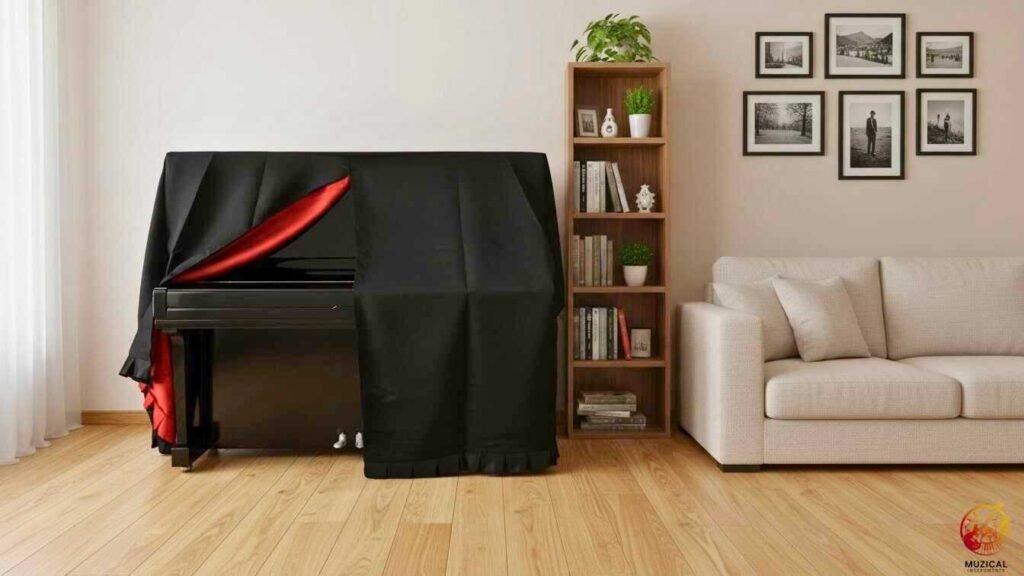
Yes, a cover is a great tool for fighting humidity. Humidity is simply the amount of water in the air. Pianos are very sensitive to this water.
When the air is wet, the wood in your piano drinks it up. This makes the wood swell and get bigger.
When the air is dry, the wood loses that water. This makes the wood shrink and get smaller.
This constant growing and shrinking is bad for the instrument. It causes humidity damage to piano parts.
A cover helps by slowing down this process. It does not stop the air completely. Instead, it creates a barrier. The air inside the cover changes much slower than the air in the room. This prevents “thermal shock.”
Thermal shock happens when the temperature or humidity changes too fast. The cover keeps the environment around the piano stable.
Here is what happens to specific parts without a cover:
- The Soundboard: This is the big wood sheet in the back. If it swells and shrinks too much, it can crack.
- The Tuning Pins: These hold the strings tight. If the wood loosens, the piano goes out of tune quickly.
- The Keys: Swollen wood makes keys stick. You press them down, but they don’t come back up.
How Does Dust Actually Damage A Piano?
Dust seems harmless, but it is actually a sharp enemy to your piano. It is made of tiny particles. Some of these are hard and scratchy. When dust lands on your piano, it acts like sandpaper. If you wipe it with a dry cloth, you might scratch the shiny finish.
Dust damage to piano mechanics is even worse.
Your upright piano has thousands of moving parts called the “action.” These parts are made of felt, leather, and wood. If dust gets inside, it settles on these parts. It creates friction.
Friction makes the parts wear out faster. It makes the action feel heavy or slow when you play.
There is also a dangerous mix of dust and water. When dust sits on the strings or pins, it attracts moisture from the air. This wet dust turns into a sticky gunk. This gunk creates rust on the metal strings. Rust is very hard to fix. It makes strings break and ruins the sound.
Piano cover for dust protection stops this before it starts. It keeps the dust in the air, not inside your instrument.
What Type Of Cover Is Best For An Upright Piano?

Not all covers are the same. You need to pick the right one for your home. Some are light, and some are heavy. The material matters a lot.
Here is a simple breakdown of common types:
1. Vinyl Covers
These are usually waterproof. They are great if you have pets or kids. If someone spills a drink, the piano stays dry. However, vinyl traps heat. It does not breathe well.
2. Mackintosh Covers
This is a classic fabric. It is a mix of cotton and a rubber layer. It is tough and looks nice. It breathes better than vinyl but still protects against water.
3. Quilted or Padded Covers
A padded piano cover is the best for protection. It has a soft filling. This adds insulation. It protects against bumps and temperature changes.
4. Velvet Covers
These look fancy. They are soft and keep dust off. They do not offer much protection against bumps or heavy humidity.
You should look for a waterproof piano cover if your piano is near a kitchen or window.
If your house gets very cold or very hot, a thick piano cover with padding is better.
Comparing Piano Cover Materials
| Material | Breathability | Water Protection | Impact Protection | Best Used For |
|---|---|---|---|---|
| Vinyl | Low | High | Low | Schools, homes with spills |
| Mackintosh | Medium | Medium | Medium | Living rooms, general use |
| Quilted Nylon | Medium | High | High | Moving, variable temperatures |
| Velvet | High | Low | Low | Decoration, dust control |
How Often Should I Use The Cover?
You should use the cover whenever you are not playing. It takes only a few seconds to put on or take off. Think of it like a jacket. You wouldn’t leave your coat open in a snowstorm.
Leaving the piano uncovered at night is a missed opportunity. Houses often get colder at night. This temperature drop changes the humidity. Covering the piano at night keeps it warm and stable. If you go on vacation, a cover is mandatory.
Safe piano storage at home means keeping it covered when you are away for long periods. This prevents a layer of dust from building up while you are gone.
Can I Leave The Cover On While Playing?
This is a common question. The answer depends on your cover design. Some covers are designed to drape over the whole piano. You must take these off to play.
Other covers have special slits or openings. These allow you to fold back the front part. You can expose the keys and the music rack while the rest of the piano stays covered. This is very convenient. It encourages you to play more often.
However, the cover will muffle the sound a little bit. For serious practice, you might want the full sound. In that case, take the cover off. For quick exercises or scales, leaving it on is fine.
Does A Piano Cover Damage The Finish?
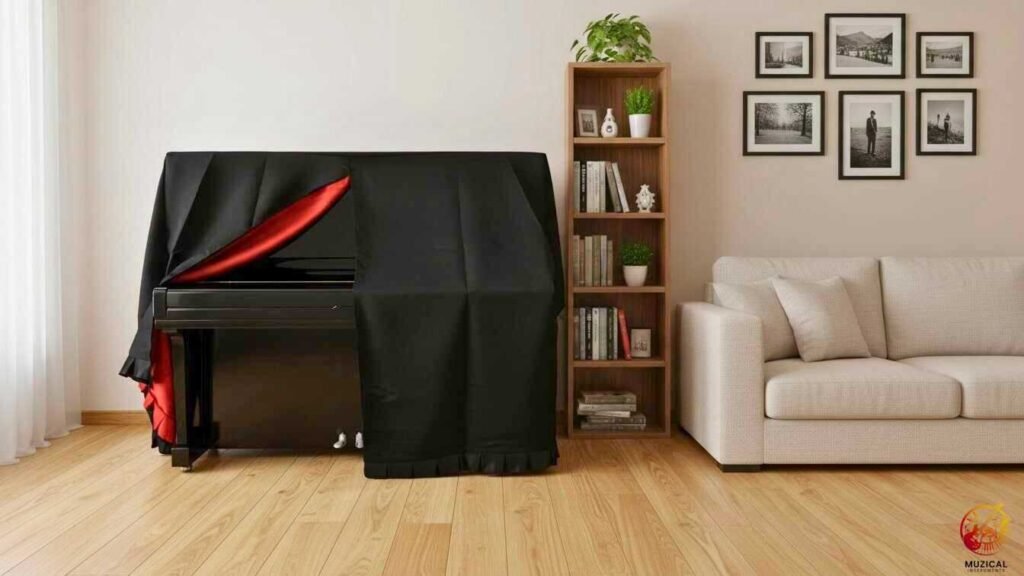
A good cover will not hurt the piano. A bad cover might. The danger comes from the lining. This is the part that touches the wood.
You want a lining that is soft and smooth. Cotton or flannel is good.
Avoid coarse or rough fabrics. They can leave tiny scratches over time. This helps protect piano finish from getting dull.
Also, make sure the piano is clean before you put the cover on. If there is grit on the piano, the cover will press it into the wood. Always dust the piano lightly before covering it.
Does A Padded Piano Cover Protect Better Than A Thin One?
In most cases, yes.
A padded piano cover has extra layers that act like insulation.
It adds two kinds of protection:
- Surface protection – padding absorbs small impacts.
- Airflow control – thicker fabric slows moisture movement.
Thin covers are fine if you only need dust protection. But if your climate shifts often, padded covers are far more effective.
How Do I Clean And Maintain The Cover Itself?
The cover catches all the dirt so your piano doesn’t have to. This means the cover will get dirty. You need to clean it.
Upright piano cleaning tips also apply to the cover.
If you don’t clean the cover, it becomes a dust trap. When you pull a dusty cover off, the dust creates a cloud. That cloud settles right back on the keys.
Steps To Clean Your Cover
- Vacuum it: Use a hand vacuum or a brush attachment. Do this once a week.
- Shake it out: Take the cover outside. Give it a good shake. Do this every few weeks.
- Spot clean: If there is a stain, use a damp cloth. Do not soak it unless the label says it is safe.
- Washing machine: Some covers are machine washable. Check the tag. Use a gentle cycle and cold water.
Never put a piano cover in a hot dryer. It might shrink. If it shrinks, it won’t fit your upright piano anymore.
Is A Piano Cover Worth The Money?
Pianos are expensive. Repairs are expensive. A tuning costs money. Fixing a cracked soundboard costs a lot of money. Piano cover benefits save you cash in the long run.
A good upright cover costs between $50 and $200. This is a small price compared to the cost of the instrument. It extends the life of the piano. It keeps the resale value high.
A piano that looks new and plays well is worth more. If you ever want to sell your piano, a shiny, scratch-free finish helps.
Buyers look for signs of care. A cover shows that you took care of the instrument.
How Often Should I Replace My Piano Cover?
Cover lifespan depends on material quality and usage.
Budget cotton covers last 2-3 years with regular use. The fabric thins and tears at stress points. Elastic edges lose stretch and won’t grip properly.
Mid-range polyester blends serve well for 5-7 years. Look for signs like fading color, stretched elastic, or musty odors that indicate the fabric holds moisture.
Premium padded covers from manufacturers like Clairevoire last 10-15 years. The investment pays off through superior protection and durability.
Replace any cover immediately if you notice:
- Tears or holes larger than a pencil eraser
- Mold or mildew spots
- Permanent odors despite washing
- Elastic that won’t stay in place
Final Thoughts: Your Best Step For Upright Piano Cover Protection
Your piano is more than just furniture. It is a machine that makes music. Upright piano cover protection is the best gift you can give it. A simple cover fights off the two biggest enemies: water and dust. It keeps the wood healthy and the sound clear.
You don’t need the most expensive cover. You just need one that fits well and has a soft lining. Whether you choose vinyl or quilted padding, the important part is using it. Cover your piano when you sleep, and it will sound beautiful for years to come.
FAQ: Upright Piano Cover Protection Guide
1. Do piano covers really protect from humidity?
Yes, they help a lot. A cover acts like a shield that slows down how fast the air changes around your piano. It stops sudden shifts in temperature and moisture that can warp the wood. While a cover isn’t a dehumidifier, it keeps the environment around your piano much more stable.
2. Should I cover my piano keys?
Absolutely. Dust is the enemy of your keys. If dust gets between them, it can make the keys stick or feel heavy when you press them. Covering the keys also stops sunlight from turning the white plastic or ivory yellow over time.
3. Can a piano cover cause mold?
It is rare, but it can happen if you use the wrong material. Plastic or heavy vinyl covers that don’t “breathe” can trap moisture inside. If you live in a very humid place, choose a cover made of breathable fabric like cotton or mackintosh to let air flow while keeping dust out.
4. Is it okay to use a regular blanket instead of a piano cover?
Using a blanket is better than nothing, but a real cover is safer. Blankets can be slippery and might slide off, taking other items with them. Also, some blankets shed lint that can get inside the piano. A fitted cover stays in place and is made of materials that won’t scratch the finish.
5. Should I cover my piano at night?
Yes, night is often when houses get colder. This drop in temperature can make the wood shrink. Covering your piano before you go to bed keeps it warm and cozy. This simple habit helps your piano stay in tune for longer.